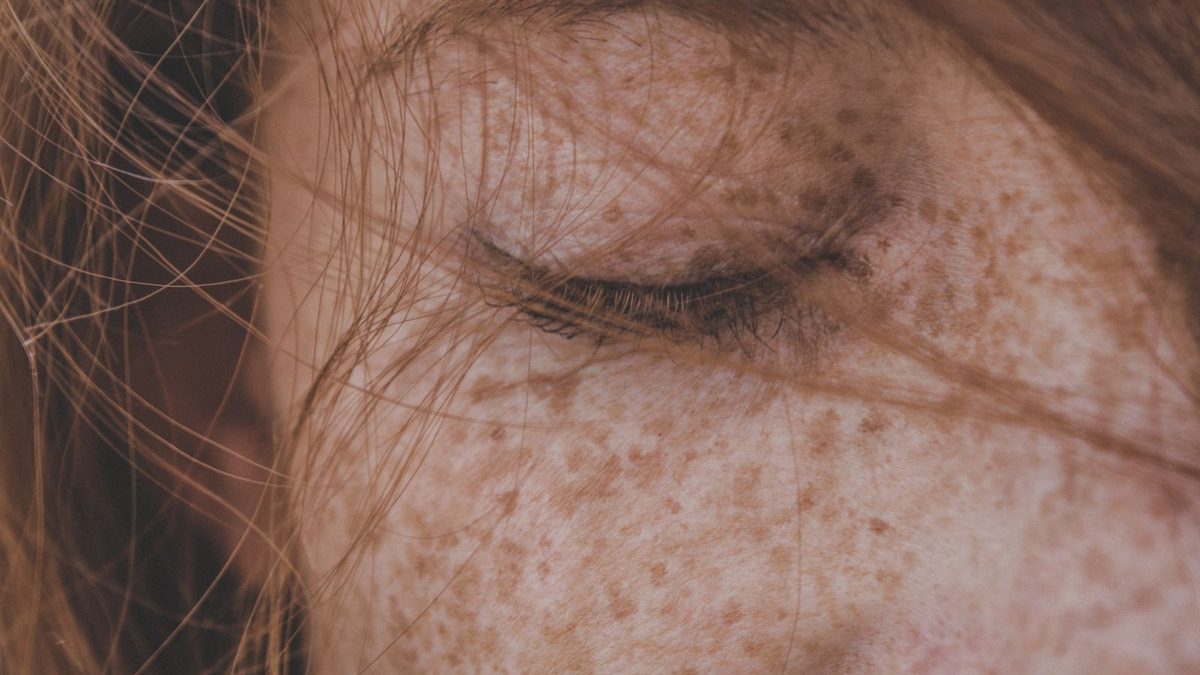
Melasma: Why It's So Hard to Treat (and What Works)
Most melasma articles promise a fix. A board-certified dermatologist starts with the truth instead, that there is no cure, and then explains the anxious-guard-dog biology behind the pigment, the sun rules that decide everything, and the treatment ladder that genuinely helps.
Melasma is very frustrating, for healthcare providers and for patients. If you’re reading this and you have melasma, you already know it’s not a quick fix.
Here’s what a lot of providers will not tell you: we do not have a cure for melasma. We can control it. We can improve it. But if you spend one day, even one weekend, in the sun, you’re ten steps back again. It’s an ongoing cycle, and it means dealing with this essentially for the rest of your life.
Sorry for the really bad news. A lot of people don’t like hearing it. But you are going to have to protect your skin against the sun for the rest of your life, and if you’re not prepared to do that, don’t waste your money treating melasma with creams, lasers, and oral medications. You’ll just get your pigmentation back.
Your doctor cannot be with you every minute of the day telling you to wear sunscreen, wear a hat, sit in the shade. If you go for a jog or a bike ride, you’re the one who has to make sure the sun isn’t touching your face. If it is, the pigment comes back, and that one is on you, not your provider.
There is no magic laser and no permanent fix. Melasma is chronic and lifelong. Now that we’ve been honest about that, everything else in this article will make sense.
Meet your anxious guard dog
To understand melasma, you need to understand the melanocyte, the cell that produces pigment.
In normal skin, the melanocyte acts like a calm guard dog. It barks, meaning it produces pigment, only when there’s a real threat, like a sunburn or prolonged sun exposure.
In melasma skin, the melanocyte is hyperactive. It’s an anxious guard dog on a short leash. It treats heat, UV light, potentially visible light, and hormones as a code-red emergency, and it instantly floods your skin with muddy brown pigment.
That single fact explains almost everything about treating melasma, including why the “obvious” treatment often backfires: aggressive lasers and heat-based devices are exactly the alarm bells the anxious guard dog is listening for.
Who’s most prone
- Genetics load the gun. Some people are simply born with more reactive pigment cells.
- Hormones turn up the volume. Estrogen and progesterone hypersensitize your pigment cells. That’s why we see the “mask of pregnancy” in pregnant women, a heightened-estrogen state, and why birth control pills, especially higher-estrogen formulations, keep the melanocytes active.
- Deeper Fitzpatrick skin types (olive, tan, and brown tones) naturally have more active melanocytes to begin with.
The most important treatment: block the sun, seriously
The most important treatment for melasma is blocking the sun as much as you possibly can.
There’s some debate about visible light as a trigger too. Visible light can be blocked with a tinted sunscreen containing iron oxide, and that’s the type I’d suggest if you suffer from melasma. But don’t rely on sunscreen alone. Use a hat. Use a scarf. Use physical barriers to keep sunlight off your face entirely.
Here’s a rule of thumb worth memorizing: if you can feel the warmth of the sun on your face, you are stimulating those melanocytes, and your melasma can come back or worsen. Seek shade. Sit under an umbrella. Don’t exercise during the peak hours of the day; go when the UV index is lower. Prevent that sunlight from touching your face, or the pigment returns.
The treatments that inhibit the melanocyte
With sun protection as the foundation, we can quiet the pigment cells with topicals:
- hydroquinone
- kojic acid
- alpha-hydroxy acids
- beta-hydroxy acids
- tranexamic acid
Peels and laser can help, but you have to be conscious of the energy and heat a laser introduces, because heat is a melasma trigger. Starting with peels is the gentler route. They take time, and you’ll want to use them in conjunction with the creams, because the goal is improvement without triggering post-inflammatory hyperpigmentation on top of the melasma.
The only oral medication shown to reduce melasma at this point is oral tranexamic acid. It’s usually started at 250 mg twice daily, and if you don’t get any stomach upset, you can take it once a day.
The bottom line
The best melasma treatment is the one that costs nothing: preventing sun from ever contacting your face. Everything else, the creams, the peels, the careful lasers, the oral tranexamic acid, works only as well as your sun discipline allows. Control is absolutely achievable. A cure is not, and anyone who promises you one is selling something.
Comparing your options? See our guide to melasma treatments compared, and my article on hyperpigmentation and dark spots if you’re not sure which pigment problem you have.
Find a Chemical Peel clinic near you
See the clinics in your city that offer it, compare reviews, and request a free consultation.
Your location is used once to pick the nearest city and is never stored.

Dr. Victoria Taraska, MD, FRCPC
Board-Certified Dermatologist
Dr. Victoria Taraska, MD, FRCPC, is a board-certified dermatologist with over 25 years of experience in both medical and cosmetic dermatology. She earned her medical degree from the University of Manitoba, completed internal medicine training there, and finished her dermatology residency at the University of Ottawa. She has been a Fellow of the Royal College of Physicians and Surgeons of Canada in dermatology since 1998, is an active member of the Canadian Dermatology Association and the American Academy of Dermatology, and developed the InforMED patient decision aids for dermatological conditions. Dr. Taraska reviews ClinicCompass treatment content for medical accuracy.
More from Dr. Taraska →This article is for education, not medical advice. Treatment decisions should always be made in consultation with a qualified provider who has examined you.
Keep reading
Dermatology Marketing: How a Derm Practice Fills Its Cosmetic Schedule
A dermatology practice does not lose cosmetic patients to med spas because of price. It loses them because the cosmetic side is hidden behind a medical front desk, a three-month wait and a website written for insurance patients. This is how to give the cosmetic side its own front door and fill it.
Read post → Patient GuideMicroneedling Aftercare and Downtime: The Day-by-Day Guide
Microneedling downtime is short, but the first 48 hours decide whether your result is good. Here is what to expect each day, what to put on your skin and what to keep off it, and the handful of things people do that undo the treatment they just paid for.
Read post → WellnessIs Red Light Therapy Safe? The Risks, the Evidence, and Who Should Skip It
Red light therapy has almost no side effects, which makes it easy to recommend and easy to overpromise. The honest picture: strong evidence for a few uses, thin evidence for most of the claims on the box, and a short list of people who should not sit under the panel.
Read post →Find Chemical Peel providers in your city
Compare vetted clinics with real Google ratings, see honest local cost ranges, and request a free consultation.