See the clinics in your city that offer it, compare reviews, and request a free consultation.
Your location is used once to pick the nearest city and is never stored.
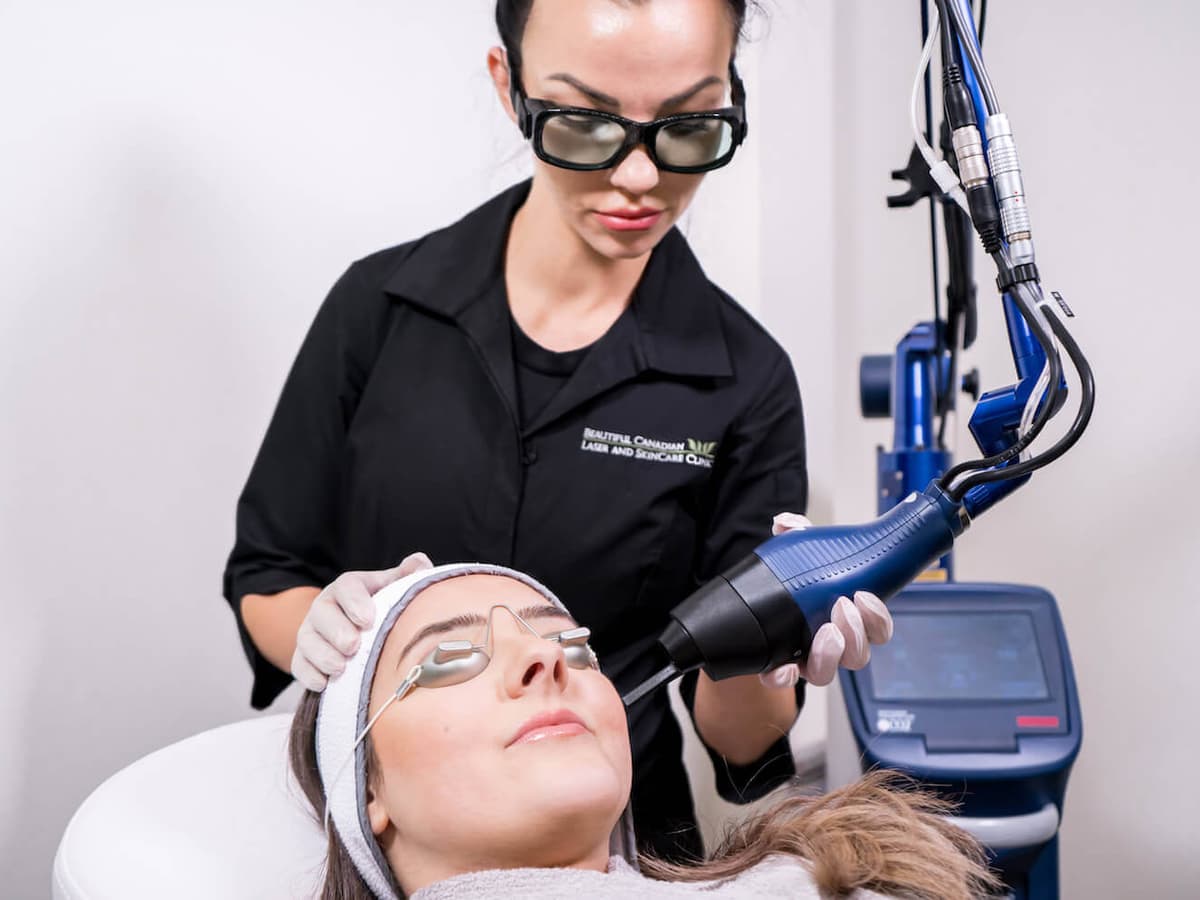
Laser skin resurfacing uses focused light energy to remove or heat damaged skin so that smoother, healthier skin replaces it. It’s one of the most effective tools available for treating wrinkles, sun damage, scars, and uneven texture, and because “laser resurfacing” spans a wide range of devices and intensities, it can be tailored from a gentle refresh to a dramatic transformation.
How laser resurfacing works
Resurfacing lasers fall into two broad categories:
Ablative lasers (CO2 and Erbium:YAG) vaporize the outermost layers of skin in a precise, controlled way. As the skin heals, it regenerates tighter, smoother, and more even. These produce the most dramatic results but require the most recovery.
Non-ablative lasers (such as Fraxel and other fractional devices) pass through the surface to heat the deeper dermis, stimulating collagen without removing the top layer. Recovery is much faster, but it takes a series of sessions to match the impact of a single ablative treatment.
Most modern treatments are fractional, meaning the laser treats microscopic columns of skin while leaving surrounding tissue intact. This speeds healing and lowers risk while still driving strong collagen renewal.
What to expect during treatment
After numbing cream (and sometimes a local anesthetic for ablative treatments), the provider passes the laser over the target area. You’ll feel heat and a prickling or snapping sensation. Sessions range from 20 minutes to over an hour depending on the area and device.
Afterward, the skin is red, warm, and swollen. Non-ablative treatments may feel like a sunburn for a day or two; ablative treatments involve more pronounced redness, oozing, crusting, and peeling as the new skin forms over one to two weeks.
Results and timeline
Non-ablative: Subtle improvement after each session, building over a series of 3–6 treatments.
Ablative: A single full-field session delivers significant change once healing completes, with continued improvement as collagen rebuilds over 3–6 months. Fractional ablative treatments may take 1–3 sessions depending on the result you want.
Either way, expect smoother texture, softened wrinkles, faded sun spots, and a more even, luminous tone.
Is laser resurfacing right for you?
Strong candidates have sun damage, fine lines, acne or surgical scars, or uneven tone and texture and want a real reset rather than a subtle tweak. Historically, traditional resurfacing lasers worked best on lighter skin tones, as deeper complexions carry a higher risk of pigment changes, though newer devices and careful settings have widened who can be treated. If you have a deeper skin tone, radiofrequency microneedling may be a safer route to similar texture and tightening goals.
If you have taken isotretinoin (Accutane), wait about six months after finishing the course before any ablative laser treatment.
Risks and side effects
Beyond the expected redness, swelling, and peeling, risks include prolonged redness, infection, changes in pigmentation (lighter or darker patches), and (rarely) scarring, particularly with aggressive ablative settings or improper aftercare. Strict sun avoidance and diligent post-treatment skincare are critical. An experienced, properly equipped provider is the most important safeguard.
What affects the cost
The price range for laser resurfacing is wide because it spans gentle non-ablative sessions to deep ablative CO2 treatments. Cost depends on the type of laser, the depth and intensity, the size of the treated area, the number of sessions, and your provider’s expertise. A full-face ablative treatment sits at the high end; a small non-ablative spot treatment is far less. Always confirm exactly which device and protocol your quote covers.
Dramatically improves wrinkles, sun damage, scars, and skin texture
Options range from gentle (minimal downtime) to deep (more dramatic results)
Stimulates long-term collagen production for ongoing improvement
One ablative session can rival a series of milder treatments
Are you a good candidate?
Sun damage, fine lines and wrinkles, acne or surgical scars, and uneven tone or texture, ideally on lighter skin tones (device-dependent)
By location
Find Laser Skin Resurfacing near you
5,315 clinics across 463 cities list Laser Skin Resurfacing on ClinicCompass. 2,779 of them (52%) say on their own websites that they offer financing or payment plans;
ask about approval and interest before you book.
What's the difference between ablative and non-ablative lasers?
Ablative lasers (like CO2 and Erbium) remove the outer layers of skin for dramatic results with longer downtime. Non-ablative lasers (like Fraxel) heat the deeper skin without removing the surface, so they need a series of sessions but involve much less recovery. Your provider will match the approach to your goals and tolerance for downtime.
How much downtime should I expect?
Non-ablative treatments typically mean 1–3 days of redness and swelling. Ablative resurfacing can require 5–14 days of healing, with redness that fades over weeks. Plan ablative treatments around your schedule.
Is laser resurfacing safe for all skin tones?
Many traditional resurfacing lasers carry a higher risk of pigment changes on medium to deep skin tones. Some devices and settings are safer for darker complexions, and alternatives like radiofrequency microneedling may be recommended. A consultation with an experienced provider is essential.
Does it hurt?
Numbing cream and sometimes local anesthesia keep discomfort manageable. You'll feel heat and a prickling sensation; deeper ablative treatments are more intense and may use stronger numbing.
When will I see results?
Initial improvement appears once redness and peeling resolve. Because the treatment stimulates collagen, results continue improving for 3–6 months.
How long do results last?
Results can last years, but they don't stop the aging process or new sun damage. Daily sunscreen and good skincare protect your investment, and periodic maintenance keeps skin looking its best.
Sources
Where this information comes from
Clinical facts on this page are checked against these primary sources.
1.Ablative Laser Resurfacing, National Library of Medicine, StatPearls (National Institutes of Health)That ablative lasers (CO2 and Erbium:YAG) work by vaporizing the outer layers of skin to treat wrinkles, scars, and sun damage; that fractional treatment shortens recovery compared to full-field ablative treatment; and the risks of infection, herpes simplex reactivation, scarring, and pigment changes, including the higher risk of pigment changes for darker skin tones.
2.Laser Carbon Dioxide Resurfacing, National Library of Medicine, StatPearls (National Institutes of Health)The CO2-specific recovery timeline (redness and swelling for about one to two weeks, resolving over about six weeks) and the risks of infection, cold sore (herpes) reactivation, and pigmentation changes, which are more pronounced with CO2 than other laser types.
3.Laser Erbium-Yag Resurfacing, National Library of Medicine, StatPearls (National Institutes of Health)The Erbium:YAG-specific recovery timeline (re-epithelialization in about 4 to 7 days, shorter downtime than full-field CO2) and that hypo- and hyperpigmentation are common side effects that are more pronounced in darker skin types.
4.Laser Skin Resurfacing Recovery, American Society of Plastic SurgeonsThat downtime runs up to about two weeks for CO2 laser resurfacing and about one week for Erbium laser resurfacing, and that redness and peeling continue for days to weeks after treatment.
5.Laser Skin Resurfacing Results, American Society of Plastic SurgeonsThat laser resurfacing results can last for years, that improvement continues for up to a year after treatment, and that normal aging causes wrinkles to reoccur so the treatment does not stop the aging process.
6.Laser Resurfacing, American Society for Dermatologic SurgeryThat CO2 lasers treat wrinkles and scars while Erbium lasers cause fewer side effects; that patients with active acne or very dark skin are usually not good candidates because of pigmentation risk; and that patients with a history of herpes infections are given antiviral medication before and after treatment to prevent reactivation.
7.Non-ablative Laser Resurfacing for Wrinkles, American Society for Dermatologic SurgeryThat non-ablative fractional lasers heat the skin through microthermal treatment zones without removing the surface, that most patients return to work immediately with minimal downtime, and that multiple sessions are typically needed to see results.