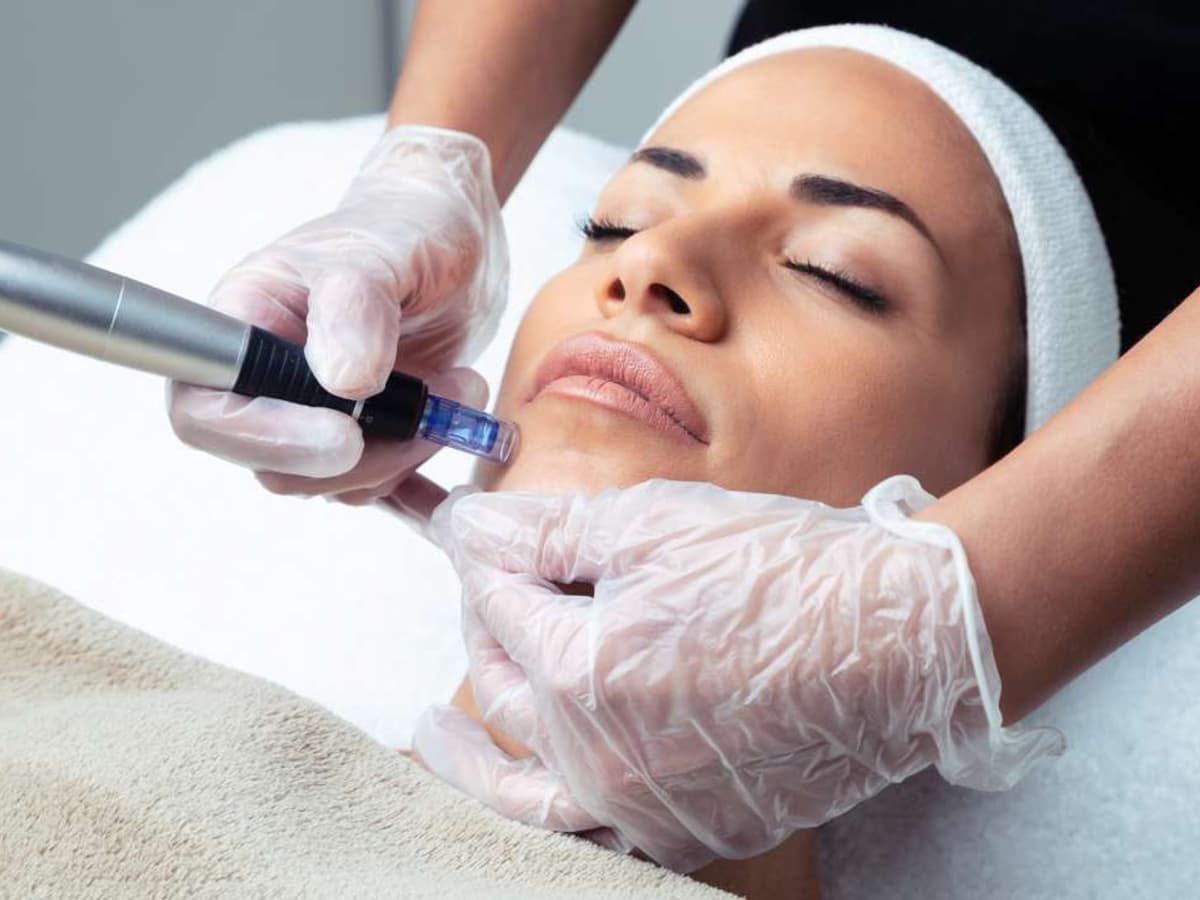
A minimally invasive treatment that uses tiny needles to create controlled micro-injuries in the skin, triggering collagen production to improve texture, scars, pores, and fine lines.
Also called: Collagen induction therapy, Dermapen, SkinPen, Microneedling with PRP, exosome facial, microneedling with exosomes
See the clinics in your city that offer it, compare reviews, and request a free consultation.
Your location is used once to pick the nearest city and is never stored.
Microneedling is one of the most versatile skin treatments available, using tiny, precisely controlled needles to create micro-channels in the skin that trigger your body’s own healing and collagen-building response. The result, over a series of sessions, is smoother texture, softer fine lines, improved acne scars, and refined pores, with minimal downtime and broad safety across skin tones.
How microneedling works
A handheld device (the most common is SkinPen, the first FDA-cleared microneedling device, along with newer options like Vivace and various professional Dermapens) presses a cartridge of ultra-fine needles into the skin at a precisely controlled depth. Each tiny puncture creates a controlled wound that the body treats as an injury, kicking off the natural healing cascade.
That healing cascade produces two important responses:
New collagen and elastin as the skin rebuilds, improving texture and firmness over weeks.
Enhanced absorption of topical serums applied during or after the treatment, since the micro-channels temporarily increase penetration.
Because microneedling works at depth rather than relying on heat or light absorbed by pigment, it’s considered one of the safer skin-remodeling options for medium and deep skin tones.
What to expect during treatment
After 20–30 minutes of numbing cream, the actual treatment takes 20–45 minutes depending on the area. The provider passes the device across the skin in overlapping passes, adjusting depth for different facial zones. You’ll feel pressure and a vibrating sensation more than pain. Some pinpoint bleeding is normal.
Immediately after, your skin will look pink to red, similar to a moderate sunburn. A growth factor serum, hyaluronic acid, or PRP is often applied to support healing.
Results and timeline
24–48 hours: Redness like a mild sunburn; some mild swelling.
Day 3: Skin starts to feel smoother; pink tone fades.
4–6 weeks per session, building over 3–6 sessions: Cumulative improvement in texture, scars, pores, and firmness.
Results continue to develop for 3–6 months after your final session as collagen remodels. Most people do a maintenance session every 6–12 months.
Is microneedling right for you?
Excellent candidates have fine lines, mild texture issues, enlarged pores, acne scarring (especially atrophic/rolling scars), uneven tone, or mild skin laxity and want meaningful, lasting improvement without major downtime. It’s safe for most skin tones and works well in combination with other treatments (HydraFacial, light chemical peels, Botox).
It’s less suited to deep wrinkles or severe sagging (where lasers, Morpheus8, or surgical options work better) and shouldn’t be done over active acne breakouts, active infections, or open wounds.
Risks and side effects
The most common effects are redness, mild swelling, and a “tight” feeling for 1–2 days. Less common: small pinpoint scabs, transient breakouts, mild bruising. Rare and almost always tied to inappropriate at-home devices or unqualified providers: scarring, pigment changes, or infection. In-office microneedling with a medical-grade device and a trained provider is what makes this treatment so safe.
What affects the cost
Microneedling typically runs $200–$700 per session in the US. The wide range reflects:
Device: basic dermapen treatments are cheaper; FDA-cleared SkinPen or RF-enhanced devices like Vivace cost more.
Add-ons: PRP commonly adds $200–$400 per session; exosomes add more.
Area treated: face alone vs. face + neck + chest.
Provider: esthetician-led vs. nurse/physician.
Packages: most clinics discount a series of 3–6.
For results, prioritize quality of device and provider over the lowest per-session price: microneedling is one of those treatments where technique meaningfully changes the outcome.
Stimulates natural collagen production for long-lasting skin improvement
Improves acne scars, fine lines, pores, and texture in a series
Safe for most skin tones, lower pigmentation risk than many lasers
Can be combined with PRP, exosomes, or topical serums for enhanced results
Minimal downtime (most people return to normal activity the next day)
Are you a good candidate?
People with fine lines, acne scars, enlarged pores, uneven texture, or mild skin laxity who want collagen-building results with minimal downtime
By location
Find Microneedling near you
7,765 clinics across 464 cities list Microneedling on ClinicCompass. 3,828 of them (49%) say on their own websites that they offer financing or payment plans;
ask about approval and interest before you book.
Standard microneedling uses needles alone to trigger collagen production. Morpheus8 adds radiofrequency energy delivered through the needles, which heats deeper skin layers for stronger tightening. Both improve skin, but Morpheus8 is more aggressive and tends to deliver more dramatic remodeling. It also costs more.
Does microneedling hurt?
Numbing cream is applied for 20–30 minutes beforehand, so most people tolerate it well. You'll feel pressure and a vibrating sensation, with more sensitivity over bony areas like the forehead. Discomfort is brief and manageable.
How many sessions do I need?
Most concerns need 3–6 sessions spaced 4–6 weeks apart. Acne scarring often requires the upper end (6+); general skin quality and fine lines may only need 3. Results build progressively with each session.
What's the downtime?
Expect redness similar to a mild sunburn for 24–48 hours, sometimes with slight swelling. By day 3, most people are back to normal with a noticeable glow. Avoid makeup, retinoids, and active exfoliants for 24–48 hours.
Is microneedling safe for darker skin tones?
Yes. Because microneedling targets depth rather than pigment, it carries a much lower risk of pigmentation changes than many lasers. This makes it one of the more inclusive options for skin remodeling.
What is "microneedling with PRP"?
PRP (platelet-rich plasma) is drawn from your own blood and applied during microneedling. The micro-channels help the growth factors penetrate, enhancing healing and collagen response. It costs more but is popular for acne scarring and anti-aging.
What about microneedling with exosomes?
Exosomes are tiny vesicles released by cells, harvested from lab-grown stem cells, placental tissue or plants, and some clinics apply them to the skin right after microneedling to speed healing. Treat the add-on with care. The FDA states there are no FDA-approved exosome products, and in December 2019 it issued a public safety notification after Nebraska patients suffered serious adverse events from unapproved products marketed as containing exosomes; injecting them is not permitted, and topical use after microneedling sits in a cosmetic gray area with thin evidence for any benefit beyond what the needling delivers. If a clinic offers it, ask what the product is, where it comes from, and whether the FDA has reviewed it, which is the FDA's own advice.
Sources
Where this information comes from
Clinical facts on this page are checked against these primary sources.
1.Public Safety Notification on Exosome Products, U.S. Food and Drug Administration (December 6, 2019)There are currently no FDA-approved exosome products; the FDA received multiple reports of serious adverse events in Nebraska patients treated with unapproved products marketed as containing exosomes; and patients are advised to ask whether the FDA has reviewed a treatment before proceeding. Backs the exosome FAQ on this page.
2.Microneedling Devices, U.S. Food and Drug AdministrationBacks the FDA-clearance claim (facial acne scars, wrinkles, and abdominal scars in patients 22+), the side-effect list (redness, bruising, bleeding, infection, pigment changes), and the guidance on who should not have microneedling (active skin infection, certain skin or autoimmune conditions, pregnancy, clotting disorders).
3.Microneedling can fade scars, uneven skin tone, and more, American Academy of DermatologyBacks what microneedling treats (acne scars, large pores, uneven texture, fine lines), that it works by stimulating collagen production (collagen induction therapy), that downtime is minimal, and that it is safe for all skin tones.
4.Microneedling in Dermatology: A Comprehensive Review of Applications, Techniques, and Outcomes, CureusBacks the mechanism description (controlled micro-injury triggers the skin's wound-healing and collagen response), that redness and swelling are short-lived, that microneedling is often preferred over lasers for darker skin tones, and that maintenance sessions are typically spaced six to twelve months apart.
5.Microneedling for the Treatment of Scars: An Update for Clinicians, Clinical, Cosmetic and Investigational DermatologyBacks that microneedling causes less downtime than laser resurfacing, that it is considered an option for darker skin phototypes (Fitzpatrick IV-VI) due to lower pigment-change risk than lasers, and documents scabbing, transient acne flares, and rare scarring as recognized side effects.