See the clinics in your city that offer it, compare reviews, and request a free consultation.
Your location is used once to pick the nearest city and is never stored.
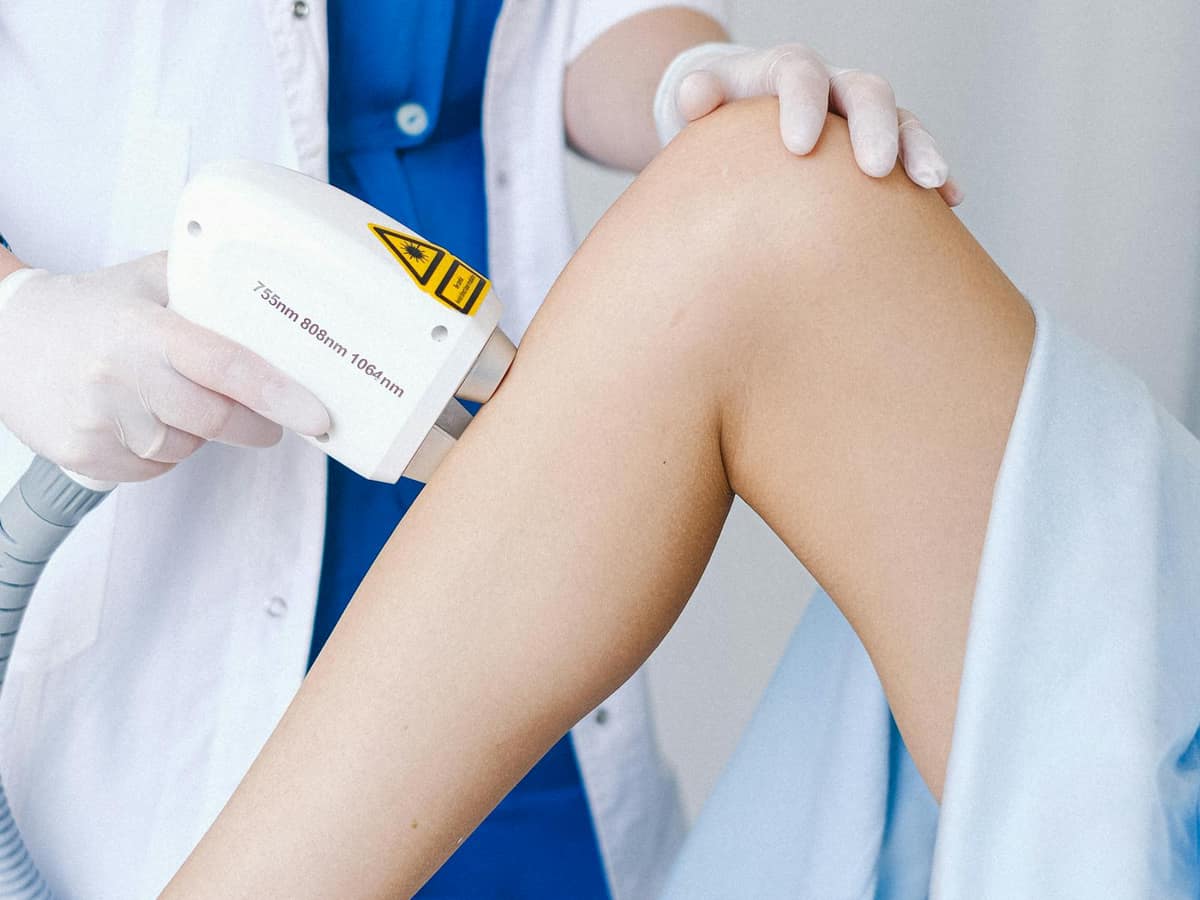
Laser hair removal is one of the most popular cosmetic treatments in the world because it offers a lasting solution to unwanted hair, eliminating the endless cycle of shaving, waxing, and plucking. A laser targets the pigment in each hair follicle and disables its ability to grow new hair, producing a dramatic, long-term reduction over a series of sessions.
How laser hair removal works
The laser emits a wavelength of light that’s absorbed by melanin, the pigment in the hair. That light converts to heat, which damages the follicle and impairs future growth. Because the treatment relies on the contrast between the hair and surrounding skin, the technology and settings are matched to your specific skin tone and hair color for both safety and effectiveness.
Crucially, the laser only affects hairs in their active growth (anagen) phase, and at any given time only a fraction of your hair is in that phase. That’s why a series of sessions spaced weeks apart is required, to catch each follicle during its growth window.
What to expect during treatment
Sessions are quick: an upper lip takes a couple of minutes, while large areas like the legs or back take up to an hour. You’ll feel a snapping or warm-rubber-band sensation with each pulse; most modern systems include integrated cooling to keep you comfortable. Afterward the skin may look slightly red or feel like a mild sunburn for a few hours. There’s no downtime: you can resume normal activity right away, avoiding sun exposure and heat (saunas, hot workouts) for a day or two.
Results and timeline
You’ll notice shedding and thinning within a couple of weeks of your first session, but the cumulative effect builds over the full series:
After 6–8 sessions: Most people achieve dramatic, lasting reduction.
Regrowth: Any hair that returns is typically finer, lighter, and sparser.
Maintenance: Occasional touch-up sessions handle stray or hormonally driven hairs.
Is laser hair removal right for you?
Nearly anyone bothered by unwanted hair is a candidate. The biggest factor in results is hair color: dark hair responds best because it holds the most pigment, while very light blonde, gray, white, and some red hair respond poorly. Thanks to advances like the Nd:YAG laser, deeper skin tones can now be treated safely and effectively, something older devices struggled with. A consultation and often a test patch confirm the right device and settings for you.
Risks and side effects
Side effects are usually mild and temporary: redness, swelling around the follicles, and a sunburn-like sensation for a few hours. Less common risks include blistering, temporary pigment changes (lightening or darkening), and, rarely, scarring (almost always tied to the wrong device for a skin tone, incorrect settings, or sun-tanned skin at the time of treatment). This is why choosing an experienced provider with the right technology matters, especially for medium and deep complexions.
What affects the cost
Cost is quoted per session and per area, and it varies widely with the size of the area: a small upper-lip treatment is inexpensive, while full legs or a back cost considerably more. Because a full course is 6–8 sessions, most clinics sell discounted packages that bring the per-session price down. Your total also depends on your hair’s responsiveness, your provider’s expertise, and your city.
Where to compare laser hair removal
Laser hair removal is almost always sold in packages, so local pricing varies. See it in Houston, Charlotte, Tampa, and Calgary. For the best results, plan your sessions around lower-sun months. Our laser timing guide shows how.
Why people choose Laser Hair Removal
Long-lasting reduction of unwanted hair, far more permanent than shaving or waxing
Treats nearly any area: face, underarms, legs, back, bikini, and more
Quick sessions; small areas take just minutes
Modern lasers (like Nd:YAG) safely treat darker skin tones
Are you a good candidate?
Anyone seeking lasting reduction of unwanted hair; modern lasers treat a wide range of skin tones
By location
Find Laser Hair Removal near you
5,843 clinics across 464 cities list Laser Hair Removal on ClinicCompass. 2,919 of them (50%) say on their own websites that they offer financing or payment plans;
ask about approval and interest before you book.
It produces permanent hair *reduction* rather than 100% permanent removal, and this distinction matters. After a full series (typically 6–8 sessions), the FDA-cleared definition of "permanent hair reduction" means most people see a dramatic, lasting decrease in hair density, with any regrowth being finer, lighter, and sparser than original hair. Some patients see ~90%+ reduction; others see ~70%. Hormonal areas (face, bikini) often need periodic maintenance sessions over the years. Truly zero-regrowth-forever results are not what the technology promises.
What are the negatives of laser hair removal?
Honest list: (1) Upfront cost: even with packages, a full body laser hair removal series runs $1,500–$3,000+ total; (2) Time commitment: 6–8 sessions over 6–12 months, all timed with your hair growth cycle; (3) Results aren't 100% permanent: some maintenance is typically needed; (4) It doesn't work well on very light, gray, or red hair (the laser targets pigment); (5) Sun avoidance before and after each session limits scheduling; (6) Rare risks include burns, blistering, and temporary pigment changes, almost always from operator error or wrong device for skin tone. Net: for most people the math still favors laser long-term vs. years of shaving/waxing, but it's not zero-effort or zero-risk.
What I wish I knew before laser hair removal?
The most common patient regrets we hear about: (1) That it would take 6–8 sessions, not 1–2 (patience required); (2) That shaving (not waxing or plucking) is required between sessions because the laser needs the follicle intact to target; (3) That hormones can trigger regrowth months or years later, especially on the face/bikini, requiring maintenance; (4) That cheaper providers using outdated equipment produce noticeably worse results; (5) That sun avoidance is mandatory: a tan at treatment time can cause burns or pigment changes; (6) That pain varies dramatically by body area: upper lip is brief but intense; legs are easier. Going in with realistic expectations + an experienced provider with modern equipment is everything.
How painful is laser hair removal on a scale of 1 to 10?
Highly variable by body area. Most patients rate large fleshy areas (legs, back, arms) at 2–4/10, easily tolerable, comparable to a warm rubber-band snap with cooling. Bonier or sensitive areas (upper lip, bikini line, underarms, ankles) rate higher at 5–7/10, brief but intense. Modern lasers with integrated cooling (Diolaze, Soprano Ice, GentleMax Pro) are dramatically more comfortable than older devices. Most patients describe the discomfort as totally manageable and significantly less than waxing the same area.
How many laser hair removal sessions will I need?
Most areas need 6–8 sessions spaced 4–8 weeks apart. The reason: the laser only affects hairs in their active growth (anagen) phase. At any given time, only ~20% of your hair follicles are in this phase. Multiple sessions catch each follicle during its growth window over many cycles. Hormonal areas (face, bikini, especially in PCOS patients) often need 8–10+ sessions and periodic maintenance. Larger areas (legs, back) may show meaningful reduction after 4–5 sessions but still benefit from the full series.
Does it work on dark skin or blonde hair?
Darker skin: yes. Modern lasers like the Nd:YAG (Cutera, Cynosure) safely and effectively treat darker complexions because they target deeper into the skin without heating surface pigment. Older alexandrite lasers were riskier for medium-to-deep skin tones. Ask which device your provider uses before booking. Blonde, gray, white, or very fine hair: not really. The laser targets melanin (pigment) in the hair, so light hair has nothing to absorb the energy. Electrolysis is the only proven option for very light hair.
How do I prepare for laser hair removal?
1–2 weeks before: avoid sun exposure, tanning beds, and self-tanner (tanned skin = burn risk). 1 month before: stop waxing, plucking, sugaring, threading. The follicle needs to be intact for the laser to target. Day before: shave the area (yes, shave is fine and required; just no plucking the root). Day of: arrive with clean, product-free skin (no lotions, deodorant, makeup on the treatment area). Avoid hot showers, saunas, and intense exercise for 24 hours after each session.
Is laser hair removal worth it vs shaving or waxing?
Over a multi-year horizon, yes (for most patients). The upfront investment ($1,500–$3,000+ for a full series) offsets within 3–5 years vs. ongoing salon waxing costs ($30–$80/month). Vs. shaving, the math is less about money and more about time and outcome: laser eliminates ingrown hair issues, daily razor maintenance, and shaving rash. The case for laser is strongest if you currently wax regularly, deal with significant ingrown hairs, or just want to be done with hair management. The case against is weaker results for very light hair or hormonal-driven regrowth.
Sources
Where this information comes from
Clinical facts on this page are checked against these primary sources.
1.510(k) Premarket Notification Clearance Letter K223778: Diode Laser Hair Removal System (RD-SLD600), U.S. Food and Drug AdministrationThe FDA-cleared term is permanent hair reduction, not permanent removal, defined as the long-term, stable reduction in the number of hairs regrowing when measured at 6, 9, and 12 months after a treatment regime, and this clearance covers Fitzpatrick skin types I through VI.
2.Laser Hair Removal, StatPearls, NCBI Bookshelf (National Library of Medicine)How the laser works (melanin is the target chromophore, selective photothermolysis converts absorbed light to heat that destroys the hair matrix and bulge stem cells), that only anagen-phase hairs respond so multiple sessions are required, that the Nd:YAG laser has less epidermal damage and is suited to the widest range of skin types (I to VI) compared with ruby and alexandrite lasers (best limited to lighter skin types I to III), and side effects including burns, blistering, crusting, pigment changes, and scarring.
3.Laser hair removal: FAQs, American Academy of DermatologyLaser hair removal works best on light skin with dark hair, generally requires no real downtime, and can cause burns, permanent skin-color changes, and scarring, especially in inexperienced hands, which is why a board-certified dermatologist should perform it.
4.6 ways to remove unwanted hair, American Academy of DermatologyLaser hair removal will not work on blonde, white, gray, or red hair because lasers cannot target light-colored hair, and electrolysis is the method that does work on all hair colors, including light-colored hair.
5.Laser hair removal: Preparation, American Academy of DermatologyPatients should not tan outdoors, indoors, or with sunless tanners and should use sunscreen before a laser hair removal session, consistent with tanned skin raising the risk of burns and pigment changes.