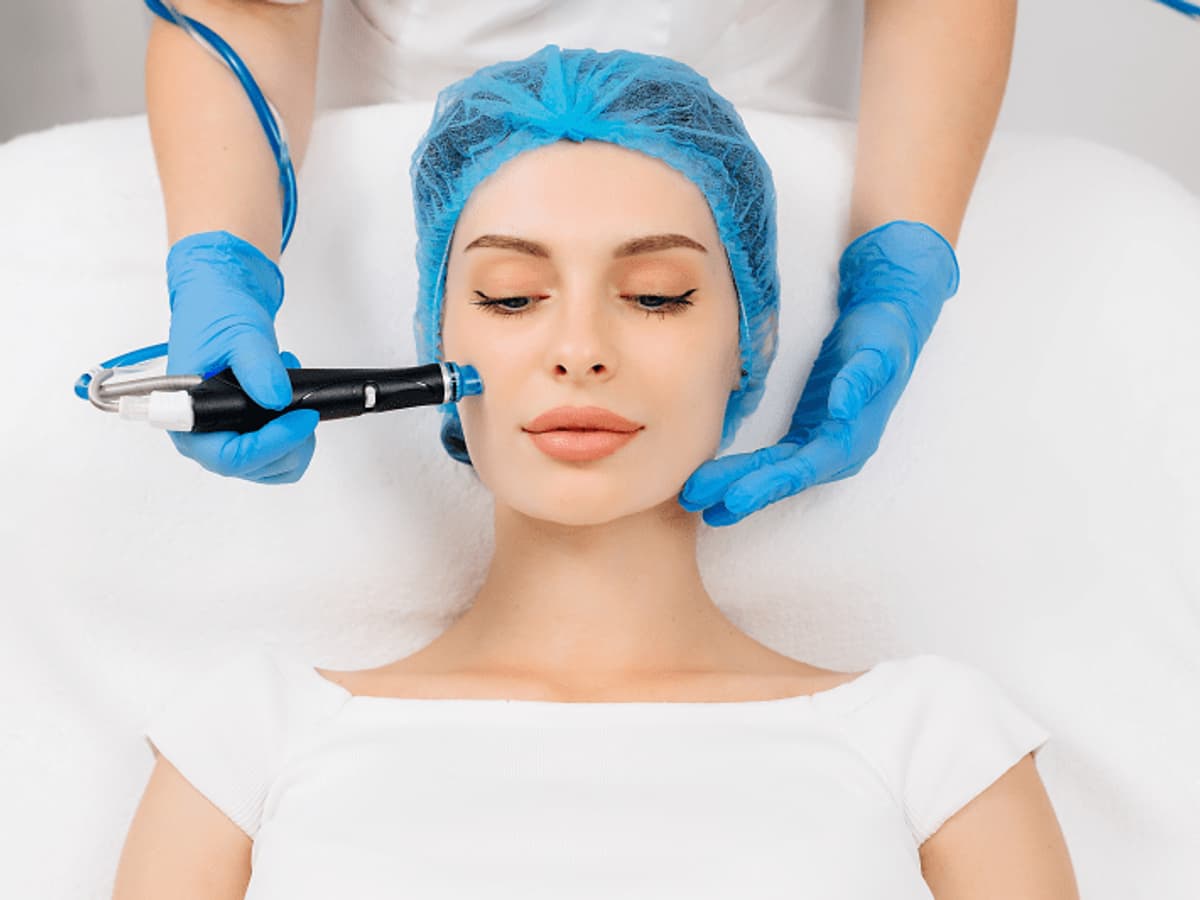
A multi-step facial that cleanses, exfoliates, extracts impurities, and infuses the skin with hydrating serums, all using a patented spiral suction wand in about 30 minutes.
Also called: Hydra Facial, HydraFacial MD, Hydradermabrasion
See the clinics in your city that offer it, compare reviews, and request a free consultation.
Your location is used once to pick the nearest city and is never stored.
HydraFacial has quietly become the most-booked facial in the world because it does something rare: deliver immediate, visible glow with zero downtime in about 30 minutes. It’s the treatment people choose before weddings, photo shoots, and big events, but it’s also the foundation of many monthly skincare routines because the results compound over time.
How HydraFacial works
HydraFacial uses a patented spiral-tipped handpiece that creates a gentle vortex suction while simultaneously delivering serums to the skin. In a single 30-minute treatment, it performs four steps on every inch of your face:
Cleanse + exfoliate. A gentle exfoliating serum lifts dead skin and surface debris.
Acid peel. A mild glycolic/salicylic blend loosens deeper congestion.
Extract. Vortex suction painlessly removes blackheads, oil, and impurities (no manual squeezing).
Hydrate + protect. Antioxidant- and hyaluronic-acid-rich serums infuse the skin.
Optional boosters address specific concerns: brightening serums for hyperpigmentation, peptides for fine lines, growth factors for anti-aging, or salicylic-based products for acne-prone skin.
What to expect during treatment
A standard HydraFacial takes 30 minutes. You’ll lie back while the provider passes the handpiece across your face in sections. The sensation is a cool, light suction. Most people describe it as relaxing rather than active. There’s no pain, no scraping, and no extraction discomfort.
Afterward, your skin looks visibly brighter and feels deeply hydrated. You can apply makeup, return to work, and continue your normal routine immediately.
Results and timeline
HydraFacial delivers an immediate result you can see in the mirror walking out: clearer pores, a noticeable glow, smoother texture, and a healthy plumpness. With a single treatment, results typically last 5–7 days at peak; monthly treatments create cumulative improvements in tone, texture, and hydration over time.
Is HydraFacial right for you?
It’s one of the most universally appropriate aesthetic treatments, suitable for nearly all skin types and tones, gentle enough for sensitive skin, and effective for a wide range of concerns: dullness, dehydration, congestion, fine lines, uneven tone, mild texture issues. It’s especially popular as:
A monthly maintenance treatment.
A pre-event glow-up (weddings, photo shoots).
An onboarding treatment for someone new to professional skincare.
It’s not a substitute for medical-grade treatments addressing significant concerns: deep wrinkles, active inflammatory acne, melasma, or sagging skin need different (often more intensive) approaches.
Who should not have it: anyone with an active skin infection or a cold sore in the treatment area. Wait until it has fully cleared.
Risks and side effects
HydraFacial is one of the lowest-risk professional skin treatments. Some people experience mild, brief redness (usually under an hour). Very rarely, people with active rosacea or extreme sensitivity may have a longer flush. Avoid retinoids and harsh actives for 48 hours before and after to keep skin happy.
What affects the cost
A standard HydraFacial typically runs $150–$250 per session in the US. Customized treatments with multiple boosters or longer formats (HydraFacial Platinum, Deluxe) range up to $300–$350+.
Cost depends on:
Standard vs. deluxe: premium versions include LED therapy, lymphatic drainage, and additional serums.
Number of boosters: typically $50–$100 each.
Provider type and location: derm offices and high-end spas charge more than mid-tier studios.
Monthly memberships: many clinics offer monthly packages at meaningful discounts.
For maintenance, monthly memberships are usually the best value. For one-off glow before an event, a single deluxe session delivers maximum impact.
Comparing HydraFacial costs by city
HydraFacial is often sold via monthly memberships, which change the effective price. Compare Los Angeles, Dallas, Seattle, and Atlanta. Our HydraFacial cost guide breaks down single-session versus membership pricing.
Why people choose HydraFacial
Glowing, hydrated skin in 30 minutes with zero downtime
Combines cleansing, exfoliation, extraction, and hydration in one treatment
Customizable boosters target specific concerns (brightening, anti-aging, congestion, acne)
Safe for nearly all skin types and tones
Great as a one-off refresh or on a monthly maintenance schedule
Are you a good candidate?
Anyone wanting an immediate skin refresh, with concerns ranging from dullness and congestion to fine lines and uneven tone
By location
Find HydraFacial near you
5,065 clinics across 464 cities list HydraFacial on ClinicCompass. 2,345 of them (46%) say on their own websites that they offer financing or payment plans;
ask about approval and interest before you book.
How is HydraFacial different from a regular facial?
A regular facial relies on the esthetician's hands and basic tools. HydraFacial uses a patented device with vortex suction that simultaneously exfoliates and infuses serums, delivering more consistent and deeper results without the discomfort of manual extractions.
Does HydraFacial hurt?
No. Most people describe it as feeling like a cool, gentle suction. There's no scraping, no stinging, and no recovery. It's one of the most comfortable in-clinic skin treatments available.
How often should I get one?
Monthly is the most common cadence and matches your skin's natural cycle. People with specific concerns (active congestion, post-event glow) may go more often. Even quarterly delivers visible benefit.
When can I wear makeup after?
Right away. Many people specifically book a HydraFacial before a wedding, event, or photo shoot because they can apply makeup immediately and the skin looks luminous.
What are "boosters"?
Targeted serums added to the standard treatment to address specific concerns (brightening for hyperpigmentation, anti-aging peptides, growth factors, or acne-fighting ingredients). Boosters typically add to the base price.
Will it help with acne?
HydraFacial can be helpful for mild congestion and breakouts (it deep-cleans pores), but active inflammatory acne usually needs a different treatment plan from a dermatologist or experienced esthetician.
Sources
Where this information comes from
Clinical facts on this page are checked against these primary sources.
1.Skin Resurfacing Procedures: New and Emerging Options, National Institutes of Health (PubMed Central), Clinical, Cosmetic and Investigational DermatologyHydradermabrasion's vortex handpiece exfoliates the skin and delivers hydrating serum in the same treatment pass, and produces less irritation and quicker recovery than traditional crystal microdermabrasion.
2.Microdermabrasion: FAQs, American Academy of DermatologyThis type of exfoliating treatment involves no downtime or recovery period, though skin may be briefly pink, red, or swollen, and results are temporary so follow-up treatments are typically needed to maintain them.
3.Microdermabrasion, American Society for Dermatologic SurgeryPeople with active rosacea or active acne are considered poor candidates for microdermabrasion-type treatments, supporting the page's caution that rosacea-prone skin can flare and that active inflammatory acne needs a dermatologist rather than this treatment.
4.Microdermabrasion, National Institutes of Health (StatPearls, NCBI Bookshelf)Microdermabrasion-type treatments act only on the outer epidermis and carry known side effects of redness, swelling, and bruising, supporting the page's side-effect list and its statement that deep wrinkles and sagging skin need more intensive approaches than this treatment.