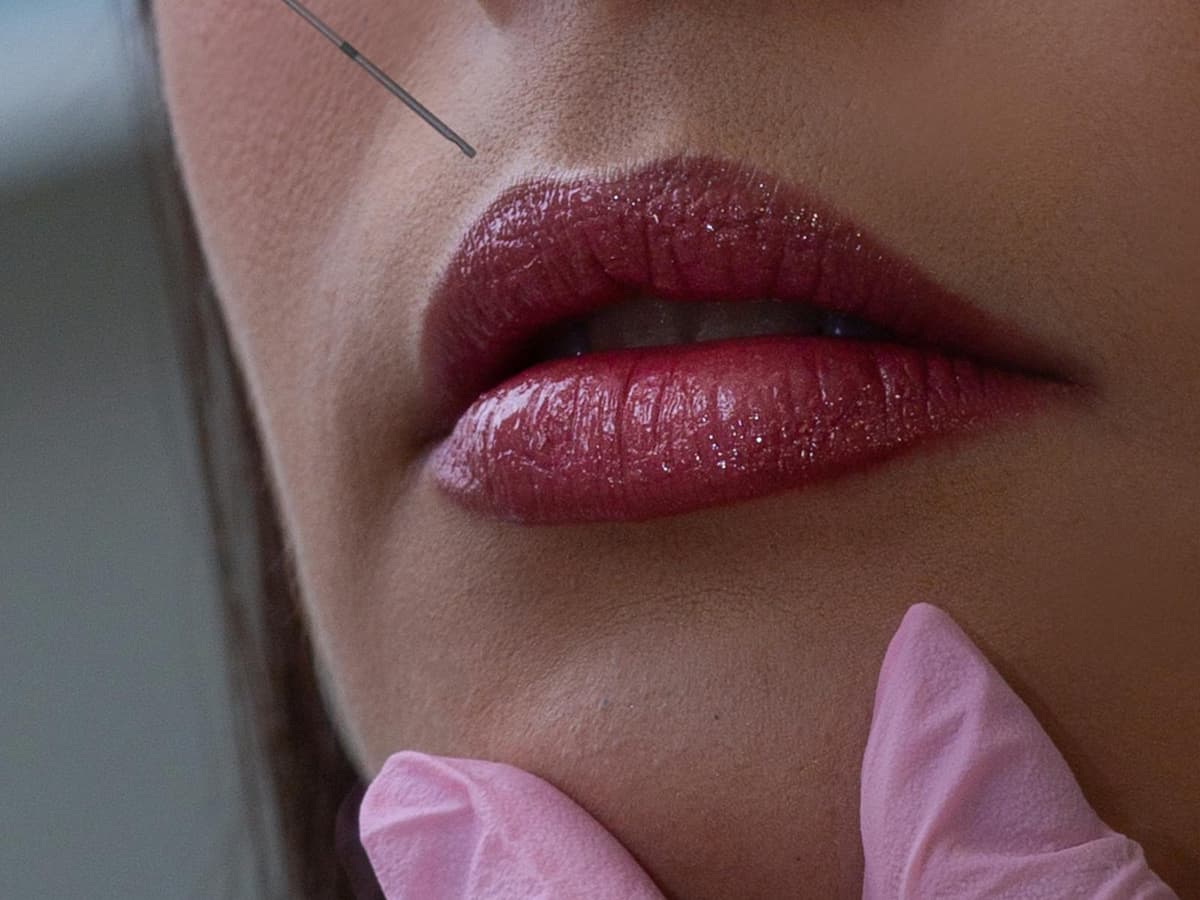
Hyaluronic acid injections that add subtle volume, definition, or hydration to the lips, from a soft natural enhancement to a more sculpted, defined shape.
See the clinics in your city that offer it, compare reviews, and request a free consultation.
Your location is used once to pick the nearest city and is never stored.
Lip filler is one of the most-requested aesthetic treatments because it can do so many different things (add subtle volume, fix asymmetry, restore lost fullness, sharpen the border for definition, or hydrate thin lips), all with the same basic procedure tuned to your goals. Done well, it looks like the best version of your own lips, not someone else’s.
How lip filler works
Lip filler uses a hyaluronic acid (HA) gel, the same family of products used elsewhere in the face, engineered specifically for the soft tissue of the lips. Different lip-specific products have different consistencies: thinner products like Juvederm Volbella integrate seamlessly for hydration and subtle plumping, while slightly firmer products like Restylane Kysse add more shape and definition.
The provider injects small amounts of product at specific points to achieve the desired effect: adding volume to the body of the lip, defining the vermillion border (the lip’s outline), correcting a flat upper lip, or balancing asymmetry between top and bottom.
What to expect during treatment
Most lip filler appointments take 30–45 minutes. Numbing cream is applied for 15–20 minutes; some providers also use a dental block for additional comfort. The provider then carefully places small amounts of filler with a fine needle or cannula, often massaging and stepping back to assess as they go.
Expect significant swelling immediately afterward. Lips swell more than almost any other filler area. You may also feel some tenderness or develop small bruises that take a few days to fade. Use ice intermittently for the first 24 hours and avoid heat, alcohol, and intense exercise for the rest of the day.
Results and timeline
Immediately: Visible result, but masked by swelling.
24–48 hours: Peak swelling (lips look fuller than they will settle).
3–5 days: Swelling subsides; bruising fades.
2 weeks: True final result visible. This is the right moment to assess.
If you’d like more, a touch-up at the 2-week mark is the conservative way to build to your desired look without over-correcting in one visit. Results typically last 6–12 months before a refresh is wanted.
Is lip filler right for you?
Strong candidates: people who want fuller, more defined, more hydrated, or more symmetric lips. That includes naturally thin lips, lips that have lost fullness with age, lips with an uneven top-to-bottom ratio, or lips you’d simply like to enhance. There’s no “right” lip: the right amount of filler is the amount that gives you the look you want while still reading as natural.
Contraindications include pregnancy/breastfeeding, active cold sores (the procedure can trigger an outbreak; providers often pre-treat with antivirals), certain autoimmune conditions, and allergies to filler components.
Risks and side effects
Common, temporary effects: swelling (always), bruising, tenderness, and small lumps you can feel that resolve as the filler integrates. Less common but serious: vascular occlusion (filler blocking a small blood vessel), which is why it’s critical to see a medically trained injector with deep anatomical knowledge and hyaluronidase on hand for emergencies. Cold sore activation is another reason to be honest about your history during consultation.
What affects the cost
Lip filler is priced per syringe, typically $600–$1,200 for a 1 mL syringe in the US. Many providers offer half-syringe pricing for first-timers or subtle enhancements.
Cost depends on:
How much product (most start with 0.5–1.0 mL).
Which product line: premium lip-specific products cost more.
Your injector’s expertise: physician-led practices typically charge more, and for lips especially, expertise matters.
Your city.
Loyalty programs (Allē, ASPIRE) reduce costs over time. If you’re considering a more dramatic look, build it over multiple visits rather than chasing it in one. This protects both your appearance and your investment.
Adds natural-looking volume, shape, or symmetry to the lips
Reversible (hyaluronic acid filler can be dissolved if you don't love it)
Results visible immediately
Multiple products engineered specifically for lips (Volbella, Kysse, Vollure)
Customizable, from subtle hydration to a more dramatic, defined look
Are you a good candidate?
Anyone wanting lips with more volume, definition, hydration, or symmetry, from very natural enhancement to a fuller, more sculpted look
By location
Find Lip Filler near you
7,312 clinics across 464 cities list Lip Filler on ClinicCompass. 3,724 of them (51%) say on their own websites that they offer financing or payment plans;
ask about approval and interest before you book.
Lip filler typically lasts 6–12 months. Lips are highly mobile (we talk, eat, drink, kiss constantly), so the product breaks down a bit faster than filler in less-mobile areas like the cheeks. Most people maintain their results with a touch-up once or twice a year.
Will my lips look fake or overdone?
Not if it's done well. A skilled injector starts conservatively (often half a syringe to one full syringe), works with your natural lip shape, and prioritizes definition and hydration over sheer volume. "Overfilled" lips come from too much product placed incorrectly or too quickly.
Does lip filler hurt?
Lips are sensitive. Most providers use a strong numbing cream and sometimes a dental block. The filler itself contains lidocaine. Discomfort is brief and manageable.
How much swelling should I expect?
Lips swell more than most filler areas. Expect significant swelling for 24–48 hours that resolves over 3–5 days. Your "final" result is best judged at 2 weeks. Don't book lip filler the day before a big event.
Can lip filler be dissolved?
Yes. Hyaluronic acid lip filler can be dissolved with an enzyme called hyaluronidase, usually in a single appointment. This reversibility is one of the main reasons HA fillers are the standard for lips.
How many syringes do I need?
Most people start with a half or full syringe (0.5–1.0 mL). A single syringe creates a noticeable but natural enhancement for most lips. Larger lips or more dramatic looks may use 1–2 syringes total, often built up across multiple visits.
Sources
Where this information comes from
Clinical facts on this page are checked against these primary sources.
1.FDA-Approved Dermal Fillers, U.S. Food and Drug AdministrationHyaluronic acid is an FDA-approved dermal filler material, and its effects typically last about 6 to 12 months.
2.Dermal Fillers (Soft Tissue Fillers), U.S. Food and Drug AdministrationCommon side effects (bruising, redness, swelling, pain, tenderness) and contraindications such as pregnancy, breastfeeding, bleeding disorders, and severe allergies.
3.Dermal Filler Do's and Don'ts for Wrinkles, Lips and More, U.S. Food and Drug AdministrationVascular occlusion (filler blocking a blood vessel) is the most serious risk of filler injection and can cause tissue necrosis, blindness, or stroke.
4.Dermal Fillers Recovery, American Society of Plastic SurgeonsRecovery and downtime after filler injection, including swelling and bruising that improve within a matter of hours to a few days.
5.Fillers: FAQs, American Academy of DermatologyTemporary side effects like redness, swelling, tenderness, and bruising typically clear within 7 to 14 days, and the importance of choosing an experienced injector.
6.How Should We Use Hyaluronidase for Dissolving Hyaluronic Acid Fillers?, National Institutes of Health (PubMed Central), Journal of Cosmetic DermatologyHyaluronic acid lip filler can be dissolved with the enzyme hyaluronidase, including as emergency treatment for vascular occlusion.