See the clinics in your city that offer it, compare reviews, and request a free consultation.
Your location is used once to pick the nearest city and is never stored.
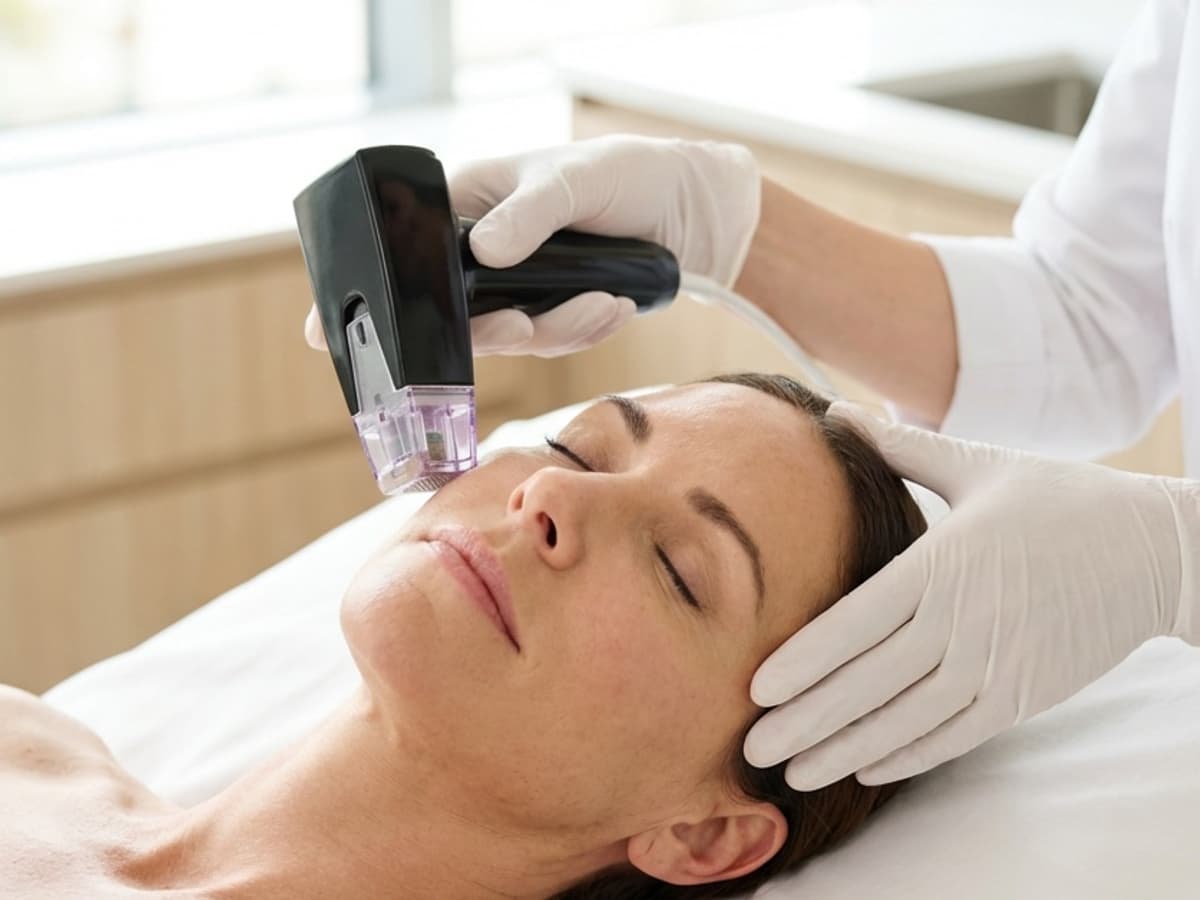
Morpheus8 is a radiofrequency (RF) microneedling treatment that combines two proven approaches (microneedling and deep heat) to remodel the skin from within. Tiny needles create controlled micro-injuries while delivering radiofrequency energy into the deeper layers, triggering a powerful wound-healing and collagen-building response. The result is firmer, smoother, more even skin without surgery.
How Morpheus8 works
A handpiece presses an array of ultra-fine, insulated microneedles into the skin at an adjustable depth. As the needles penetrate, they emit radiofrequency energy that heats the underlying tissue (the dermis and, in some applications, the subdermal fat). This does two things at once:
Microneedling stimulates the skin’s natural repair process, boosting new collagen and elastin.
Radiofrequency heat contracts existing collagen immediately and remodels deeper structural tissue, which tightens and refines the skin over time.
Because the energy is delivered at depth and isn’t absorbed by surface pigment, Morpheus8 is safer for a broad range of skin tones than many resurfacing lasers, a meaningful advantage for people with deeper complexions who are often poor candidates for ablative lasers.
What to expect during treatment
A numbing cream is applied for about 30–45 minutes before treatment. The session itself takes 30 to 60 minutes depending on the area. You’ll feel heat and a prickling pressure, more noticeable over bony areas like the jaw and forehead. Afterward, the skin looks red and feels warm, similar to a sunburn, and you may see a faint grid pattern and minor pinpoint scabbing.
Results and timeline
Morpheus8 delivers a mix of immediate and progressive results:
First 1–2 weeks: Skin feels tighter as initial collagen contracts; redness resolves.
4–6 weeks: Texture and tone visibly improve.
3–6 months: Full results as new collagen continues to build, especially after a full series.
Most providers recommend a series of three sessions spaced four to six weeks apart for the best outcome, with results that can last a year or longer.
Is Morpheus8 right for you?
It’s an excellent option for people with mild to moderate skin laxity, acne scarring, enlarged pores, uneven texture, or early sagging along the jawline and neck who want meaningful improvement without surgery or significant downtime. It’s not a substitute for a facelift in cases of advanced sagging, and very deep wrinkles may need a combination approach. A consultation will confirm whether your concerns are well matched to the treatment.
Risks and side effects
Expected effects include redness, swelling, tenderness, and minor scabbing that resolve within several days. Less commonly, there can be bruising or prolonged redness. Because the radiofrequency reaches the fat layer, some fat reduction is possible on the face as well as the body, welcome under the chin and less so in a cheek that is already lean, so tell your provider if you want to keep facial fullness. Rare complications, more often with aggressive settings, include pigmentation changes, scarring, fat loss, disfigurement and nerve damage. Choosing a skilled provider who sets the device appropriately for your skin type is the single biggest factor in a safe, effective result.
What affects the cost
Cost is usually quoted per session and varies with the size and number of areas (face only versus face plus neck, or body areas), the depth and technology used, your provider’s expertise, and your city. Because a series of three is standard, factor the full course into your budget. Many clinics offer package pricing for the complete series.
Combines microneedling with radiofrequency to remodel collagen deep in the skin
Treats wrinkles, acne scars, texture, pores, and mild sagging in one technology
Safe for most skin tones, including deeper complexions
Stimulates ongoing collagen production for results that improve over months
Are you a good candidate?
Mild to moderate skin laxity, acne scarring, enlarged pores, or early sagging on the face, neck, or body
By location
Find Morpheus8 near you
3,464 clinics across 460 cities list Morpheus8 on ClinicCompass. 1,557 of them (45%) say on their own websites that they offer financing or payment plans;
ask about approval and interest before you book.
"Better" depends on what you're trying to fix. For deep wrinkles and significant sun damage, ablative laser resurfacing (CO2, Erbium) produces more dramatic results in fewer sessions, at the cost of significantly longer downtime (1–2 weeks vs. 1–3 days). For surface texture and pore size only, Halo or Fraxel may be comparable. For significant skin laxity, a surgical facelift is more powerful. Morpheus8's strength is being a single treatment that addresses laxity + texture + acne scars + early sagging with relatively minimal downtime, on a wide range of skin tones. For most patients in the "early-to-moderate concerns" range, it's the best balance of results vs. recovery.
Which is better, Fraxel or Morpheus 8?
Different tools for different problems. Fraxel is a non-ablative fractional laser that excels at surface concerns (pigmentation, sun damage, fine lines, and texture) by treating microscopic columns of skin. Morpheus8 is RF microneedling that targets deeper structural concerns: skin laxity, jawline definition, acne scars, and collagen remodeling at depth. Fraxel is safer on superficial pigmentation; Morpheus8 is safer for deeper skin tones (the RF doesn't target pigment). Both can be combined in a complete skin protocol. Your provider should recommend based on your specific concerns rather than picking one universally.
Is Morpheus 8 stronger than microneedling?
Yes, significantly. Standard microneedling uses tiny needles to create controlled micro-injuries that stimulate surface-level collagen production. Morpheus8 adds radiofrequency energy delivered through the needles into the deeper skin layers (and into subdermal fat tissue with certain tips), creating a much more powerful collagen-building and tissue-remodeling response. Results from Morpheus8 are more dramatic for skin tightening and structural concerns, with longer-lasting effects (12–18+ months vs. 6 months for standard microneedling). Cost is higher, and downtime is slightly longer.
What procedure takes 10 years off your face?
No single non-surgical procedure consistently does this. That's marketing language. The closest combinations: (1) a full Morpheus8 series + Botox + cheek/jawline filler can produce a meaningful refresh that many patients describe as "looking 5–10 years younger"; (2) laser resurfacing (ablative CO2) is the most aggressive non-surgical option for dramatic skin renewal; (3) a deep plane facelift remains the gold standard for actual decade-scale results. Beware of any provider promising "10 years off your face" from a single treatment. Realistic expectations + a combination plan + a skilled provider deliver the best outcomes.
What does Morpheus8 actually treat?
Fine lines and wrinkles, acne scars, enlarged pores, uneven texture, mild-to-moderate skin laxity, early jowling, and stubborn pigmentation. It's used most commonly on the face and neck, but also on the jawline, décolletage, abdomen, knees, and arms. It's NOT a fit for: deep static wrinkles set in at rest (need lasers or filler), significant skin sagging (need surgical facelift), or active acne (treat first, Morpheus8 later).
Is Morpheus8 safe for darker skin tones?
Yes. This is one of its biggest advantages. The radiofrequency energy targets depth, not pigment, so Morpheus8 carries a much lower risk of pigment changes (hyperpigmentation, hypopigmentation) than ablative or pigment-targeted lasers. It's one of the few advanced skin remodeling treatments considered safe across Fitzpatrick I–VI skin types. Your provider should still tailor depth and energy settings to your specific skin, but the core risk profile is dramatically better than CO2, Fraxel, BBL, or IPL for medium-to-deep complexions.
How painful is Morpheus8?
Manageable with numbing. Providers apply a topical numbing cream for 30–45 minutes before treatment, which significantly reduces discomfort. You'll feel pressure and heat with each pass of the device, and bonier areas (forehead, jawline, around the mouth) feel more intense than fleshier areas (cheeks, neck). Discomfort is brief during treatment and resolves within hours afterward. Most patients describe it as "5–6 out of 10" tolerable, not severe.
How long is the downtime after Morpheus8?
Expect 1–3 days of redness resembling a sunburn, often with minor swelling, tiny scabs, and a visible grid-like pattern on the skin. Most patients return to work within 1–2 days and can apply mineral makeup after 24–48 hours to cover residual redness. The skin may feel sandpapery for a week as it heals and renews. Significantly less downtime than ablative laser resurfacing (which can require 1–2 weeks of recovery).
What's the Morpheus8 results timeline?
Morpheus8 results build progressively over months as new collagen forms. Realistic timeline: Day 1: slight tightness from initial collagen contraction, but mostly redness/swelling. Week 2: initial smoothing visible as inflammation resolves. Week 4–6: first meaningful changes in skin tone, texture, and early tightening. Month 3: primary results visible as collagen building peaks. Month 6: full results from a single session. Patients who follow the recommended 3-session series (4–6 weeks apart) see compounding results, with peak benefit roughly 3 months after the final session.
What results can I expect after 1, 2, or 3 Morpheus8 treatments?
After 1 treatment: subtle initial improvement in texture and minor tightening. Most patients describe it as "refreshed-looking" but not dramatic. Some Reddit reviews of single-treatment Morpheus8 are underwhelming because expectations exceeded what one session can deliver. After 2 treatments: visible improvement in laxity, texture, and tone. This is where most patients start seeing meaningful change. After 3 treatments (the standard recommended series): peak results, measurable skin tightening, smoother texture, improved jawline definition, reduced acne scarring. Significant differences exist between providers and patient response, but the standard guideline is 3 sessions for full benefit.
Does Morpheus8 work on the stomach or abdomen?
Yes. Morpheus8 Body (using the deeper Morpheus8 Burst or Morpheus8 Body tips) is specifically designed for body areas including the abdomen, knees, arms, thighs, and bra-line. It addresses two common post-pregnancy or post-weight-loss concerns: loose skin laxity AND remaining stubborn fat in the subdermal layer (the deeper tips can target both). Results on the body take longer to develop (4–6 months) than on the face and typically require 3 sessions for noticeable change. Cost on the body is higher than face because larger areas require more time and energy. Most candidates are within 15–20 lbs of goal weight with mild-to-moderate skin laxity rather than significant excess skin.
Sources
Where this information comes from
Clinical facts on this page are checked against these primary sources.
2.Microneedling Devices, U.S. Food and Drug AdministrationBacks the redness, bruising, bleeding, infection, and possible pigment-change side effects described in the Risks and side effects section.
3.510(k) Clearance K240017: InMode System with the Morpheus8 90 Applicator, U.S. Food and Drug AdministrationConfirms Morpheus8 is FDA 510(k)-cleared (not FDA-approved) for coagulation and contraction of soft tissue via fractional radiofrequency, matching the page's description of radiofrequency heat contracting collagen and remodeling tissue.
5.Microneedling can fade scars, uneven skin tone, and more, American Academy of DermatologyStates that radiofrequency microneedling is safe for all skin tones, backing the page's claim that Morpheus8 is safe for darker complexions.
6.FDA Safety Communication on RF Microneedling, American Society for Dermatologic Surgery and American Society for Laser Medicine and SurgeryStates RF microneedling can be performed safely and effectively across skin types when done by a trained, board-certified physician, backing the page's point that provider skill is the biggest factor in a safe result.