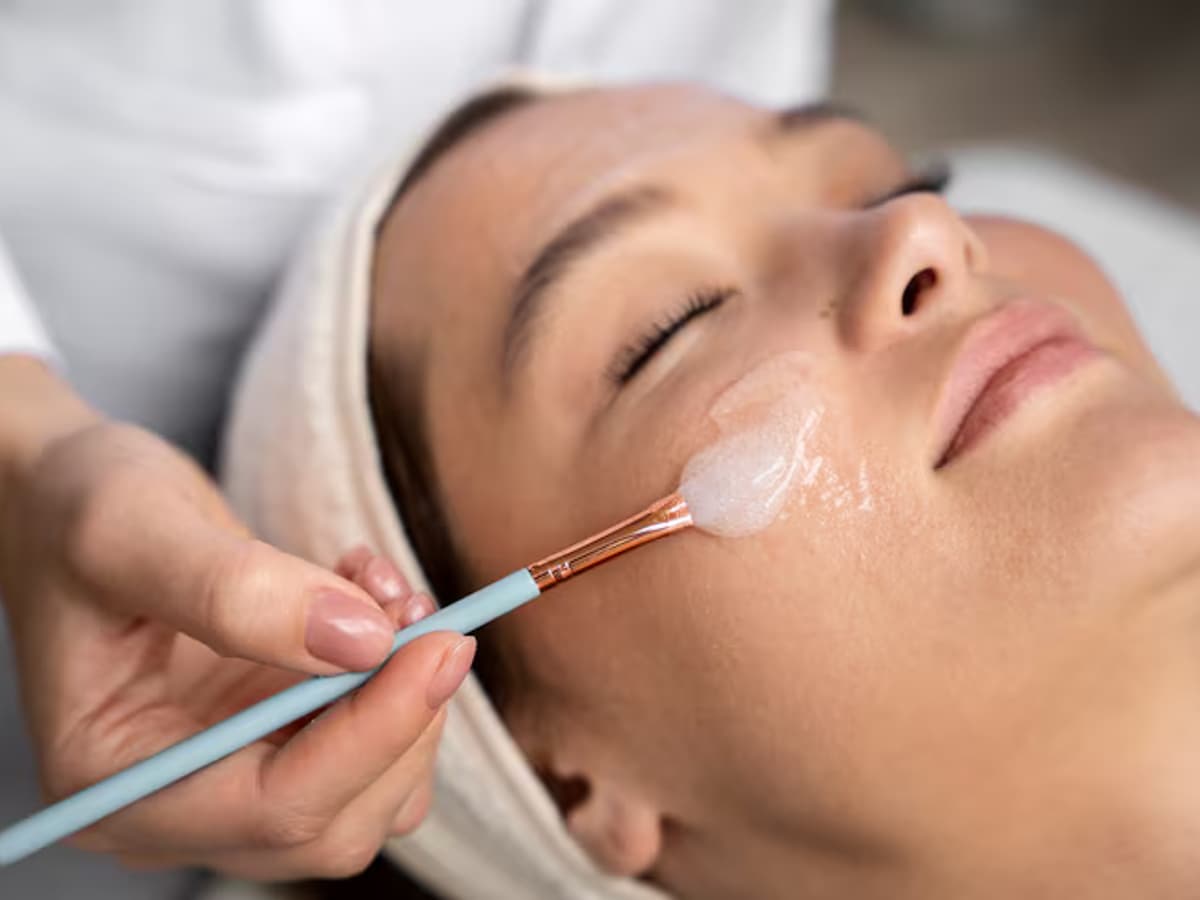
A controlled chemical exfoliation that removes damaged outer skin layers, revealing brighter, smoother, more even skin and improving fine lines, sun damage, acne, and hyperpigmentation.
Also called: Glycolic peel, TCA peel, Salicylic peel, VI Peel, Jessner's peel, Perfect Derma Peel
See the clinics in your city that offer it, compare reviews, and request a free consultation.
Your location is used once to pick the nearest city and is never stored.
Chemical peels are one of the oldest and most reliable tools in skincare for a reason: a properly chosen peel can do a remarkable amount for the skin (fading sun damage, smoothing texture, clearing acne, lifting hyperpigmentation, and softening fine lines) at a fraction of the cost of laser resurfacing. The key is matching the right depth to your skin and your goals.
How chemical peels work
A chemical peel is a controlled chemical exfoliation: the provider applies a carefully formulated acid solution to the skin, which loosens the bonds between damaged surface cells so they shed and reveal fresher, healthier skin underneath. Depending on the formulation, the peel works at three depths:
Light peels (glycolic, salicylic, mandelic, lactic acid) exfoliate the outermost layer for an immediate glow and gradual improvement.
Medium peels (TCA, Jessner’s, VI Peel, Perfect Derma) penetrate into the upper dermis to address sun damage, fine lines, mild scarring, and uneven tone.
Deep peels (TCA combined with glycolic acid or Jessner’s; the deepest is a modified phenol peel) reach the mid-dermis for dramatic resurfacing, comparable to ablative laser results.
Beyond the surface effect, peels stimulate new collagen production as the skin heals, which is why the benefit continues for weeks after the peel itself is done.
What to expect during treatment
A peel appointment typically takes 30–60 minutes. After cleansing, the provider applies the peel solution in passes, watching for the right level of frost or color change that signals the target depth has been reached.
Light peels: Mild tingling, no anesthesia needed. You may leave looking flushed but normal.
Medium peels: Stronger stinging managed with cool air, a fan, or a handheld cool roller. The skin will tighten and darken before peeling begins.
Deep peels: Performed with sedation or strong numbing; typically a one-time procedure.
Afterward, you’ll get specific aftercare instructions: gentle cleanser, occlusive moisturizer, strict sun avoidance, and no picking at peeling skin.
Results and timeline
Light peel: Brighter, smoother skin within a few days; cumulative improvement over a series of 3–6.
Medium peel: Peeling on days 3–7; final result visible at 2 weeks with continued improvement for 1–3 months.
Deep peel: About 2 weeks before you can wear makeup; dramatic transformation visible as healing completes; results can last years.
Is a chemical peel right for you?
Peels work for a wide range of concerns:
Sun damage and hyperpigmentation: medium peels are highly effective.
Active acne and oily skin: salicylic-based peels reduce breakouts and unclog pores.
Fine lines and dull texture: glycolic and lactic peels for a series-based glow.
Mild melasma: specialized peels (Cosmelan, Jessner’s) used carefully by experienced providers.
Mild scarring: medium peels can soften surface scarring.
Avoid peels with: active cold sores or infections, recent isotretinoin use, sunburn, pregnancy (for many formulations), or active inflammatory skin conditions. Your provider will screen carefully.
Risks and side effects
Common, expected effects: redness, peeling, dryness, temporary darkening of treated spots before they shed. Less common: prolonged redness, mild irritation, transient breakouts as the skin clears.
The main risk to know about, post-inflammatory hyperpigmentation (PIH), is more common in medium-to-deep skin tones with aggressive peels, which is why provider expertise and peel selection matter enormously. An experienced provider chooses the right peel and depth for your skin and may pre-treat with topical regimens to reduce risk.
What affects the cost
Chemical peels span a very wide cost range ($100–$600+ per session in the US) based on:
Depth: light peels are the most affordable; medium peels cost meaningfully more; deep peels are the priciest.
Brand of peel: branded protocols (VI Peel, Perfect Derma, Cosmelan) cost more than generic glycolic.
Number of sessions: light peels are usually sold in packages of 3–6 at a discount.
Provider type: esthetician vs. medical provider (some peels are medical-only).
For maintenance, a series of light peels delivers excellent value. For a focused reset, a single medium peel can do what a long series of lights would take. Match the depth to your goal and budget honestly.
Effective for sun damage, fine lines, acne, melasma, and uneven tone
Range of depths, from a gentle lunchtime refresh to dramatic resurfacing
One of the most affordable medical-grade skin treatments
Boosts the absorption and effectiveness of your home skincare
Works well combined with microneedling, lasers, or HydraFacial
Are you a good candidate?
People with dull skin, sun damage, fine lines, acne, mild scarring, melasma, or uneven tone wanting visible improvement at varying intensity levels
By location
Find Chemical Peel near you
7,331 clinics across 464 cities list Chemical Peel on ClinicCompass. 3,562 of them (49%) say on their own websites that they offer financing or payment plans;
ask about approval and interest before you book.
What's the difference between light, medium, and deep peels?
Light peels (glycolic, salicylic) exfoliate the surface for a refresh (minimal downtime, often done in a series). Medium peels (TCA, Jessner's) reach the upper dermis for stronger results. Expect 5–7 days of peeling. Deep peels (TCA combined with glycolic acid or Jessner's, and at the deepest a modified phenol peel) penetrate further and can dramatically resurface skin (about 2 weeks before you're back in makeup). Most people start light and step up as needed.
Does a chemical peel hurt?
Light peels feel like a warm, tingling sensation for a few minutes. Medium peels burn and sting more, and providers use cool air or compresses to manage discomfort. Deep peels require sedation or strong numbing. Most people tolerate light and medium peels well.
How much will I actually peel?
Light peels often produce no visible peeling, just a brighter glow over a few days. Medium peels produce moderate flaking and peeling for 5–7 days that's manageable. Deep peels produce significant peeling over 1–2 weeks. Plan downtime accordingly.
Are peels safe for darker skin tones?
Light peels (glycolic, salicylic, mandelic) are generally safe across skin tones. Medium and deeper peels require more care on medium-to-deep skin tones because of pigmentation risk. Jessner's and some TCA protocols are commonly used safely on darker skin by experienced providers. An experienced provider tailoring the peel to your skin is essential.
Can I wear makeup after?
After a light peel, usually yes within a few hours. After a medium peel, plan to skip makeup for several days while skin is actively peeling. After a deep peel, you'll be in healing mode for about 2 weeks before makeup makes sense.
How many sessions do I need?
Light peels are typically done in a series of 3–6 spaced 2–4 weeks apart. Medium peels often work well as a standalone or repeated every 6–12 months. Deep peels are usually a one-time procedure with results that can last years.
Sources
Where this information comes from
Clinical facts on this page are checked against these primary sources.
1.Chemical Peels for Skin Resurfacing, StatPearls Publishing, National Library of Medicine (NIH Bookshelf)Confirms the light, medium, and deep peel depth classification and agents (light: TCA, glycolic, or salicylic acid; medium: TCA combined with Jessner's solution or glycolic acid; deep: high-strength TCA or phenol), what each depth treats, and that active infection, active or recent isotretinoin use, and pregnancy are contraindications.
2.Chemical peels: FAQs, American Academy of DermatologyConfirms that recovery time increases with peel depth and that people with skin of color should see a dermatologist experienced in treating darker skin tones to avoid permanent pigment problems.
3.Chemical Peels, American Society for Dermatologic SurgeryCorroborates the agents used at each peel depth (superficial: alpha-hydroxy acid; medium: glycolic or trichloroacetic acid; deep: trichloroacetic acid or phenol) and that cold sore reactivation and skin color change are possible risks.
4.Light Chemical Peel, American Society of Plastic SurgeonsConfirms light peel agents (glycolic, lactic, and salicylic acid) and that a light peel is used for uneven pigmentation, dryness, acne, and fine wrinkling.
5.Deep Chemical Peel, American Society of Plastic SurgeonsConfirms phenol is the deep-peel agent, that deep peels treat deep wrinkles, sun damage, and scars, and that results from a single deep peel can last for years.
6.Chemical Peel Risks and Safety, American Society of Plastic SurgeonsConfirms chemical peel risks including infection, scarring, temporary or permanent skin color change, and reactivation of prior cold sores.
7.Complications of Medium Depth and Deep Chemical Peels, Journal of Cutaneous and Aesthetic Surgery, National Library of Medicine (PMC)Confirms post-inflammatory hyperpigmentation is a more common complication in dark-skinned patients, that recent isotretinoin use is a risk factor requiring a waiting period before peels, and that patients with a history of cold sores should get antiviral prophylaxis before peeling.