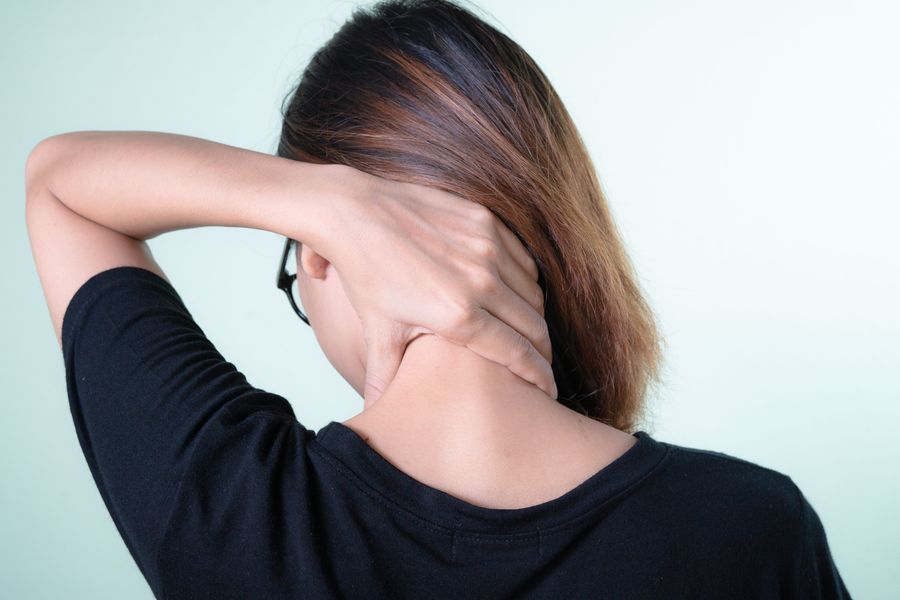

The fat pad that forms at the base of the neck, between the shoulders, has an unflattering nickname and a more complicated story than most aesthetic concerns. It is one of the few places where the right first step might not be a clinic at all.
Start with why it is there
Most dorsocervical fat pads are unremarkable. Genetics decide where your body stores fat, and for some people this is one of those places. Posture and a rounded upper back can make an ordinary pad look more prominent than it is.
But this specific fat pad is also a recognised clinical sign. Long-term corticosteroid use causes it. So does Cushing’s syndrome, where the body overproduces cortisol. Certain older HIV antiretroviral regimens were strongly associated with it. If yours appeared over months rather than years, or arrived alongside weight gain around the abdomen, thin or easily bruised skin, or purple stretch marks, that combination is worth a doctor’s opinion before anything else.
This is not a reason to panic. It is a reason to sequence properly. Freezing the fat off a pad driven by an active medical cause treats the symptom and leaves the cause running.
If it is simple fat
CoolSculpting is the primary non-surgical tool. An applicator draws the pad in and cools it to the temperature that destroys fat cells without damaging skin, taking out roughly a fifth to a quarter of the treated cells per session. Most people need two or three sessions, and the change builds over two to three months.
The honest limit: it only works on soft, pinchable fat. Some buffalo humps are firm and fibrous rather than soft, and those do not respond well to freezing. A provider who pinches the area and tells you it will not work is giving you the most valuable thing in the consultation.
Kybella is used here off-label. Deoxycholic acid dissolves fat cells chemically, and in experienced hands it can address a small, well-defined pad. The area needs considerably more product than a chin does, swelling is substantial, and experience at this specific site varies enormously between injectors. Ask directly how many times they have treated it.
If the skin is the problem
Removing volume from an area with loose skin can leave it looking softer rather than tighter. Radio-frequency or ultrasound tightening, or Morpheus8 where mild laxity and mild fullness sit together, firms the envelope so the area lies flat after the fat is gone. The strongest results often sequence both: reduce, then tighten.
Significant laxity, or a pad too large or too fibrous for devices, is a surgical conversation. Liposuction and excision are established options here, and a provider willing to route you there rather than sell you three sessions that will not work is the one to trust.
What a good consultation looks like
It starts with history, not price. When did it appear, how fast, what medications are you on, has anything else changed. Then the pinch test, to separate soft fat from firm tissue and from the bony prominence of the upper spine. Only then a plan, quoted across the full arc of sessions rather than as a single teaser number.
If the consultation skips the history and goes straight to a package price, you are being sold to rather than assessed.