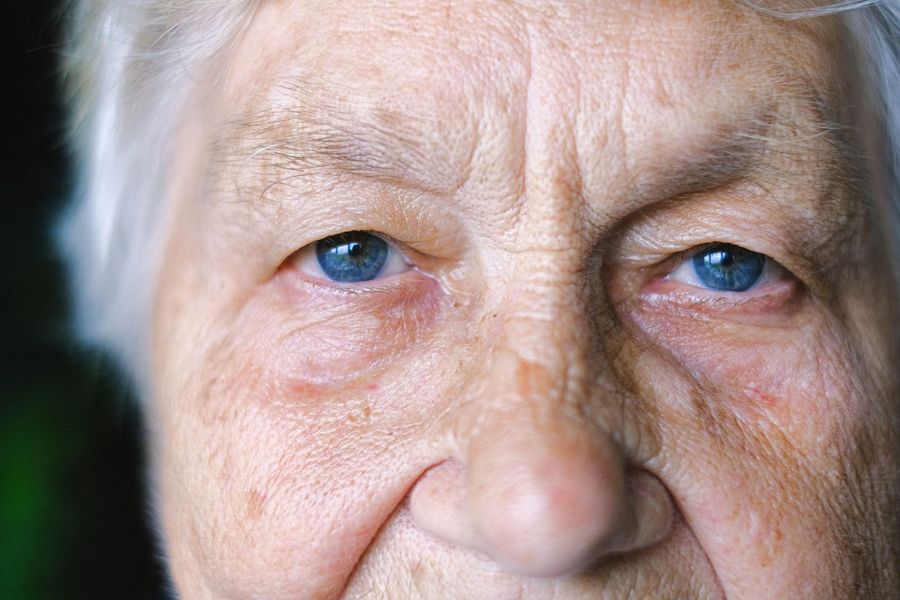

Heavy eyelids are the complaint behind much of what people call looking tired. The upper lid develops a fold of skin that rests on the lashes, the crease disappears, eye makeup has nowhere to go, and in advanced cases the fold blocks the upper field of vision. It comes from skin stretching with age, from a brow that has descended onto the lid, or from both, and occasionally from a lifting muscle that has weakened. Each has a different fix, and a surgeon sorts them in the first minute of a consultation.
Excess lid skin
The most common cause. Upper eyelid skin is the thinnest on the body and loses elasticity early, forming a fold that hangs over the lash line. Upper blepharoplasty removes the excess skin and, where needed, a small amount of fat, through an incision placed in the natural crease so the scar disappears into it. The procedure takes about ninety minutes, often under local anesthesia with sedation. The result is an open, rested eye with a visible crease, and it lasts around ten years. It is among the highest-satisfaction procedures in facial surgery.
When the fold is severe enough to obstruct vision, insurance frequently covers the surgery, with a visual field test as the usual evidence.
A dropped brow
Sometimes the lid skin is fine and the brow has descended onto it, pushing the skin down. The finger test tells you: lift the brow gently and see whether the heaviness resolves. If it does, a brow lift is the treatment, raising the brow back to its natural position and clearing the lid without removing skin. Removing lid skin in this situation can pull the brow lower and make the eye look worse, which is why the assessment matters. Many people over 55 need both, and surgeons often combine them.
For early, mild heaviness, Botox placed off-label to relax the muscles that pull the brow down gives a modest lift for a few months, and radio-frequency or ultrasound tightening around the brow firms mild laxity over a series. Neither replaces surgery once skin genuinely hangs.
A weak lifting muscle
Less often, the lid itself droops because the muscle that raises it has stretched, a condition called ptosis. It looks like heaviness but the lid margin sits low across the pupil. A specific repair of that muscle corrects it, sometimes combined with blepharoplasty. An eye-focused surgeon will check for it routinely.
Recovery and result
Bruising and swelling for one to two weeks, stitches out at about a week, back at work in seven to ten days. The scar hides in the crease. Results are visible at two weeks and refined over a few months.
How to choose a provider
Ask the surgeon to do the brow test and check for ptosis, and to explain which problem you have before naming a procedure. Ask how many upper lid surgeries they do a year and to see results at six months, with the eyes open and closed. If vision is affected, ask about the insurance assessment.
Browse the surgeons below. Photographs of your eyes from ten years ago help the surgeon see what has changed.