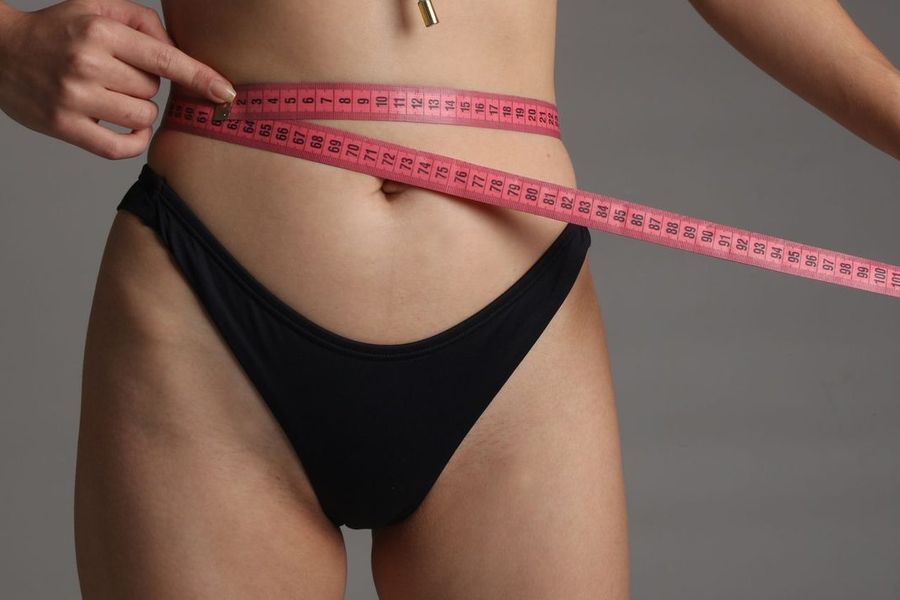
Hip dips are the indent on the side of each hip, between the point of the hip bone and the top of the thigh. People searching for a fix usually assume they are fat or a lack of muscle. They are neither. The dip is the space between the ilium, the hip socket and the greater trochanter, the knob at the top of the femur. How visible it is depends on how wide your pelvis is, how long the neck of your femur is and how large that knob is. Everyone with a typical skeleton has them. Women show them more because the female pelvis is built to carry a pregnancy. Fat and muscle can soften or sharpen the line, but they do not cause it.
So the honest answer starts with what cannot change: the bone. What can change is the soft tissue over it, and that is what the clinics below work on.
What exercise does and does not do
Building the gluteal muscles with squats, lunges, bridges and hip thrusts is good for your hips and may fill the divot a little. It will not remove it. Losing weight often makes dips more visible, because there is less over the bone. If a program promises to erase hip dips with a workout, it is selling the workout.
Filling the dip
Fat transfer is the larger answer. A surgeon takes fat by liposuction from the waist, back or thighs, prepares it and places it into the dips, usually in the same operation as a Brazilian butt lift. The fat that survives is yours for good. The catch is that fat survival is unpredictable: a surgeon quoted by the plastic surgery society puts it at 50 to 90% depending on technique and aftercare, which is why a second round is common and why you need enough spare fat to begin with. The larger catch is safety. Gluteal fat grafting has carried a death rate estimated as high as one in 3,000, the highest of any cosmetic operation, which the plastic surgery societies attribute to how technically difficult it is and to surgeons who are not board-certified plastic surgeons performing it. This is a procedure where the surgeon’s training is the whole decision.
Sculptra is the smaller answer. A collagen stimulator is injected into the dips over two or three sessions and the body builds tissue there over months. On the hips this is off-label: the product is approved for facial folds and wrinkles. The result is modest, builds slowly and needs repeating, which suits a shallow dip and a person who does not want surgery. It is not for anyone prone to keloids.
CoolSculpting fills nothing. What it can do is reduce the fat bulge above the dip, at the flank, or below it, at the outer thigh, so the indent reads as a smoother curve. It is cleared for both of those areas and is a supporting move, not a fix.
When the answer is to leave it
If your dips are mild and the thing bothering you is a photo angle or a pair of jeans, that is worth saying out loud before a consultation, because every option here is a cosmetic procedure with real cost and, in the case of fat transfer, real risk, aimed at a normal feature of the skeleton. A good provider will tell you when the change on offer is smaller than the dip you are pointing at.
How to choose a provider
For fat transfer, a board-certified plastic surgeon who does this operation often; ask how they follow the plastic surgery societies’ safety recommendations for gluteal fat grafting, what their survival rates look like at a year, and how they handle a second round. For Sculptra, ask how many body treatments they do, how many vials they expect to use, and what you will see at six months. For any injectable, ask the product’s name and ask to see the box. Choose on training and results, never on price.
Browse the clinics and surgeons below. Take a photo from the side and the back in fitted clothing; it is the view a provider needs and the one you will compare against later.