A razor bump is a hair that grew back into its own skin. Shaving cuts the hair to a sharp point; on coarse, curly hair the point curls round as it grows, pierces the skin or the follicle wall, and the body treats it as a foreign object. The result is the red, sometimes pus-filled bump that appears a day or two after shaving, on the beard and neck in men and on the bikini line, underarms and legs in women. The medical name is pseudofolliculitis barbae. It is especially common in men with darker skin tones, and it comes back with every shave because the cause is the hair itself.
Managed for years, it does damage. The American Academy of Dermatology is blunt about this: men who keep getting bumps can develop permanent deep grooves and raised scars on the face. The time to deal with it is before that.
First, the free fixes
Growing the beard clears the bumps, with fewer within a month and clear skin by about three months. If you need to shave, the technique matters more than the product: wash first, soften the hair with a warm compress or shave after a shower, use a moisturizing shave cream and a sharp single blade or an electric razor, shave with the grain in short strokes and no more than two passes, never stretch the skin, never pluck a hair out of a bump, and leave two or three days between shaves. Brushing the hairs in one direction every day reduces new bumps. If you are doing all of that and still breaking out, you have reached the point where a clinic earns its fee.
The treatment that ends it
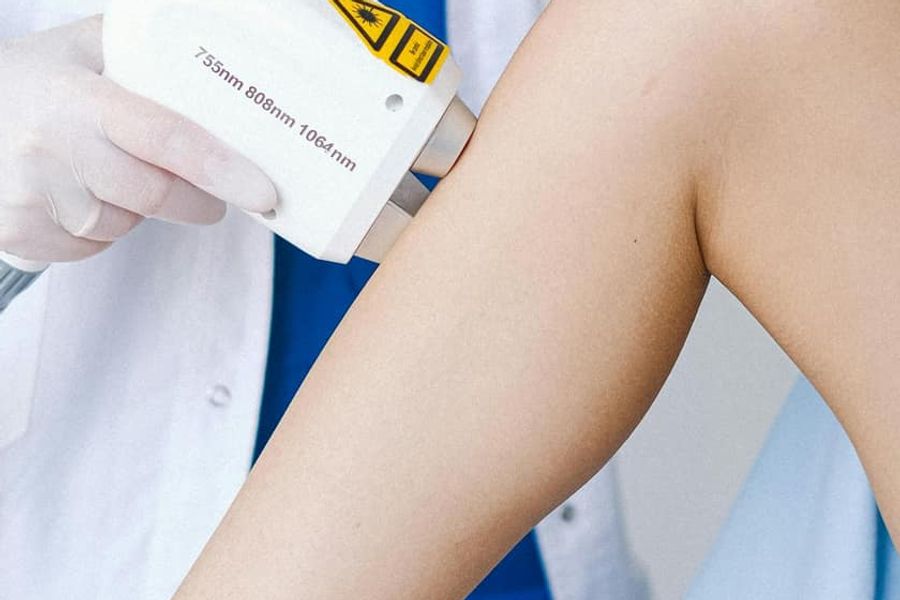
Laser hair removal works on razor bumps for a simple reason: a hair that has been thinned to nothing cannot curl back in. In studies on the beard and neck, more than half the bumps were gone after a series, and individual trials reported reductions of roughly 56% to 91%. The reduction is permanent on most of the body, with occasional touch-ups, over six sessions or more.
Skin tone decides the device. On darker skin the long-pulsed Nd:YAG laser is the one reported safe and effective in the deepest skin types, because it reaches the follicle while largely sparing the pigment above it. The side effects reported in these studies were temporary darkening or lightening, redness and crusting. Ask the clinic which laser it uses on skin like yours and how many patients with your skin tone it treats; a clinic that answers with a device name and a number is the one to book.
One limit to know: on a woman’s face, hormones keep recruiting new hair, so laser is not permanent there and the bumps can return if the hair does.
What the bumps leave behind
Once new bumps stop, the dark marks fade on their own, and a light chemical peel evens the tone and smooths rough texture faster. Raised scars and grooves are a different matter. They are permanent, and nothing on a spa menu removes them. Severe scarring is a dermatologist’s problem, and a good clinic will say so before selling a series.
How to choose a provider
Ask which laser they use for your skin type and why. Ask to see results on someone with your skin tone and your beard or hair pattern. Ask what a test patch showed. And ask what they do when a client has active, infected bumps, because the honest answer is to calm those first, sometimes with a prescription from a dermatologist, and laser once the skin is quiet.
Browse the clinics below. Stop shaving the area for a few days before a consultation so the provider can see the hair and the skin as they are.