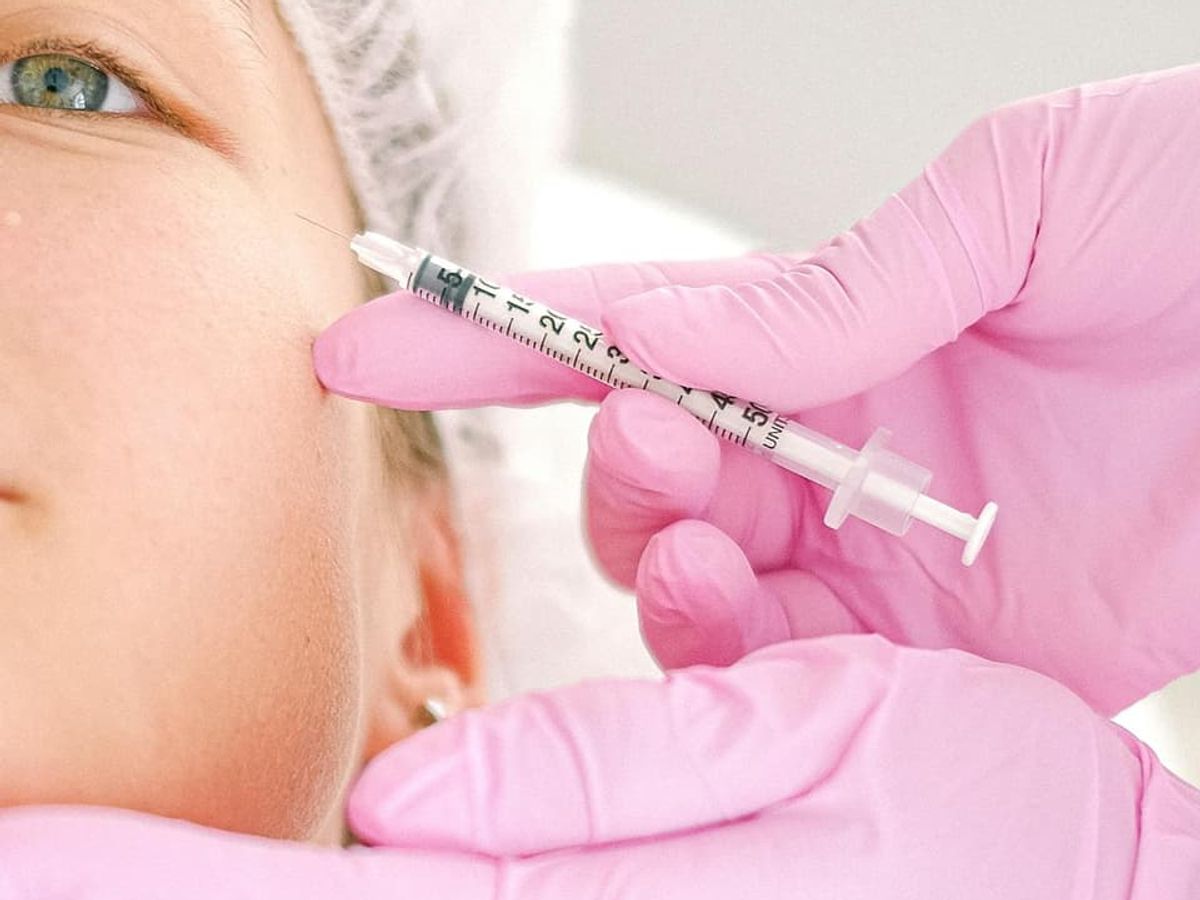
Botox injected into the jaw muscles to slim a square jawline, relieve teeth grinding, and ease TMJ-related tension. One treatment, cosmetic and functional benefits.
Also called: jaw botox, jaw slimming, TMJ botox, bruxism botox
Masseter Botox is the rare aesthetic treatment that’s equally famous for a cosmetic result and a medical one: it slims a square jawline and it’s one of the most effective treatments available for teeth grinding and jaw tension. A large share of patients book it for one benefit and stay for both.
How it works
The masseter is your primary chewing muscle. Put your fingers at the back corners of your jaw and clench, and you’ll feel it bulge. In chronic clenchers and grinders, this muscle can hypertrophy (grow) enough to visibly widen and square the lower face.
Botox injected directly into the masseter partially relaxes it. Two things follow:
The grinding force drops within days, protecting teeth, dental work, and easing TMJ-adjacent tension.
The muscle gradually shrinks from reduced workload over 4–8 weeks, softening a square jaw toward a slimmer V-line.
What to expect
A 15-minute appointment: the injector maps your masseter by having you clench, then places 3–5 injections per side. It’s a big, forgiving muscle. Most people find this less uncomfortable than forehead Botox. No downtime; skip hard workouts and don’t massage the area for the rest of the day.
Some patients notice mild chewing fatigue with tough foods in the first week or two. Everyday eating is unaffected.
Both uses, slimming and grinding relief, are off-label: Botox’s approvals do not include the masseter. A small number of people notice a paradoxical bulge in part of the muscle when they clench a few weeks in, because one section is still working harder than the rest; it is easily corrected with a few more units.
Week 4–8: visible slimming develops as the muscle shrinks
Month 3: full cosmetic effect, the fair moment for before/after photos
Month 4–6: effects gradually fade; re-treatment maintains both benefits
Long-term users often stretch intervals over time as the clenching habit itself diminishes.
Is masseter Botox right for you?
Strong candidates:
Square or wide lower face driven by muscle bulk (an injector can distinguish muscle from bone: only muscle responds)
Bruxism: you grind at night, wake with jaw soreness, or your dentist keeps flagging wear
Jaw tension or TMJ-adjacent discomfort with a muscular component
If your jaw width is bone-structural rather than muscular, Botox won’t slim it. An honest injector will tell you at the consult. Standard botulinum exclusions apply (pregnancy, certain neuromuscular disorders).
What affects the cost
Dose. At 40–60 total units this is one of the highest-unit Botox treatments. Flat-price quotes ($400–800) are common and usually better value than per-unit math.
Muscle size. Severe hypertrophy needs more product, sometimes with a top-up at two weeks.
Injector expertise. Depth and placement matter. Too shallow or forward risks affecting the smile. Choose someone who treats masseters regularly.
Browse masseter Botox providers near you on ClinicCompass to compare pricing, and if your goal is jawline definition rather than slimming, see jawline filler.
Why people choose Masseter Botox
Visibly slims a square jaw into a softer V-shape over 4–8 weeks
Dramatically reduces teeth grinding and clenching damage
Relieves TMJ-related jaw tension and morning headaches
No downtime, a 15-minute appointment
Are you a good candidate?
People with a square or wide lower face from enlarged jaw muscles, chronic teeth grinders (bruxism), and anyone with jaw tension, clicking, or morning jaw fatigue
By location
Find Masseter Botox near you
4,905 clinics across 334 cities list Masseter Botox on ClinicCompass. 2,534 of them (52%) say on their own websites that they offer financing or payment plans;
ask about approval and interest before you book.
The masseter is the thick chewing muscle at the back corner of your jaw, and like any muscle, it grows with use. Chronic clenching and grinding can enlarge it enough to square off the lower face. Botox partially relaxes the masseter, and over 4–8 weeks the under-worked muscle shrinks (atrophies), narrowing the lower face. The effect is gradual and natural-looking.
How many units does masseter Botox take?
It's a big muscle, typically 20–30 units per side (40–60 total), which is why masseter treatment costs more than a forehead area. Severe cases can need more. This is also why per-unit pricing matters more here than almost any other Botox treatment.
Does it help with teeth grinding and TMJ?
Yes, this is one of the best-supported functional uses of Botox. By weakening the clench, it reduces grinding force, protects teeth (and expensive dental work), and relieves the muscle tension component of TMJ discomfort, including morning jaw soreness and tension headaches. Many patients come for the grinding relief and consider the slimming a bonus.
Will chewing feel different?
For the first 1–2 weeks, some people notice mild fatigue when chewing very tough foods (steak, thick bagels). Everyday chewing is unaffected. Other muscles share the workload. It resolves as you adjust, and a skilled injector doses to avoid meaningful weakness.
How long until I see the slimming effect?
Grinding relief starts within 1–2 weeks. The visible facial slimming is slower. The muscle shrinks gradually over 4–8 weeks, with full effect around 3 months. Photos at 12 weeks are the fair before/after comparison.
Is the result permanent?
No. Like all Botox, effects fade as the product wears off over 4–6 months and the muscle can rebuild with renewed clenching. That said, after several consistent treatment cycles, many people maintain results with less frequent visits because the grinding habit itself weakens.
Sources
Where this information comes from
Clinical facts on this page are checked against these primary sources.
1.Botulinum Toxin Type A for the Treatment of Masseter Muscle Prominence in Asian Populations, Aesthetic Surgery Journal Open Forum, Oxford University Press (via PubMed Central, National Institutes of Health)Supports that typical masseter Botox dosing (this page's 20 to 30 units per side) falls within the studied range, that the muscle gradually shrinks (atrophies) over weeks after treatment as it is used less, and that injecting too far forward or too superficially into the masseter risks affecting the smile.
2.A Prospective Clinical Trial to Evaluate the Role and Efficacy of Botulinum Toxin Type-A for Masseter Muscle Hypertrophy, Journal of Pharmacy & Bioallied Sciences (via PubMed Central, National Institutes of Health)Supports roughly 30 units per side as a typical dose, visible muscle reduction developing within weeks of treatment, the need for repeat treatment on the order of every few months, and that the main reported side effect is mild, temporary chewing (masticatory) fatigue rather than serious weakness.
4.FDA Prescribing Information for BOTOX Cosmetic (onabotulinumtoxinA): Indications, Usage, and Dosing, U.S. Food and Drug AdministrationSupports the mechanism by which Botox partially relaxes an injected muscle so that it can atrophy (shrink) over time, the boxed warning on distant spread of toxin effect, and that standard botulinum exclusions such as pregnancy and neuromuscular disorders apply to any botulinum toxin injection.