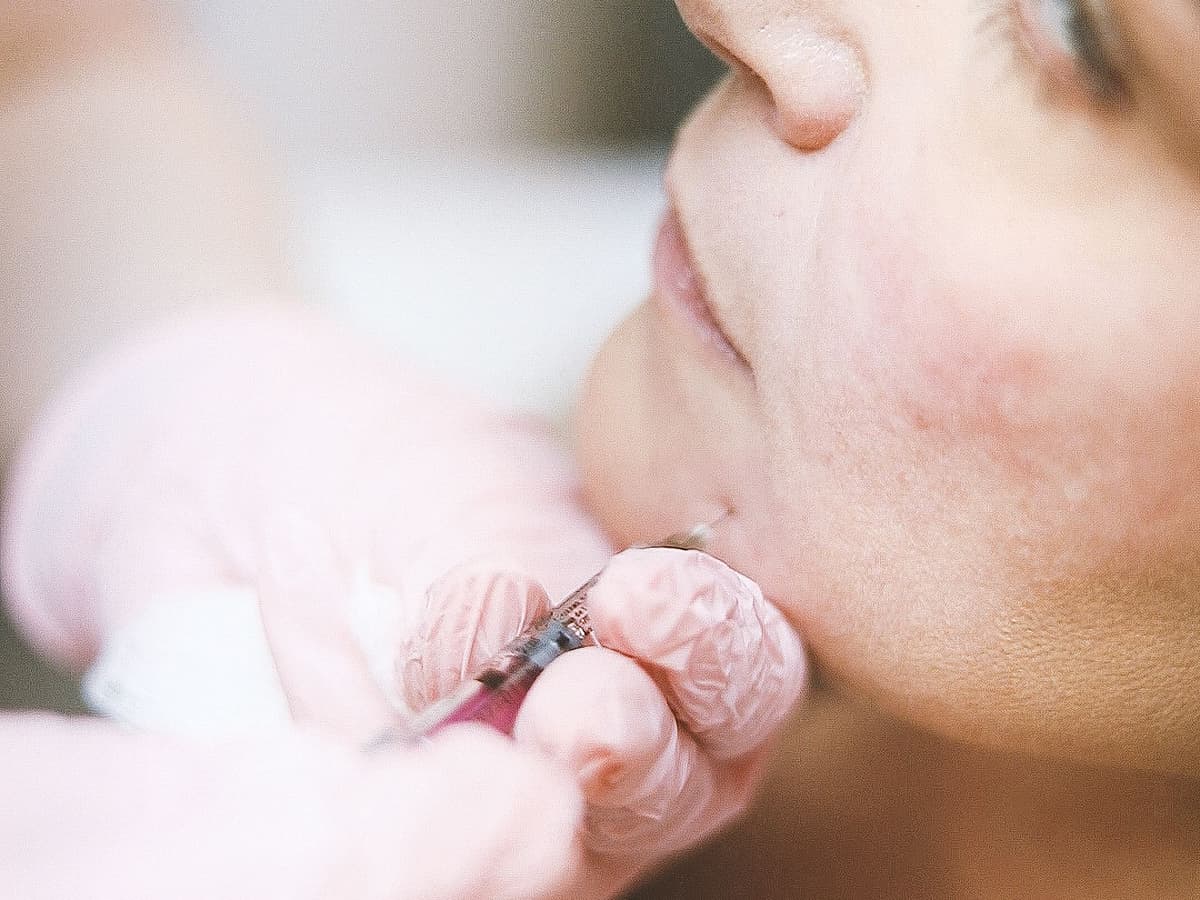
Structural filler along the jawline and chin that sharpens definition, balances profiles, and strengthens weak chins, the non-surgical answer to a soft lower face.
Jawline filler is facial architecture at its most structural: firm filler placed along the mandible and chin to sharpen the border between face and neck. It’s the non-surgical answer for soft jawlines, weak chins, and unbalanced profiles, and one of the fastest-growing treatments for both women and men.
How jawline filler works
A defined jawline depends on bone, and where bone is modest or age has softened the overlying tissue, definition blurs. Firm, structural hyaluronic acid fillers placed at bone level rebuild that border:
Jaw angle: product at the back corner strengthens the vertical line below the ear
Jaw body: placement along the mandible sharpens the horizontal border and camouflages early pre-jowl hollows
Chin: forward projection corrects recession and anchors the whole profile, frequently the highest-impact placement of the three
The result is read by everyone and identified by no one: sharper photos at every angle, a cleaner jaw-neck shadow, a balanced profile.
What to expect
Appointments run 45–60 minutes. This is planning-heavy work. After numbing, the injector places filler at several deep points, sculpting by hand as they go. Expect swelling for several days and sometimes up to two weeks, with possible light bruising; chewing may feel slightly tender for a day.
Judge the result at two weeks, when swelling has fully settled.
Results and duration
Structural jaw fillers last about 12 months. First sessions typically use 2–4 syringes across chin and jawline; annual maintenance uses less.
Is jawline filler right for you?
Strong candidates:
Soft or receding chin, often the single best-value correction in profile aesthetics
Undefined jaw-to-neck transition with decent skin tone
Early pre-jowl softening that interrupts the jaw line
Men seeking a squarer, more angular lower face
The honest limits: filler will not lift established jowls, tighten loose neck skin, or substitute for fat reduction under the chin. Those call for skin tightening, Kybella, or a surgical consult, and the best injectors will tell you so.
What affects the cost
Product volume. The dominant factor: jawlines take real amounts (2–4 syringes). Session pricing of $800–2,500 reflects it.
Filler tier. The firmest structural products carry premium pricing and hold definition longest.
Injector expertise. Jaw architecture is advanced work, and as with any filler anywhere on the face there is a rare risk of vascular occlusion, so choose an experienced injector to keep complications to a minimum. Review healed profile photos specifically.
Maintenance plan. Annual top-ups cost meaningfully less than the initial build.
Browse jawline filler providers near you on ClinicCompass, and if jaw width from muscle is your concern rather than definition, see masseter Botox, which solves the opposite problem.
Why people choose Jawline Filler
Sharpens jawline definition and the jaw-neck angle
Corrects a weak or recessed chin without surgery
Balances side profiles, often paired with or instead of rhinoplasty consults
Firm structural fillers last about 12 months here
Are you a good candidate?
Adults with a soft or undefined jawline, a recessed chin, early jowling, or profile imbalance, with realistic expectations about what filler can and can't lift
By location
Find Jawline Filler near you
4,904 clinics across 334 cities list Jawline Filler on ClinicCompass. 2,534 of them (52%) say on their own websites that they offer financing or payment plans;
ask about approval and interest before you book.
Three things well: a soft, undefined jaw-to-neck transition; a weak or recessed chin (which quietly unbalances the whole profile); and mild pre-jowl hollows that interrupt a clean jawline. What it can't do is lift significant jowls or tighten loose skin. That's skin-tightening or surgical territory, and honest injectors draw that line at the consult.
How many syringes does a jawline take?
More than people expect. The jaw is a long structure. Meaningful definition typically takes 2–4 syringes in the first session (chin work included), which is why jawline quotes run $800–2,500 rather than single-syringe pricing. Beware quotes built on one syringe; the result will underwhelm.
Chin filler and jawline filler, same treatment?
Same appointment, usually. The chin is the anchor point of the jawline. Projecting a recessed chin forward often does more for the profile than the jaw angle itself. Most injectors treat chin and jawline as one architectural plan and split product accordingly.
How long does it last?
About 12 months. The firm, structural fillers used here are built to hold shape in a high-movement area, and the jaw's bone-level placement wears slowly. Annual top-ups typically use less product than the initial build.
Will it help my double chin?
Indirectly at best. Filler defines the jaw border above; it doesn't remove fat below. A double chin is a job for Kybella or CoolSculpting's chin applicator, and jawline filler afterward often finishes the transformation. Many providers stage exactly that combination.
Does jawline filler work for men?
It's one of the fastest-growing male treatments. A wider jaw angle and stronger chin are classically masculinizing changes, and filler achieves both without surgery. Male treatment plans typically use more product for a squarer, more angular result.
Sources
Where this information comes from
Clinical facts on this page are checked against these primary sources.
1.JUVEDERM VOLUX XC: FDA Summary of Safety and Effectiveness Data (PMA P110033/S065), U.S. Food and Drug Administration (CDRH device approval, PMA P110033/S065)Confirms a structural hyaluronic acid filler (JUVEDERM VOLUX XC) is FDA-approved specifically for improvement of jawline definition, injected at the angle of the mandible, body of the mandible, prejowl sulci, and chin, matching this page's jaw angle, jaw body, and chin placements; states the pivotal trial's median injection volume at initial treatment was 4.35 mL, about four 1 mL syringes, supporting the page's 2 to 4 syringe range; lists mastication disorder as a reported treatment-related side effect, supporting the claim that chewing can feel tender afterward; lists severe skin laxity in the chin or jaw area as a trial exclusion criterion, supporting that this filler does not correct established jowls or loose skin; and reports that most treated participants maintained improvement through the 12-month follow-up visit, with maintenance treatment offered around 12 months, supporting the claim that results last on the order of a year with annual top-ups.
2.JUVEDERM VOLUMA XC (Chin Augmentation Indication): FDA Summary of Safety and Effectiveness Data (PMA P110033/S047), U.S. Food and Drug Administration (CDRH device approval, PMA P110033/S047)Confirms a structural hyaluronic acid filler is separately FDA-approved specifically for augmentation of the chin region to improve chin profile, supporting this page's treatment of chin projection as a distinct, high-impact placement; states the trial protocol capped combined initial and touch-up chin volume at 4 mL, with a median achieved volume of 2.4 mL, consistent with the page's 2 to 4 syringe range; and reports that chin volume improvement was maintained in the majority of treated subjects through the 12-month follow-up visit.
3.Dermal Fillers Recovery, American Society of Plastic SurgeonsStates that swelling, bruising, and other initial treatment-site reactions typically improve within hours to a few days and that normal activity can resume right away, supporting this page's claim of 1 to 3 days of possible swelling or light bruising after treatment.
4.Dermal Filler Do's and Don'ts for Wrinkles, Lips and More, U.S. Food and Drug AdministrationLists the jawline among the facial areas dermal fillers are FDA-approved to augment, and advises working only with a licensed, experienced injector trained specifically to inject dermal fillers, supporting this page's point that injector expertise is a key cost driver for jaw architecture work.
5.Fillers: FAQs, American Academy of DermatologyStates that temporary filler side effects clear within 7 to 14 days and that both results and the likelihood of serious side effects depend largely on the injector's experience and medical training, supporting this page's downtime expectations and its emphasis on injector expertise.