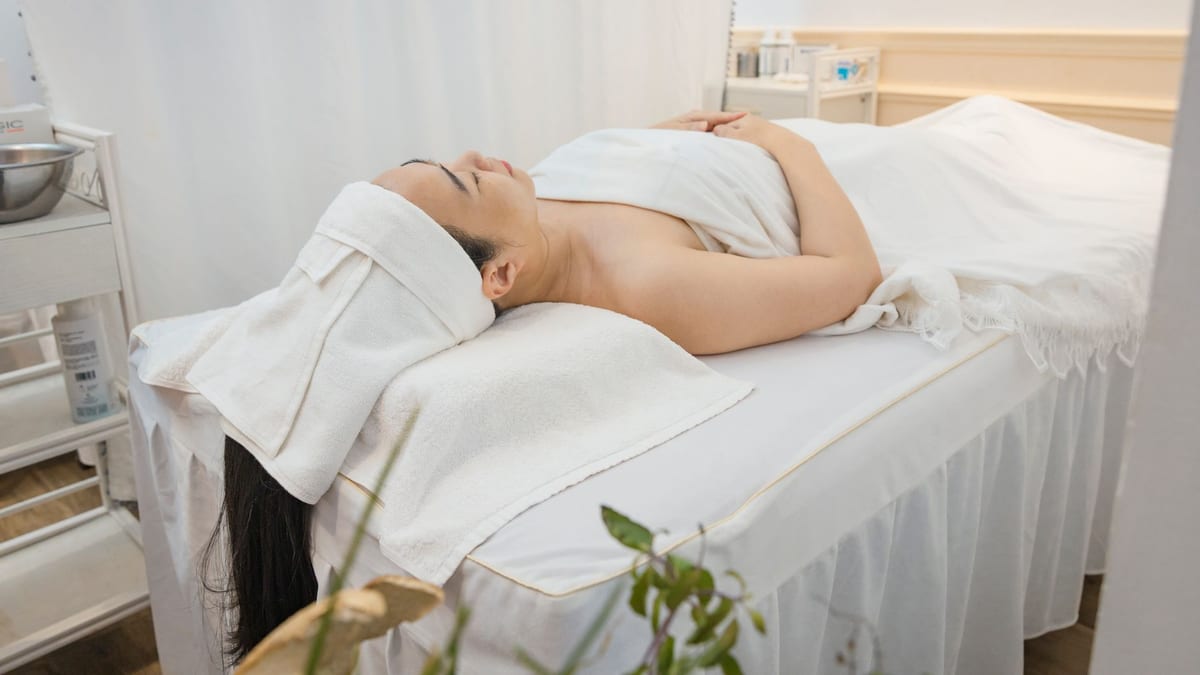
HydraFacial vs. Chemical Peel: Which Does Your Skin Actually Need?
Glow now or transformation over weeks: an honest comparison of what each treatment really does, downtime, costs, and how to choose (or combine) them.
One is a facial perfected by engineering; the other is controlled renovation. HydraFacial and chemical peels get shopped against each other constantly, but they’re really answers to two different questions: “How do I look great this week?” versus “How do I fix what months of sun and breakouts left behind?”
What each actually does
HydraFacial is a device-driven facial: a vortex tip cleanses, a gentle acid loosens debris, painless suction extracts, and serums infuse. Four steps, ~30 minutes, zero downtime. You leave glowing and stay glowing for one to two weeks. It’s maintenance, engineered.
Chemical peels apply a measured acid solution that removes damaged skin layers at a controlled depth: light (glycolic, lactic, mandelic), medium (TCA), or deep. The days of flaking afterward are the mechanism: damaged layers off, fresher skin up, collagen stimulated below. It’s correction, dosed.
The honest decision table
| You want | Book |
|---|---|
| Glow for an event this week | HydraFacial, 2–3 days out |
| Congested pores, dull skin, monthly upkeep | HydraFacial (membership math wins) |
| Sun spots, melasma-adjacent pigment | Peel series |
| Acne marks and rough texture | Peels (or microneedling) |
| Fine lines starting to settle | Medium peel territory |
| Zero tolerance for visible flaking | HydraFacial |
Downtime and timing
- HydraFacial: none. Slight flush for an hour. Book anytime, including the week of anything.
- Light peel: 2–5 days of mild flaking. Fine a week-plus before events.
- Medium peel: 7–10 days of genuine, visible shedding. Schedule it like minor downtime, ideally in low-sun months.
Peels belong in fall and winter for most people: healing skin and strong sun are a bad combination, which is why peel calendars fill from October onward.
Cost and the membership math
Single sessions price similarly, but the ownership models differ. HydraFacial is built for repetition: memberships in the $150–$250/month range keep the maintenance crowd on schedule. Peels are usually bought as a corrective series (3–6 light peels, $400–$1,200) or a single medium event ($400–$900) with results that hold months with good SPF discipline.
Compare local pricing on our HydraFacial and chemical peel pages.
The combination most good estheticians actually recommend
This isn’t either/or. The strongest routine uses both in rotation: corrective peel series in the low-sun months, HydraFacial as monthly maintenance and the pre-event button. Add daily SPF (non-negotiable after either) and you’ve covered both timelines: this week and this year.
If you’re choosing exactly one: pick by your dominant concern. Dull-but-healthy skin → HydraFacial. Visible sun damage or texture → peels, and let a good provider grade the depth.
Find a HydraFacial clinic near you
See the clinics in your city that offer it, compare reviews, and request a free consultation.
Your location is used once to pick the nearest city and is never stored.
Treatments mentioned in this guide
Common questions
Which gives better results, HydraFacial or a chemical peel?
They're built for different jobs. HydraFacial delivers immediate glow, hydration, and clean pores with zero downtime (peak effect in days). Chemical peels remodel, improving pigmentation, texture, fine lines, and acne marks over weeks of visible peeling and renewal. "Better" depends entirely on whether you want maintenance or correction.
Which is better before an event?
HydraFacial, almost always (booked 2–3 days before the event). A peel before an event is a timing gamble; light peels flake for up to a week, and medium peels visibly shed for 7–10 days. The classic mistake is booking a peel the week of a wedding.
How do costs compare?
Singles are similar: HydraFacial $150–$350, light peels $100–$300. The models differ from there: HydraFacial works as monthly maintenance (memberships $150–$250/month), while corrective peel plans are typically a 3–6 peel series ($400–$1,200 total) or one medium peel ($400–$900).
Can I alternate between them?
It's one of the best skin routines going: corrective peels in fall and winter for pigment and texture, HydraFacial maintenance monthly or before events, and strict SPF throughout. Many med spas build membership plans around exactly this rotation.
Which is safer for darker skin tones?
HydraFacial is universally gentle. Peels are absolutely workable for deeper skin tones but require a provider experienced in melanin-rich skin. The right acids (mandelic, lactic, low-strength TCA) and conservative protocols prevent post-inflammatory pigmentation. Ask specifically about their experience; the answer quality tells you everything.
Where this information comes from
Clinical facts on this page are checked against these primary sources.
- 1.Skin Resurfacing Procedures: New and Emerging Options, National Institutes of Health (PubMed Central), Clinical, Cosmetic and Investigational DermatologyThat a vortex-suction hydradermabrasion device exfoliates and hydrates the skin in the same treatment pass, backing the guide's description of HydraFacial as a four-step, device-driven facial rather than a corrective treatment.
- 2.Microdermabrasion: FAQs, American Academy of DermatologyThat this type of exfoliating treatment has no downtime or recovery period, backing the guide's statement that HydraFacial carries zero downtime and can be booked the week of an event.
- 3.Chemical peels: FAQs, American Academy of DermatologyThat healing time runs about 1 to 7 days for a light/refreshing peel, 7 to 14 days for a medium peel, and 14 to 21 days for a deep peel, with total sun avoidance needed until skin heals (3 to 6 months after a deep peel), backing the guide's downtime figures for light and medium peels and its advice to schedule peels in low-sun months.
- 4.Chemical Peels for Skin Resurfacing, StatPearls Publishing, National Library of Medicine (NIH Bookshelf)That chemical peels are classified by depth into light, medium, and deep, using agents such as glycolic and salicylic acid at the light depth, TCA at the medium depth, and phenol at the deep depth, backing the guide's description of what each peel depth uses.
- 5.Complications of Medium Depth and Deep Chemical Peels, Journal of Cutaneous and Aesthetic Surgery, National Library of Medicine (PMC)That peel complications, including post-inflammatory hyperpigmentation, are more common in dark-skinned patients and that starting at low strength and titrating up slowly helps prevent it, backing the guide's statement that darker skin tones need a provider experienced in melanin-rich skin and conservative protocols.
Still deciding? Talk it through.
The right answer depends on your anatomy, and that is a conversation, not a web page. Tell us what you are weighing up and we will match you with a clinic near you that offers both.
Or browse clinics by city and all treatments.
Request received
Thanks, we've got your details. A matched clinic will reach out shortly to confirm pricing and next steps.
Request a free consultation
A matched clinic reaches out. No obligation.