

Marc Everett MD, FACS
Queens
Marc Everett MD, FACS is a plastic surgery practice in Queens, New York, rated 5 stars across 319 Google reviews, performing 21 tracked procedures.
View surgeon →
Surgery that reshapes or repositions prominent ears closer to the head, commonly performed on children but equally effective in adults. Compare Queens clinics below and request a free consultation.
$3,500–$8,000
per procedure · USD
A general range for Queens, rounded for guidance. Confirm exact pricing with each clinic.
Plastic surgeons in Queens who list otoplasty among their procedures. Tap any surgeon to view details and request a consultation.
Queens
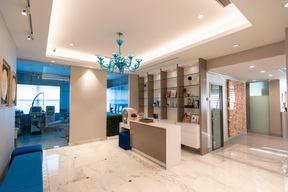
Marc Everett MD, FACS is a plastic surgery practice in Queens, New York, rated 5 stars across 319 Google reviews, performing 21 tracked procedures.
Queens
JK Facial Plastics - John Kang, MD is a plastic surgery practice in Queens, New York, rated 4.9 stars across 296 Google reviews, performing 8 tracked procedures.
Queens
Financing available
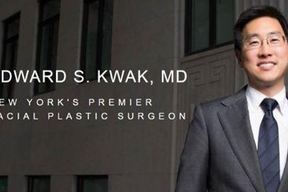
Edward S. Kwak MD - ESKMD Facial Plastic Surgery is a plastic surgery practice in Queens, New York, rated 5 stars across 242 Google reviews, performing 11 tracked procedures.

Queens
Financing available
Jerry W. Chang, MD, FACS is a plastic surgery practice in Queens, New York, rated 4.9 stars across 234 Google reviews, performing 21 tracked procedures.
Queens
Financing available
Dr. Jean-Paul Leva, FACS is a plastic surgery practice in Queens, New York, rated 5 stars across 230 Google reviews, performing 24 tracked procedures.
Queens
Financing available
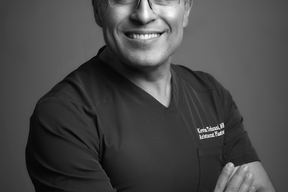
Aristocrat Plastic Surgery: Dr. Kevin Tehrani - Long Island is a plastic surgery practice in Queens, New York, rated 4.7 stars across 226 Google reviews, performing 24 tracked procedures.
Queens
Financing available
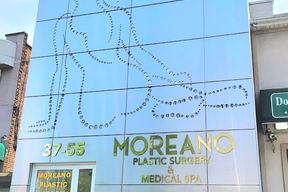
Dr. Edwin H. Moreano, MD is a plastic surgery practice in Queens, New York, rated 4.3 stars across 450 Google reviews, performing 12 tracked procedures.
Surgery that reshapes or repositions prominent ears closer to the head, commonly performed on children but equally effective in adults.
One procedure, permanent
1 week off work or school, headband worn at night for several weeks
Children from about age five, once ear growth is largely complete, and adults of any age bothered by prominent or asymmetric ears
7 plastic surgery practices in the Queens area list otoplasty. From Google Places listings; hours and locations change, so confirm with the practice.
What 7 Queens practices that list otoplasty say on their own websites (checked September 2026); one that does not mention something may still offer it, so ask at your consultation.
Otoplasty can be completed under general anesthesia or local anesthesia with intravenous sedation, according to the preference of the patient and the recommendation of the surgeon.
Otoplasty typically takes about two hours to complete under general anesthesia (commonly used for younger patients) or local anesthesia with a sedative (often used in older children and adults).
The recovery process for Otoplasty (Ear Pinning) & Earlobe Repair is straightforward, with most patients returning to normal activities within a week.
Thankfully, all these conditions respond quite favorably to the otoplasty procedure. Our New York ear surgery may be performed on children five years of age and up, since by then the cartilage has reached its mature development.
Otoplasty is a surgical procedure to set the anteriorly protuberant or “lop” ear back closer to the side of the head.
Side effects from otoplasty include bruising, swelling, tenderness, and aching for one to two weeks.
Corrective ear surgery (otoplasty) is most commonly performed on children after their ear cartilage has matured and when the entire external ear is at least 75% of the ultimate size of the adult ear. This typically occurs between ages 5 and 8 years.
Otoplasty is an outpatient surgery; you’ll relax in recovery for about an hour, clear safety checks, and an adult must drive you home.
ESK ear surgery clients are usually in the operating room for around 2 hours, during which time the ear’s cartilage is reshaped, repositioned and/or reduced. Young patients will require general anesthesia, while adults may opt for local anesthesia with mild sedation.
Otoplasty may also be helpful for shell ears, lop ears, cupped ears, large or stretched earlobes, and lobes with noticeable irregularities.
Otoplasty generally runs $3,500–$8,000 per procedure, and each Queens clinic sets its own price. The biggest variables are the provider's experience level and the specific device or product used. Newer technology and senior injectors price at the upper end. Pricing is quoted in US dollars (USD). Request a consultation from any of our listed Queens clinics for a personalized quote.
Maintenance schedules vary. Most Queens providers recommend periodic refresh sessions every 6–12 months once optimal results are achieved.
Most patients wait 24 hours before applying makeup to avoid irritation on freshly-treated skin.
Ears reach close to adult size by about age five or six, which is when surgeons will typically consider it. Many families choose to do it before a child starts school, or early in school years if teasing has begun. There is no upper limit, and plenty of adults have it done having lived with prominent ears for decades. For children, most surgeons want the child to want it too, not just the parents.
Behind the ear, in the crease where the ear meets the head, which makes them essentially invisible in normal life. Some techniques use a small amount of cartilage scoring from the front, but the standard approach keeps everything behind. This is one of the few operations where scar placement is genuinely not a concern.
Sometimes for children, particularly when there is documented psychological impact from teasing, and policies vary widely. It is generally considered cosmetic for adults. It is worth having the surgeon's office check, because coverage for pediatric otoplasty is more common than people assume.
Partial relapse happens in a minority of cases, usually within the first year, and is more likely when the correction relied only on stitches rather than reshaping the cartilage itself. Wearing the protective headband as directed during early healing meaningfully reduces the risk. Revision is possible when relapse occurs.
For newborns in roughly the first few weeks of life, ear molding systems can reshape cartilage while it is still soft from maternal hormones, avoiding surgery entirely. That window is very short and closes within the first couple of months. After that, surgery is the option. Parents who notice prominent ears in a newborn should ask about molding immediately rather than waiting.
Explore other treatments and clinics available locally.
All Queens treatments & clinics