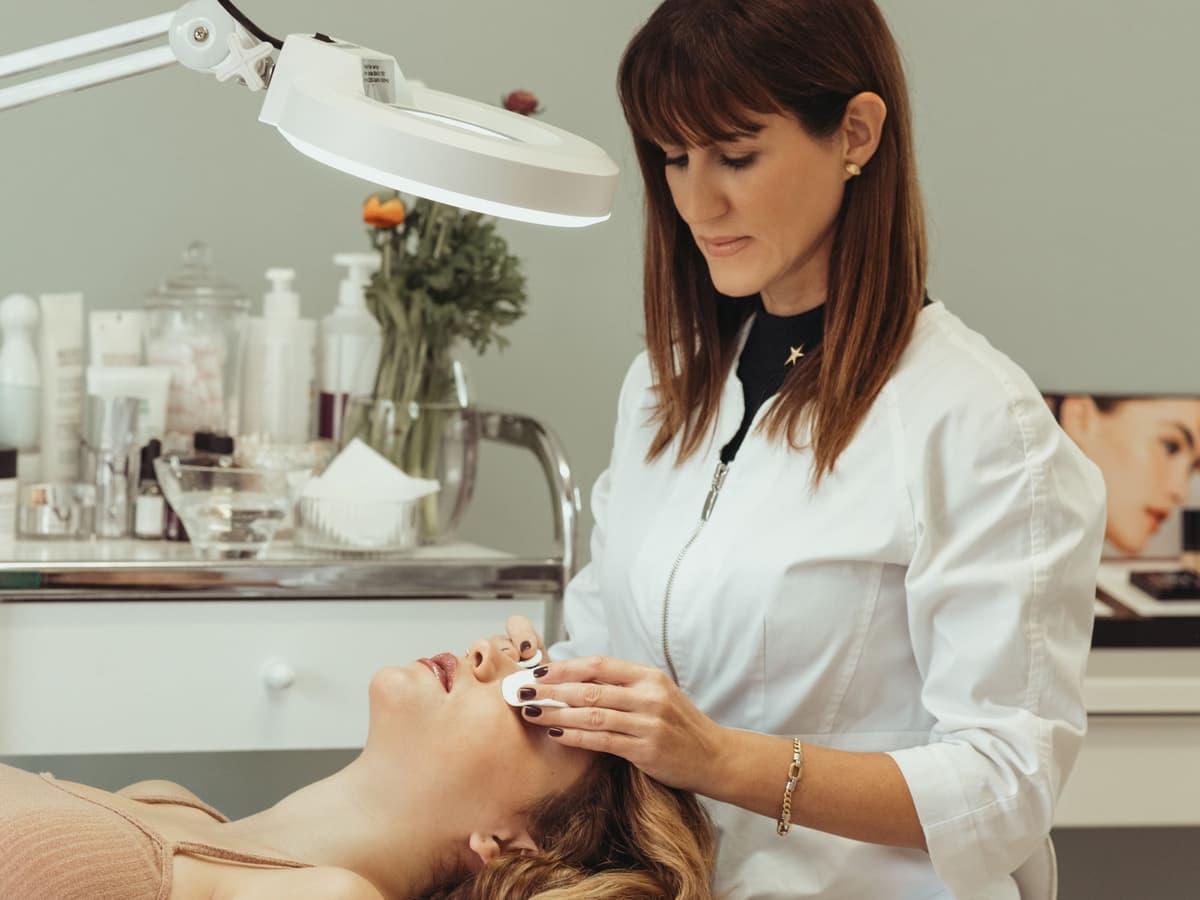
A gentle exfoliation treatment using a sterile surgical blade to remove dead skin cells and peach fuzz. Instantly smoother, brighter skin and flawless makeup application.
Also called: dermablading, face shaving facial, peach fuzz removal
Dermaplaning is the instant-gratification treatment of the med spa menu: fifteen minutes with a sterile blade in trained hands, and skin is immediately smoother, brighter, and makeup-ready. No device, no needles, no downtime, which is exactly why it’s one of the most-booked treatments in the country.
How dermaplaning works
An esthetician holds the skin taut and glides a sterile, single-use surgical blade across it at a shallow angle, in short feathering strokes. Two things come off:
The dead outer layer of skin cells, the dull, light-scattering film that builds up between cell-turnover cycles
Vellus hair, the fine “peach fuzz” that traps oil, catches light, and makes foundation sit like fabric
What’s left is the fresh layer underneath: smoother to the touch, brighter under light, and dramatically better at absorbing skincare and wearing makeup.
What to expect
A full-face session takes 20–30 minutes. It’s completely painless. Most people describe a light scratching sensation, and plenty find it relaxing. Skin may be faintly pink for an hour or two afterward.
The only aftercare that matters: SPF every day for the following week (the fresh layer is more sun-sensitive) and no retinoids or strong acids for 2–3 days.
Results and maintenance
Results are immediate and peak for about a week, which is why the classic booking is 3–4 days before an event, wedding-industry standard timing. The glow tapers as the next cell cycle builds up, making every 4–6 weeks the natural maintenance rhythm.
Peach fuzz regrows exactly as it was (same thickness, same color), typically becoming noticeable again around week 3–4.
Is dermaplaning right for you?
Almost universally, yes:
Dull, rough, or flaky skin: the core use case
Peach fuzz that shows in sunlight or under makeup
Makeup wearers: the single biggest before/after is foundation application
Pre-event glow on a deadline
As a prep step boosting peels, facials, and serums
Skip it with active inflamed acne, cold-sore outbreaks, or very reactive rosacea.
What affects the cost
Standalone vs add-on. Standalone sessions run $75–200; adding dermaplaning to a facial or peel typically costs $40–75 more, the better value.
Provider setting. Med spa estheticians price below dermatology practices for an equivalent service.
Packages. Monthly-cadence packages commonly shave 15–20% off per-session pricing.
Browse dermaplaning providers near you on ClinicCompass, or pair it with a HydraFacial or chemical peel and let the treatments multiply each other.
Why people choose Dermaplaning
Instantly smoother, brighter skin (zero downtime)
Removes vellus hair ("peach fuzz") that traps oil and catches light
Makeup and skincare apply dramatically better afterward
Boosts the effect of facials, peels, and treatments layered on top
Are you a good candidate?
Nearly everyone (dull skin, peach fuzz, rough texture, or makeup that never sits smooth); one of the few treatments with almost no exclusions besides active acne
By location
Find Dermaplaning near you
4,904 clinics across 334 cities list Dermaplaning on ClinicCompass. 2,535 of them (52%) say on their own websites that they offer financing or payment plans;
ask about approval and interest before you book.
No. This is the most persistent myth in aesthetics. Vellus hair (peach fuzz) is cut mid-shaft, and cutting has zero effect on the follicle, thickness, or color. The blunt regrowing tip can feel slightly different for a few days, but it's the same fine hair growing back the same way. Decades of clinical consensus back this.
How is dermaplaning different from shaving at home?
Tools and technique. Professional dermaplaning uses a sterile single-use surgical blade at a precise angle across prepped, taut skin, removing not just hair but the full outer layer of dead skin cells, evenly, everywhere. Home razors mostly cut hair. The exfoliation depth and evenness is the difference you're paying for.
How often should I get dermaplaning?
Every 4–6 weeks, matching your skin's natural cell-turnover cycle. Booking it a few days before big events is the pro move. It's the fastest instant-glow treatment on any menu.
Can dermaplaning be combined with other treatments?
It's the great multiplier. Removing the dead outer layer lets everything after it penetrate better. Dermaplane-then-peel and dermaplane-then-HydraFacial are two of the most common med spa pairings, usually bundled at a discount.
Who should skip dermaplaning?
Active inflamed acne (the blade can spread bacteria and irritate lesions), active cold sores, and very reactive rosacea are the main exclusions. Recent isotretinoin (Accutane) use warrants a conversation. Otherwise it's among the most universally tolerated treatments offered.
Is there really no downtime?
Really none. Mild pinkness for an hour or two, then just noticeably smoother skin. Wear SPF diligently for the following week (the fresh layer is more sun-sensitive) and skip retinoids and acids for 2–3 days.
Sources
Where this information comes from
Clinical facts on this page are checked against these primary sources.
1.How to Safely Exfoliate at Home, American Academy of DermatologyDermaplaning's removal of the outer layer of dead skin cells matches the American Academy of Dermatology's definition of physical (mechanical) exfoliation, and the Academy's caution that mechanical exfoliation can be too irritating for sensitive or acne-prone skin.
2.Medical Myths, National Institutes of Health (PubMed Central), BMJPeer-reviewed evidence that cutting hair does not make it grow back thicker, darker, or faster, backing the page's answer that dermaplaning does not change vellus hair thickness or color.
3.7 Rosacea Skin Care Tips Dermatologists Recommend, American Academy of DermatologyAAD's guidance to stop exfoliating because anything that irritates the skin can trigger a flare, backing the page's exclusion of very reactive rosacea from dermaplaning.
4.Acne: Tips for Managing, American Academy of DermatologyAAD's guidance against scrubbing or using tools on the skin because it can irritate acne, backing the page's exclusion of active inflamed acne from dermaplaning.
5.Guideline for the Management Herpes Simplex 1 and Cosmetic Interventions, The Journal of Clinical and Aesthetic DermatologyClinical guidance to delay aesthetic procedures when a patient has prodromal symptoms or an active lesion, backing the page's exclusion of active cold sores from dermaplaning.