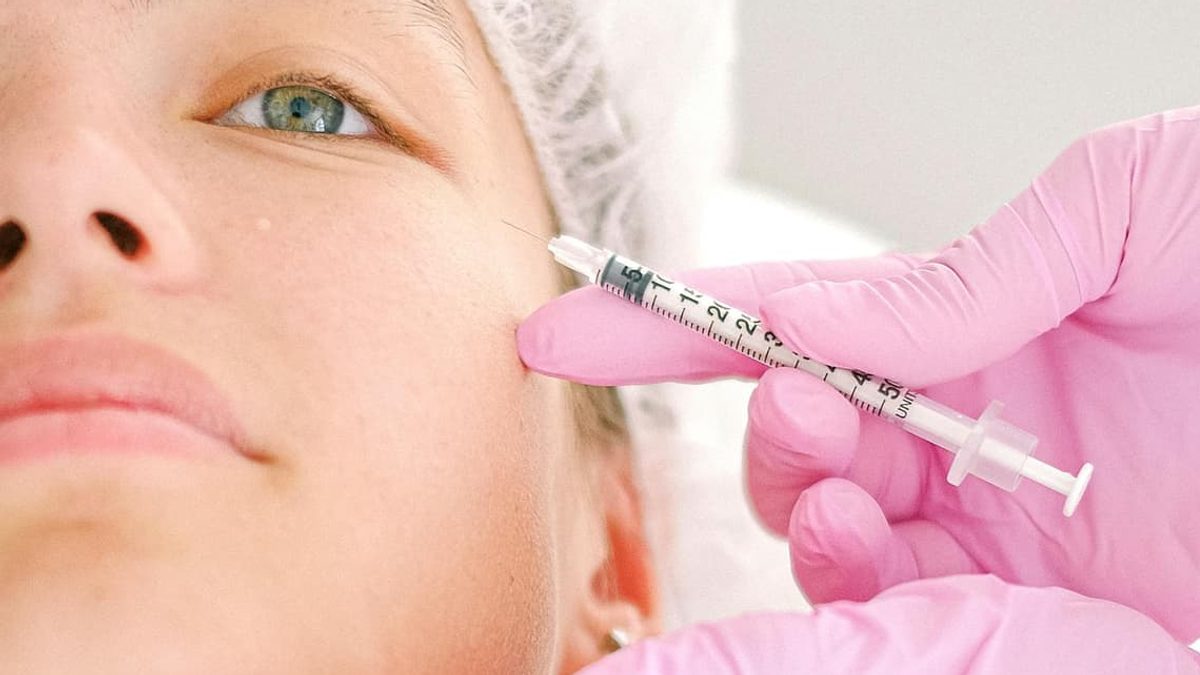
Botox Side Effects: A Dermatologist's Complete Guide
Most Botox side effects are measured in minutes, not months. A board-certified dermatologist walks through what actually happens after injection, including the truth about eyelid droop, how long it lasts, and the fixes almost nobody mentions.
Botox is one of the safest and most-studied treatments in aesthetic medicine, and most people walk away highly satisfied. But “safe” doesn’t mean “nothing ever happens.” Here is what actually happens after an injection, what’s temporary, what’s rare, and what’s simply myth.
What’s normal right after your injection
The most common thing you’ll see immediately after a Botox injection is a little mosquito-bite swelling: a small puffy area at each injection point. It lasts about 5 to 20 minutes, so by the time you’re done with your treatment or you get home, you usually won’t notice it at all.
Beyond that, any time a needle goes into skin there’s the potential for pinpoint bruising. It’s rare, it’s transient, and it goes away. Some people notice a little tenderness where the needle went in. Again, temporary.
”Can Botox give me a headache?”
Occasionally, people notice a tension headache after treatment. In my experience this is usually the muscles adapting to their new norm of relaxation. They’re fighting it a little, and it passes quickly.
Worth knowing: Botox is actually used to treat tension headaches, migraines, and stress-induced headaches. Most people who get headaches tend to improve with Botox, not worsen.
The feared one: eyelid droop
The most dreaded side effect is a lid droop, or eyelid ptosis. Here’s the distinction almost nobody explains: true eyelid ptosis is fairly rare. What’s more common is brow ptosis. When the forehead muscles are injected too low toward the eyebrow, or with too high a dose, the brow itself can drop.
Both are temporary, and shorter-lived than most people fear:
- Eyelid ptosis tends to last two to eight weeks maximum. It fades quicker than the Botox muscle relaxation in general, which tends to be a three- to five-month relaxation. And you’re not without options while you wait: prescription eye drops can prompt the levator palpebrae (the muscle that lifts the eyelid) to take over and lift the lid, and Botox can be injected into different areas around the eyelid to compensate for the droop.
- Brow ptosis generally lasts around two to six weeks. It can be corrected by using Botox to create a brow lift, and saline can be injected into the eyebrow and forehead area to help reverse it.
The point: if a droop does occur, it’s temporary, and an experienced injector has procedures to speed up your recovery rather than leaving you to wait it out.
There’s also the “Spock brow.” If the lateral part of the forehead isn’t injected, the outer brow can kick up. This one is easily corrected with a small touch-up of Botox to normalize the movement across the forehead.
The myth worth killing
Your face is not going to be completely frozen. You should still have movement. The goal is to soften the lines, not to obliterate every motion in your face. We want to relax the muscles enough that you develop fewer wrinkles over time, while still looking like you.
Who should NOT get Botox
- Pregnant or breastfeeding. This is a contraindication.
- Certain neuromuscular disorders, such as myasthenia gravis and ALS. These conditions already weaken muscles, and you don’t want to add to that.
- Allergy to any component of Botox. Rare, but a hard stop.
- An active skin infection at the injection site. We simply wait for it to clear before treating.
The single biggest factor in your risk
Your risk of complications depends on your injector. How many years of experience do they have? How many patients have they treated? This is probably the most important thing to look for when choosing an injector. An experienced injector knows these complications intimately, and knows how to avoid them in your treatment.
If you’re comparing providers, our directory shows real Google ratings and review counts for Botox clinics by city, and our guide to med spa red flags covers the warning signs to walk away from.
The bottom line
Botox is a very safe injection with a high satisfaction rate. The common side effects are minor and measured in minutes to days; the feared ones are rare, temporary, and treatable; and the best insurance against all of them is choosing an experienced injector.
Find a Botox clinic near you
See the clinics in your city that offer it, compare reviews, and request a free consultation.
Your location is used once to pick the nearest city and is never stored.

Dr. Victoria Taraska, MD, FRCPC
Board-Certified Dermatologist
Dr. Victoria Taraska, MD, FRCPC, is a board-certified dermatologist with over 25 years of experience in both medical and cosmetic dermatology. She earned her medical degree from the University of Manitoba, completed internal medicine training there, and finished her dermatology residency at the University of Ottawa. She has been a Fellow of the Royal College of Physicians and Surgeons of Canada in dermatology since 1998, is an active member of the Canadian Dermatology Association and the American Academy of Dermatology, and developed the InforMED patient decision aids for dermatological conditions. Dr. Taraska reviews ClinicCompass treatment content for medical accuracy.
More from Dr. Taraska →This article is for education, not medical advice. Treatment decisions should always be made in consultation with a qualified provider who has examined you.
Keep reading
Dermatology Marketing: How a Derm Practice Fills Its Cosmetic Schedule
A dermatology practice does not lose cosmetic patients to med spas because of price. It loses them because the cosmetic side is hidden behind a medical front desk, a three-month wait and a website written for insurance patients. This is how to give the cosmetic side its own front door and fill it.
Read post → Patient GuideMicroneedling Aftercare and Downtime: The Day-by-Day Guide
Microneedling downtime is short, but the first 48 hours decide whether your result is good. Here is what to expect each day, what to put on your skin and what to keep off it, and the handful of things people do that undo the treatment they just paid for.
Read post → WellnessIs Red Light Therapy Safe? The Risks, the Evidence, and Who Should Skip It
Red light therapy has almost no side effects, which makes it easy to recommend and easy to overpromise. The honest picture: strong evidence for a few uses, thin evidence for most of the claims on the box, and a short list of people who should not sit under the panel.
Read post →Find Botox providers in your city
Compare vetted clinics with real Google ratings, see honest local cost ranges, and request a free consultation.