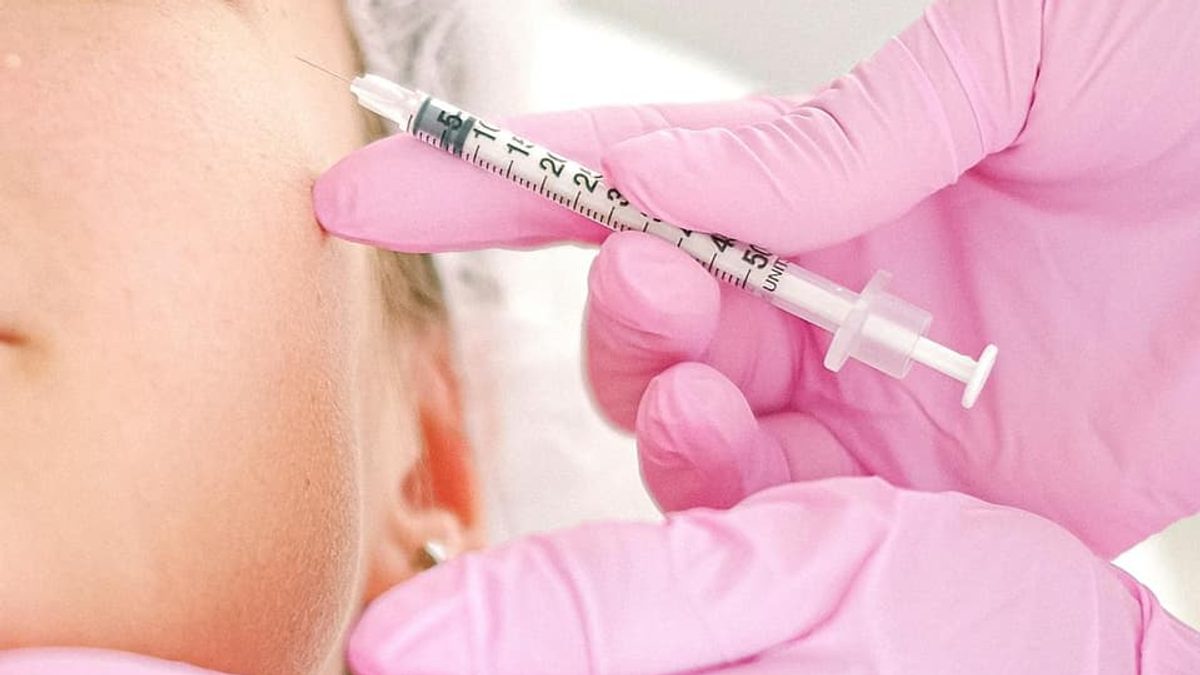
How Long Does Botox Last? A Dermatologist's Honest Answer
The standard answer is three to four months, but duration depends on which muscle was injected, how expressive you are, and even how many rounds you've had. A board-certified dermatologist breaks down the real timeline, including why your first round fades fastest.
“How long does Botox last?” is one of the most common questions I hear, and the honest answer starts with a truth about medicine in general: everything in medicine, and in life, sits on a bell curve. There’s always a range. But the range is predictable once you know what drives it.
The honest answer, by area
The standard answer is three to four months, especially for the forehead and glabella (the frown lines between the brows). But duration genuinely depends on which muscles are injected:
| Area | Typical duration |
|---|---|
| Forehead & glabella | 3–4 months |
| Around the mouth (orbicularis oris) | 2–3 months |
| Masseter (jaw) | 4–6 months |
The pattern: smaller, constantly-working muscles burn through Botox faster; the big masseter muscle holds its relaxation longest.
Why your first round fades fastest
First-timers can get a little less duration out of their Botox, and this is quite normal. It takes approximately three injections of Botox to fully saturate the receptors that Botox affects. After three rounds, your results tend to reach a steady state with each injection.
We actually watched this play out at scale after COVID. When patients stopped getting their injections during the pandemic and then restarted, we were wondering: wow, is Botox not working? What’s happening? Everybody had gone back down to a baseline saturation of zero. It took those two to three injections to get the receptors saturated again, and for Botox to really show its longevity and improved muscle relaxation over time.
So if your first round faded at eight or ten weeks, that’s not a red flag. It’s how the pharmacology works.
What makes Botox wear off faster
- Underdosing. If you didn’t get enough units for your muscle strength, it simply won’t last as long.
- Being strongly expressive. People who animate a lot burn off Botox faster. I see this particularly in theatre actresses, with their big facial expressions, and in speech therapists, who are constantly using their mouths and accentuating muscle movements. Both can particularly burn off Botox in the upper lip area.
- Incorrect placement. If the dose doesn’t land properly in the muscle, the effect is weaker and shorter. Another reason injector skill matters.
- High physical activity and fast metabolism. This one is debated. Some believe very active, fast-metabolism patients clear Botox quicker; the evidence isn’t settled.
Does injection depth matter?
In the forehead specifically, there’s a well-known debate among injectors, captured in the article “To Click or Not to Click,” about whether placing Botox deeper, below the muscle, increases how long it lasts. I tend to agree with Dr. Sebastian Cotofana on this one: deeper placement in the forehead area does result in a longer relaxation time. It’s a technique-level detail, but it’s exactly the kind of thing that separates injectors, and it’s fair to ask yours how they approach forehead placement.
Can you make it last longer?
There’s some debate about whether taking zinc supplements helps increase the longevity of Botox. There isn’t a lot of strong evidence, but zinc is fairly safe to take, so you can always try it.
The more reliable levers are the boring ones: the right dose for your muscles, placed correctly, by an experienced injector.
How it fades
It’s a gradual wear-off. There’s no day where you wake up with your full movement suddenly back. It’s a gradual onset when it starts working, and a gradual decrease as it fades. Not a steep cliff.
The bottom line
Plan on three to four months for the classic areas, less around the mouth, more in the jaw. And remember you’re a point on a bell curve, not an average. If your Botox seems to fade unusually fast, the first things to question are dose, placement, and whether you’re still in your first three rounds. Not your body.
Wondering what can go wrong? Read my complete guide to Botox side effects, including the truth about eyelid droop. And if you’re comparing prices, see what Botox costs city by city.
Find a Botox clinic near you
See the clinics in your city that offer it, compare reviews, and request a free consultation.
Your location is used once to pick the nearest city and is never stored.

Dr. Victoria Taraska, MD, FRCPC
Board-Certified Dermatologist
Dr. Victoria Taraska, MD, FRCPC, is a board-certified dermatologist with over 25 years of experience in both medical and cosmetic dermatology. She earned her medical degree from the University of Manitoba, completed internal medicine training there, and finished her dermatology residency at the University of Ottawa. She has been a Fellow of the Royal College of Physicians and Surgeons of Canada in dermatology since 1998, is an active member of the Canadian Dermatology Association and the American Academy of Dermatology, and developed the InforMED patient decision aids for dermatological conditions. Dr. Taraska reviews ClinicCompass treatment content for medical accuracy.
More from Dr. Taraska →This article is for education, not medical advice. Treatment decisions should always be made in consultation with a qualified provider who has examined you.
Keep reading
Dermatology Marketing: How a Derm Practice Fills Its Cosmetic Schedule
A dermatology practice does not lose cosmetic patients to med spas because of price. It loses them because the cosmetic side is hidden behind a medical front desk, a three-month wait and a website written for insurance patients. This is how to give the cosmetic side its own front door and fill it.
Read post → Patient GuideMicroneedling Aftercare and Downtime: The Day-by-Day Guide
Microneedling downtime is short, but the first 48 hours decide whether your result is good. Here is what to expect each day, what to put on your skin and what to keep off it, and the handful of things people do that undo the treatment they just paid for.
Read post → WellnessIs Red Light Therapy Safe? The Risks, the Evidence, and Who Should Skip It
Red light therapy has almost no side effects, which makes it easy to recommend and easy to overpromise. The honest picture: strong evidence for a few uses, thin evidence for most of the claims on the box, and a short list of people who should not sit under the panel.
Read post →Find Botox providers in your city
Compare vetted clinics with real Google ratings, see honest local cost ranges, and request a free consultation.