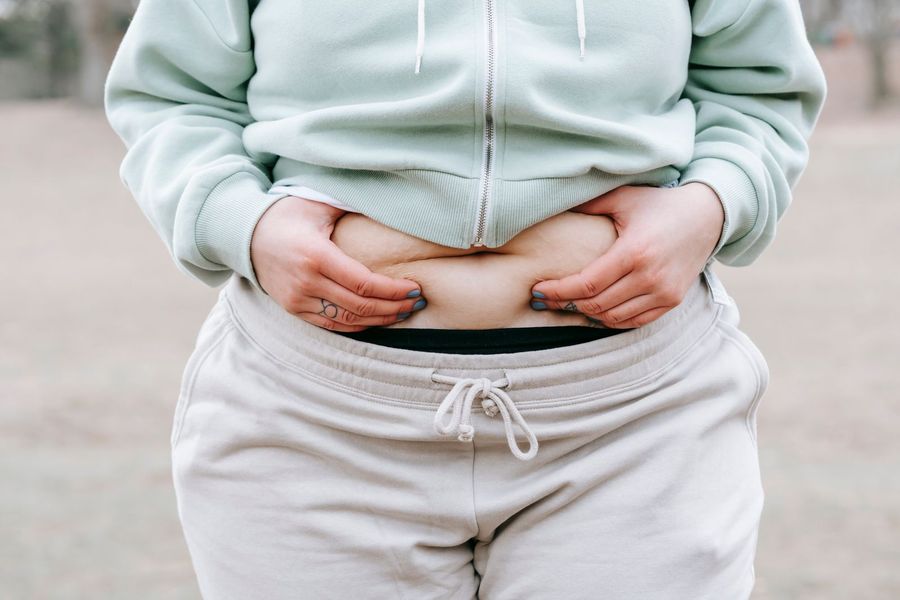

Belly fat is the most-searched body concern in aesthetics and the most-misdiagnosed. People arrive asking for the treatment they saw advertised, when the useful question is what kind of belly they have. There are three, they overlap, and each has a different fix.
The pinchable pocket
If you are near a weight you are happy with and there is a specific pad of fat, lower belly, love handles, the roll above the waistband, that no amount of exercise moves, that is a device problem. CoolSculpting freezes the fat cells in that pocket and the body clears them over two to three months. Each session removes roughly a fifth to a quarter of the fat in the treated area, so a visible result usually means one or two sessions per zone. Emsculpt NEO takes a different route, contracting the muscle thousands of times while heating the fat, which reduces the fat layer and adds definition underneath. It suits a soft midsection on someone already fit.
Neither is a weight loss treatment. Both are contouring treatments for a stable weight, and the people who love their results understood that going in.
The whole-body problem
If the belly is part of carrying extra weight generally, no device will make a meaningful dent, and a clinic that sells one anyway is selling the wrong thing. Medical weight loss with GLP-1 medications changes the whole picture, typically 15 to 20 percent of body weight over 15 to 18 months with supervision, and the belly comes down with it. Contouring, if wanted, comes afterward, when there is a stable shape to refine.
The skin problem
After pregnancy or significant weight loss, the fat may already be gone and what remains is loose, crepey skin, sometimes with separated abdominal muscles beneath it. Freezing fat here makes it worse. Skin tightening firms mild to moderate laxity over a series of sessions. Emsculpt can help rebuild the separated muscle. Real skin excess, the kind you can gather in your hand, is only fixed by a tummy tuck, and no honest device consult will tell you otherwise.
How to choose a provider
The consultation should begin with a pinch, a look at your weight history, and a question about pregnancies or weight loss. If the provider names which of the three problems you have before naming a device, you are in the right place. Ask what result to expect in inches or photos, not adjectives, and ask what they recommend if the first session underdelivers.
Browse the clinics below. Go in knowing your weight is stable, or knowing it is not; the plan depends on which.