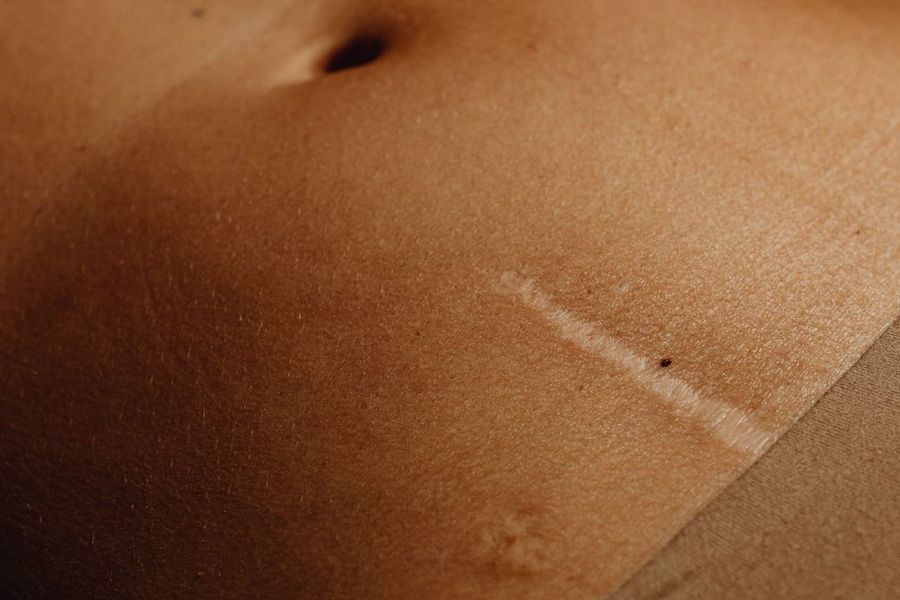
A keloid is a scar that forgot to stop. Normal scar tissue fills a wound and quiets down; keloid tissue keeps building for months or years and spreads beyond the edges of the injury that started it, as a firm, shiny, often itchy or painful lump. The earlobes, face, neck, chest and shoulders are the usual sites, because keloids favor skin with little fat beneath it, and months can pass between the injury and the scar. They do not fade with time. They are most common in Black people, more common in people of Asian, Latin American or Mediterranean descent than in lighter skin, and they run in families.
This page is honest about something aesthetic clinics are not always: the first-line treatment is medical, from a dermatologist, and surgery is a last step that only works with other treatment around it.
Thick scar or keloid
A hypertrophic scar is raised but stays within the wound’s borders, appears within a month or two, and often flattens and fades on its own. A keloid grows past the borders, can start months after the injury, and does not fade. The difference decides everything that follows, because a hypertrophic scar responds to the treatments on our scars page and a keloid responds to the plan below. A dermatologist can usually tell by looking and will biopsy if anything else is possible.
First line: corticosteroid injections
A series of steroid injections into the keloid is where treatment starts. The first injections usually relieve the itch and pain; over the series, between 50% and 80% of keloids shrink. Many regrow within five years, so a dermatologist plans follow-up and often pairs the injections with silicone gel sheets, pressure or laser. In darker skin the steroid can leave light spots, and other drugs can be injected instead. The large systematic review on the subject names corticosteroids the first-line drug therapy and finds that combinations beat any single treatment.
When surgery is the answer, and what has to go with it
A keloid that injections have not controlled, or one large enough to be in the way, can be cut out. On its own that is the worst option available: 70 to 100% of keloids removed by surgery alone grow back, often larger. So surgical scar revision for a keloid is always one part of a plan. Afterward comes a pressure earring or garment worn 12 to 20 hours a day for several months, steroid injections, cryotherapy, or a low dose of radiation to the site. Radiation is effective at stopping regrowth, but it is used less today because of permanent color change and reports of cancers years later, and it needs careful dosing and shielding. A surgeon who proposes excision without naming what comes after is not the surgeon to use.
What laser and freezing can do
Laser reduces the height and fades the redness of a keloid and is a useful partner to injections. The evidence is also clear that laser cannot be the only treatment for a keloid. Cryotherapy works best on small keloids and can leave a permanent light spot on brown or black skin, which is why dermatologists often avoid it in the people most prone to keloids.
If you are keloid-prone and want aesthetic treatment
Tell every provider. Some products are labeled against use in people with a keloid history; Sculptra is one. Piercings, tattoos, microneedling, deep peels and any treatment that cuts the skin can start a new keloid. Planned surgery can be protected from the first day with silicone and pressure, which is a reason to involve a dermatologist before the operation rather than after.
How to choose a provider
Start with a dermatologist for diagnosis and injections. For surgery, ask the surgeon how many keloids they have revised, what their recurrence rate is, and what their after-care protocol includes. Ask what they do if it returns. And ask for results at two years, not two months, because that is when a keloid shows whether the plan worked.
Browse the clinics below. Bring photos of the keloid over time if you have them, and a note of every treatment it has already had.