
Skip to content
ClinicCompass
Milia: treatment options
Find by concern

How do you get rid of milia?

Milia are tiny white bumps of trapped keratin under the skin, usually around the eyes, that no amount of squeezing or scrubbing will move. A clinic opens each one with a fine needle and expresses it in seconds, and a peel series keeps new ones from forming.

Dr. Victoria Taraska Medically reviewed by Dr. Victoria Taraska, MD, FRCPC

Milia are the small, hard, white bumps that appear around the eyes, on the cheeks, and sometimes the forehead, and that make people reach for the same three things that never work: squeezing, scrubbing, and spot treatments. They are not pimples. They are tiny cysts of keratin, the protein that makes up the skin’s surface, sealed under an intact layer of skin with no opening. Nothing applied from outside reaches them, and pressure only bruises the skin around them.

Removal is simple and quick. Prevention is a routine.

Why they form

Milia develop when keratin gets trapped instead of shedding. In adults the common triggers are heavy or occlusive creams around the eyes, sun damage that thickens the skin, a healed burn, blister, or rash, long-term use of steroid creams, and skin that simply turns over slowly. They are entirely harmless, do not spread, and do not signal anything wrong. They also, in adults, rarely resolve on their own.

How they are removed

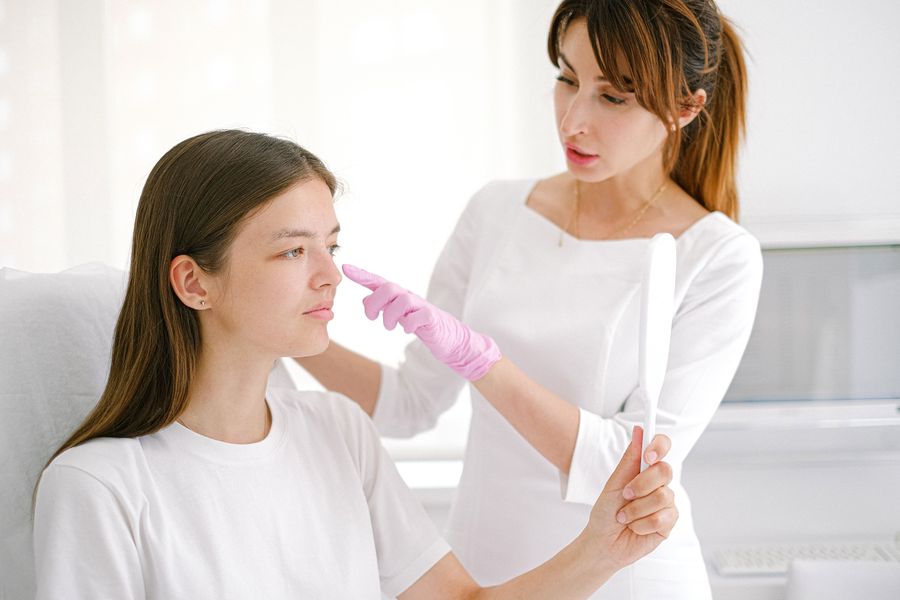
A provider cleans the area, makes a tiny opening in the skin over each milium with a sterile needle or a fine blade, and expresses the keratin pearl with gentle pressure. Each one takes seconds. There is no anesthetic needed for most, no bleeding beyond a pinpoint, and no scar; the site is a faint pink dot for a day or two. A cluster of milia is handled in one visit. Some clinics use a light electrocautery for stubborn ones, and milia very close to the lash line are removed by providers comfortable working near the eye.

Keeping them from coming back

Removal clears what exists. For people who keep getting milia, the fix is turnover. A series of light chemical peels speeds shedding so keratin stops getting trapped. A gentle retinoid at night does the same over time. HydraFacial and dermaplaning reduce the surface buildup that contributes. And around the eyes, switching from heavy creams to lighter, gel-based products often ends the cycle on its own.

What it costs

Milia extraction is usually priced per visit, often folded into a facial or charged as a small standalone fee, commonly $50 to $200 depending on how many there are. It is a cosmetic treatment and not covered by insurance.

How to choose a provider

Ask whether they extract milia specifically, since not every facial provider does. Ask what they use to open them, and whether they are comfortable treating close to the eye if yours are there. If you get milia repeatedly, ask what they recommend to prevent them, because a provider who only extracts is treating half the problem.

Browse the clinics below. Skip the eye cream for a day before your visit so the provider can see the bumps clearly.

Your options

Treatments for milia, compared

Best-first, with honest notes on when each is the right call.

Treatment Typical cost Downtime When it's the right call
Skin Tag & Mole Removal $100–$600 per visit A small scab or pink spot for 1 to 2 weeks, no time off work The direct fix. Each milium is opened with a sterile needle or fine blade and expressed, in seconds, with no scar. Several are treated in one visit.
Chemical Peel $100–$600 per session A few hours (light), about a week (medium), about 2 weeks (deep) Light peels speed up skin turnover so keratin stops getting trapped. The prevention step for people who get milia repeatedly.
HydraFacial $150–$350 per session None. Your skin looks glowing immediately Gentle exfoliation and extraction that reduces the surface buildup behind milia. Maintenance, not removal of established ones.
Dermaplaning $75–$200 per session None. Mild pinkness for a few hours at most Removes the dead surface layer that contributes to trapping. Helpful between extractions; will not open an existing milium.
FAQ

Milia: common questions

Why can't I squeeze milia out like a whitehead?

Because they are not whiteheads. A whitehead is a clogged pore with an opening; a milium is a sealed cyst of keratin under an intact layer of skin, with no way out. Squeezing bruises the surrounding skin and leaves the milium exactly where it was. It needs a tiny opening made first, which is what a clinic does with a sterile needle in seconds.

What causes milia?

Trapped keratin. In adults they most often follow skin damage or slow turnover: heavy creams around the eyes, sun damage, a burn or blistering rash, long-term steroid creams, or simply skin that sheds slowly. Newborns get them and lose them without treatment. In adults they rarely go away on their own, which is why removal is the usual answer.

Do milia come back?

A removed milium does not return, but the skin that made it can make more. People who get them repeatedly usually benefit from a light peel series or a retinoid to keep turnover up, and from switching to lighter products around the eyes. Removal handles what is there; the routine prevents the next round.

Sources

Where this information comes from

Clinical facts on this page are checked against these primary sources.

  1. 1.Milia, StatPearls, National Library of Medicine (NIH Bookshelf)Milia are benign subepidermal keratin cysts most common on the face, that congenital milia in newborns resolve spontaneously without treatment while acquired (adult) milia can persist without treatment, and that removal is by a tiny incision with extraction (or topical retinoids as a treatment option), backing the page's description of milia as trapped keratin cysts, its note that newborns lose them untreated while adults usually do not, its needle-and-express removal method, and its mention of retinoids for prevention.
  2. 2.Milia (Milk Spots): Causes and Treatment, Cleveland ClinicIn adults, milia can follow skin damage from sun exposure, burns, blistering rashes, long-term use of steroid creams or ointments, or a reaction to a heavy skin cream, and removal can be done in office with a needle to puncture and express the contents, backing the page's list of adult milia triggers (heavy creams, sun damage, healed burns or blistering rashes, long-term steroid cream use) and its needle-extraction removal method. Used because no primary source covers this full list of adult triggers.
  3. 3.Chemical Peels for Skin Resurfacing, StatPearls, National Library of Medicine (NIH Bookshelf)Light peel agents such as glycolic acid are keratolytic, disrupting the bonds between keratinocytes and forcing them to shed, backing the page's statement that a series of light chemical peels speeds up skin turnover so keratin stops getting trapped.
Take the next step

Find Skin Tag & Mole Removal providers near you

Compare vetted clinics, real ratings, and local pricing in your city.

This page is for education, not medical advice or diagnosis. The right treatment depends on an in-person assessment by a qualified provider.