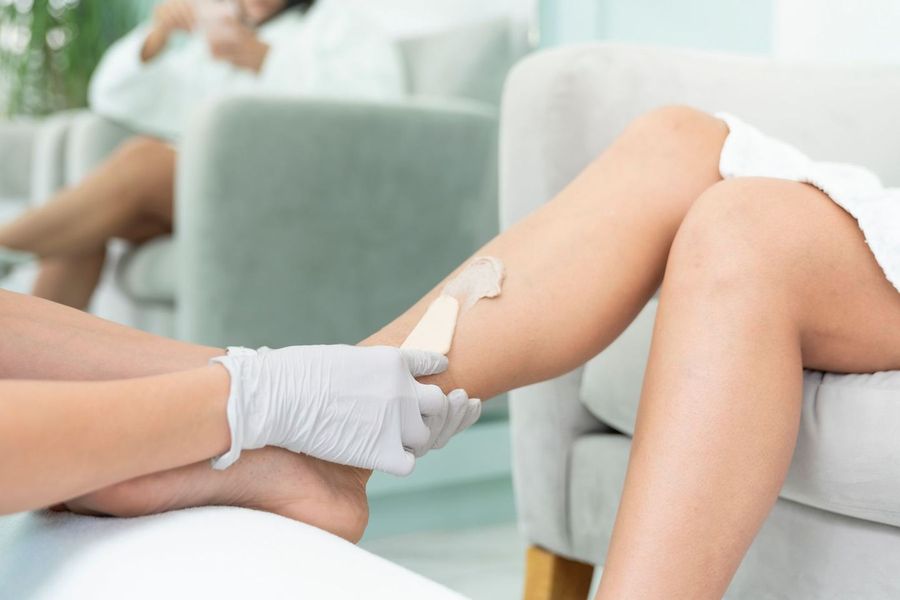
Spider veins are small vessels just under the skin that have stretched and stay visible, in red, blue or purple webs on the thighs, calves and ankles. Broken capillaries are the same thing on the face, usually around the nose and cheeks. Both come from the same mechanism: tiny valves inside the vein weaken, blood pools and the wall stretches. Family history is the main cause, with long hours on your feet or in a chair, age and pregnancy adding to it on the legs, and sun, hormones and injury on the face. They are harmless. They are also permanent until treated, because self-care and compression can prevent new veins but cannot remove the ones you have.
Legs: sclerotherapy
Sclerotherapy is the treatment of choice for spider veins on the legs and the most common vein treatment dermatologists perform. A fine needle delivers a solution that irritates the vein wall so it scars shut; the blood reroutes through healthier veins and the closed one fades. There is no anesthesia, you walk out, and you wear compression stockings for about two to three weeks. Spider veins fade over three to six weeks, small varicose veins over three to four months, and two or three sessions are usual for a full clearing. Bruising, small sores, darkened lines along the treated vein and clusters of tiny new vessels are the common side effects; the dark lines can take months to go.
Laser on the legs is used for spider and small varicose veins, usually alongside sclerotherapy rather than instead of it. Complete clearing usually takes three or more sessions, larger veins darken and stay visible for one to three months, and the area has to be kept out of the sun for three to four weeks afterward.
Face: laser and light
On the face, laser or light is the treatment of choice, and sclerotherapy is not how facial vessels are treated. The light is absorbed by the blood in the vessel, the heat damages it, and it shrinks and dissolves over the following weeks. The skin is pink for a few hours with a sunburn-like sting. One or two distinct vessels beside the nose respond to a vascular laser in a session or two; diffuse redness with scattered capillaries across the cheeks is treated over a series with a light-based photofacial. Persistent flushing with bumps is rosacea, which is a condition and belongs on our redness and rosacea pages.
When it is a vein specialist, not a clinic
Bulging, ropey veins that ache, swell or cause cramps are varicose veins, and the large ones are sealed from inside with endovenous laser or radiofrequency by a vein specialist, with results over about a year. Treating the spider veins that branch off an untreated varicose vein is a waste, because the pressure that made them is still there. A sudden swollen, red or painful leg is a clot until proven otherwise and needs urgent care, not a cosmetic appointment.
What keeps them away
Nothing prevents them entirely. On the legs: compression stockings, exercise, elevating your legs, and standing up or sitting down every half hour if your work keeps you in one position. On the face: sunscreen. Plan on a maintenance session every few years rather than a single cure, especially with the family history that caused them.
How to choose a provider
For the legs, ask who does the injecting, how many sessions they expect for your veins and what they do about the larger veins feeding them; a provider who looks for those first is the right one. For the face, ask which device they use for vessels and to see results on your skin tone, because darker skin needs a laser chosen for it. Ask about the dark lines and the tiny new vessels that can follow sclerotherapy so you are not surprised by them.
Browse the clinics below. Note whether your veins ache or swell by evening, because that answer sends you to a vein specialist first.