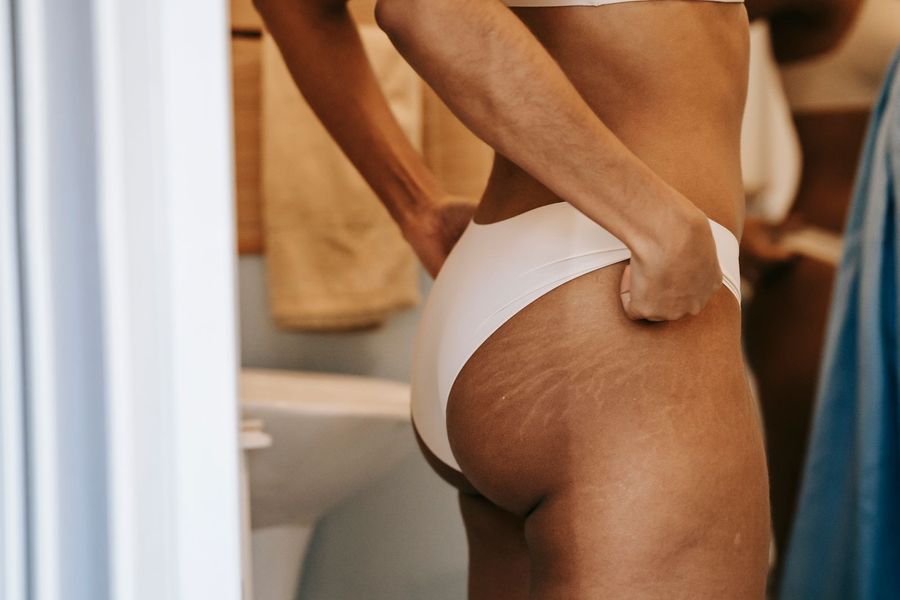

Stretch marks are scars. That is the plain version of what happens when skin stretches faster than its collagen and elastin can adapt, during a growth spurt, pregnancy, weight change, or a fast muscle-building phase. The dermis tears in lines, heals with disorganized collagen, and leaves the marks most people carry somewhere. Around eight in ten adults have them.
Because they are scars, the honest expectation is the same as for any scar: real improvement, not erasure. The treatments that work rebuild collagen in the marks so they flatten, narrow, and blend. Nothing you apply from a tube does that.
New marks versus old marks
The age of a stretch mark predicts its response better than any other factor. Red, pink, or purple marks are new. They are still inflamed and actively remodeling, and treatment can steer that process toward smoother, better-blended scar tissue. Results in this phase can be dramatic.
White or silver marks have finished healing. The collagen is set, the pigment is gone, and the mark is often slightly indented. These still respond to microneedling and laser, but more slowly and less completely, and they need more sessions. If you are deciding whether to treat marks you got last year, treating them now will do more than treating them in five.
How the treatments work
Microneedling uses fine needles to create thousands of micro-channels in the mark, which triggers new collagen production and lets topicals penetrate. Over three to six sessions, marks flatten and lose their sharp edges. It is affordable, has a day or two of redness, and works on all skin tones, which matters because some lasers carry pigment risk on darker skin.
Fractional laser resurfacing removes microscopic columns of scar tissue and stimulates deeper remodeling. It produces stronger results per session than microneedling, especially on older marks, at the cost of more redness, a higher price, and a careful conversation about skin tone.
Skin tightening addresses the surrounding skin. After pregnancy or significant weight loss, marks often sit on lax skin, and firming that skin makes the whole area read smoother even before the marks change.
How to choose a provider
Ask to see results on your mark color and your skin tone specifically, at three months after the final session. Ask what the plan is if your marks are white, since some clinics quote the same series for every case. And ask how they approach darker skin, because the wrong laser setting causes the very pigmentation you are trying to avoid.
Browse the clinics below. Bring a photo of the area in natural light so the consult starts from what is actually there.