
Wellness & IV Therapy · Flower Mound, Texas
Peptide Therapy in Flower Mound
Prescription injectable peptides, usually growth-hormone-releasing peptides like sermorelin, sold by med spas and wellness clinics for energy, recovery, body composition and sleep. Some are legal, prescribable drugs; many of the most-marketed ones are not, and the difference is the whole decision. Compare Flower Mound clinics below and request a free consultation.
Typical price range
$150–$600
per month · USD
A general range for Peptide Therapy, not specific to Flower Mound. Each clinic sets its own price, so confirm it at your consultation.
Clinic directory 
Peptide Therapy clinics in Flower Mound
Ranked by Google rating, weighted by how many reviews back it. Tap any clinic to view details and request a consultation.
Local insights
Where to find Peptide Therapy in Flower Mound
2 clinics offer Peptide Therapy across the Flower Mound metro with providers in Flower Mound, Grapevine. Flower Mound's established aesthetic clusters around Long Prairie Road / FM 2499, Cross Timbers Road / FM 1171, Parker Square, where pricing typically runs at the upper end of the local range.
Peptide Therapy generally runs $150–$600 per month , and each Flower Mound clinic sets its own price. Compare the 2 listed clinics above, request consultations from your top two or three picks, and confirm exact pricing directly with each provider.
About Peptide Therapy
Prescription injectable peptides, usually growth-hormone-releasing peptides like sermorelin, sold by med spas and wellness clinics for energy, recovery, body composition and sleep. Some are legal, prescribable drugs; many of the most-marketed ones are not, and the difference is the whole decision.
Sessions
Daily or five-nights-a-week self-injection at home, reviewed monthly, in 3 to 6 month cycles
Downtime
None. Injection-site redness or a small bruise is the usual after-effect
Good candidate
Adults with a specific goal a prescriber agrees a peptide can address (documented low growth hormone markers, recovery, body composition alongside a real program), who have had bloodwork, and who are willing to ask exactly which peptide they are getting and where it comes from
- Sermorelin and tesamorelin work through the body's own growth hormone signalling rather than injecting growth hormone itself, which is why prescribers favour them over HGH
- Programs at reputable clinics start with bloodwork and a prescriber visit, so problems like low testosterone, thyroid or sleep issues get found instead of masked
- Self-injected at home, so clinic visits are monthly check-ins rather than treatments
- Modest, gradual effects on sleep quality, recovery and lean mass over months, not weeks
FAQ
Peptide Therapy in Flower Mound: common questions
How much does Peptide Therapy cost in Flower Mound?
Peptide Therapy generally runs $150–$600 per month, and each Flower Mound clinic sets its own price. The biggest variables are the provider's experience level and the specific device or product used. Newer technology and senior injectors price at the upper end. Pricing is quoted in US dollars (USD). Request a consultation from any of our listed Flower Mound clinics for a personalized quote.
How many Peptide Therapy providers are in Flower Mound?
ClinicCompass lists 2 verified Flower Mound-area clinics offering Peptide Therapy, concentrated in Flower Mound, Grapevine. Each listing includes real Google ratings so you can compare reputable options side by side before booking a consultation.
Who's the top-rated Peptide Therapy provider in Flower Mound?
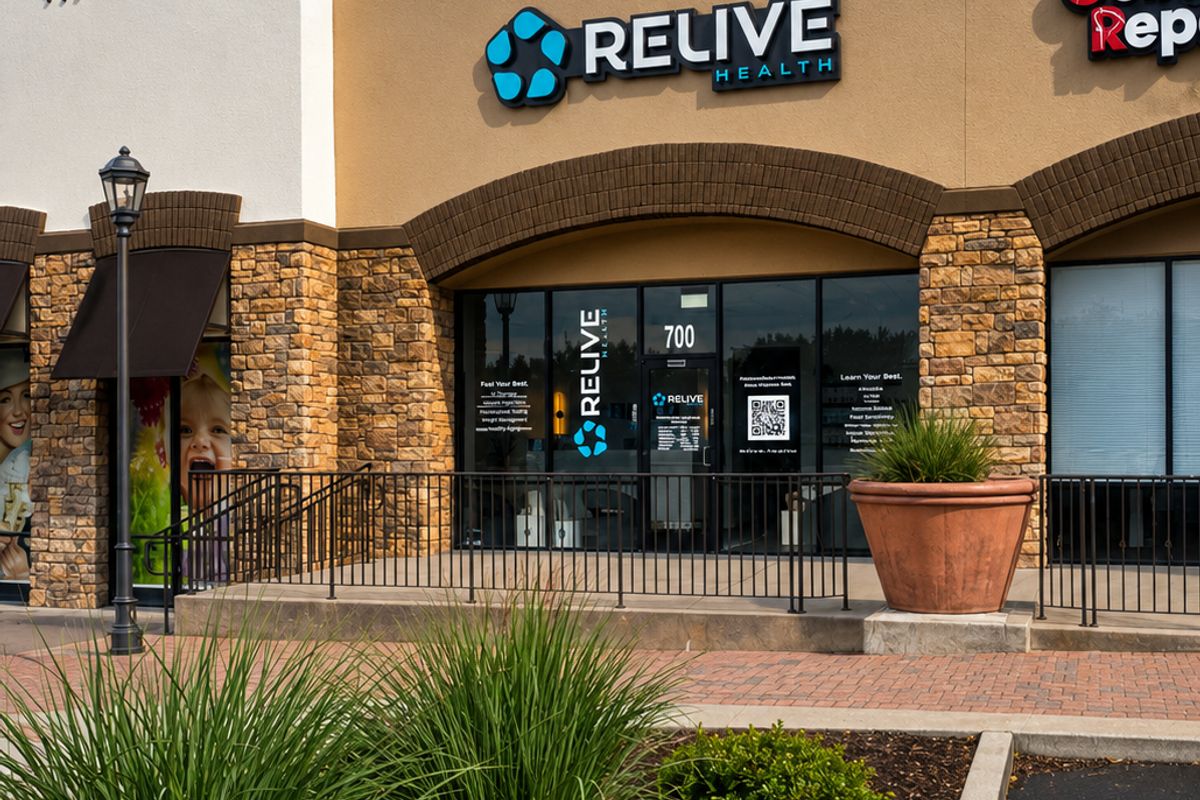
Among our 2 listed Flower Mound providers for Peptide Therapy, Relive Health Flower Mound has the strongest Google record once review volume is weighed: 5★ across 224 reviews (located in Flower Mound). "Best" is subjective. Compare 2–3 Flower Mound clinics before committing.
How long do Peptide Therapy results last?
Results vary by patient, but most Flower Mound providers report 6–18 months of sustained benefit from a full Peptide Therapy series.
Can I wear makeup after Peptide Therapy?
Most patients wait 24 hours before applying makeup to avoid irritation on freshly-treated skin.
What is peptide therapy at a med spa?
A prescriber (physician, nurse practitioner or physician assistant under a medical director) puts you on a course of injectable peptides, short chains of amino acids that act as signalling molecules. The most common med spa program is a growth-hormone-releasing peptide, usually sermorelin, injected under the skin at home most nights for three to six months, with bloodwork before and monthly check-ins. Clinics market it for sleep, recovery, energy, lean mass and fat loss. Some clinics also list BPC-157, CJC-1295, ipamorelin, TB-500 or MOTS-c; see the question on legality before you say yes to any of those.
Which peptides are actually legal to prescribe?
In the United States a compounding pharmacy can only make a drug from a substance that is on the FDA's approved bulk substances list, has a USP monograph, or is a component of an FDA-approved drug. Sermorelin was an FDA-approved drug (Geref) until it was withdrawn for commercial reasons, so pharmacies continue to compound it. Tesamorelin is an approved drug (Egrifta) and can be prescribed off-label. Semaglutide and tirzepatide are approved drugs and are the peptides behind medical weight loss. By contrast, the FDA reviewed BPC-157, CJC-1295, TB-500, GHK-Cu, MOTS-c, AOD-9604, epitalon and thymosin alpha-1 for the compounding lists and flagged each with an immunogenicity risk and limited human safety data; none is on the approved list, and ipamorelin sits on the restricted category for outsourcing facilities. A clinic offering those is sourcing them from somewhere that is not a compliant pharmacy. In Canada, Health Canada's April 2026 advisory says injectable peptides such as BPC-157 sold this way are unauthorized drugs.
How much does peptide therapy cost?
A sermorelin program at a US med spa typically runs $150 to $400 per month for the medication and supplies, plus an initial consultation and bloodwork of $150 to $400. Combination protocols that stack two or three peptides are priced at $300 to $600 per month. Tesamorelin is the expensive one at $500 to $1,000 or more per month because it is a brand-name drug. Insurance does not cover any of this at a med spa. Be wary of a clinic that quotes a package price before it has seen your labs.
Does peptide therapy work?
For the growth-hormone-releasing peptides the honest answer is modestly, slowly and mostly in people who start low. Sermorelin raises the body's own growth hormone pulses, which is measurable, and patients most often report better sleep first, then recovery, then small changes in body composition over three to six months. It is not a fat-loss drug and it is not a substitute for a GLP-1 program if weight is the goal. For BPC-157 and the healing peptides, almost all of the evidence is in animals; the FDA notes that for several of them it has identified no human exposure data at all. Anyone promising tissue repair, longevity or a specific number of pounds is selling past the evidence.
What are the side effects and risks?
With pharmacy-compounded sermorelin: injection-site redness, flushing, headache, and occasionally water retention or joint aches while the dose settles. The larger risk is the product itself. The FDA's concern with the peptides it declined to list is immunogenicity, meaning the body may mount an immune response to the peptide or to impurities, and both agencies have documented serious harm from online and unauthorized supply. Ask to see the pharmacy name on the label. Growth-hormone-releasing peptides should not be used by anyone with an active cancer, and tesamorelin's own label says long-term heart safety has not been established.
Is peptide therapy the same as HGH or TRT?
No. HGH (somatropin) injects growth hormone directly and is a controlled prescription with narrow approved uses; sermorelin and tesamorelin instead prompt your pituitary to release your own, which is gentler and why clinics use them. TRT replaces testosterone and is a separate program with its own labs and monitoring; many clinics offer both, and a good prescriber will check testosterone, thyroid and sleep before suggesting a peptide for fatigue. Peptides are also different from GLP-1 weight loss drugs, even though semaglutide and tirzepatide are technically peptides.
How do I choose a clinic for peptide therapy?
Four questions. Who is the prescriber and who is the medical director? Which exact peptide, and which pharmacy compounds it (the name should be on the vial)? What bloodwork do you run first and what would make you say no? What does the program cost per month after the first visit? A clinic that answers all four plainly and will not sell you BPC-157 or CJC-1295 is doing this properly. In Canada, add: does the product have a Drug Identification Number?
More in Flower Mound
Explore other treatments and clinics available locally.
All Flower Mound treatments & clinicsRelated treatments in Flower Mound
Nearby cities
See Peptide Therapy in all 243 cities → Peptide Therapy near Flower Mound
Peptide Therapy in Southlake Texas → Peptide Therapy in Denton Texas → Peptide Therapy in Frisco Texas → Peptide Therapy in Plano Texas → Peptide Therapy in Dallas Texas → Peptide Therapy in Arlington Texas → Peptide Therapy in McKinney Texas → Peptide Therapy in Fort Worth Texas → Peptide Therapy in Rockwall Texas → Peptide Therapy in Tyler Texas → Peptide Therapy in Norman Oklahoma → Peptide Therapy in Abilene Texas →