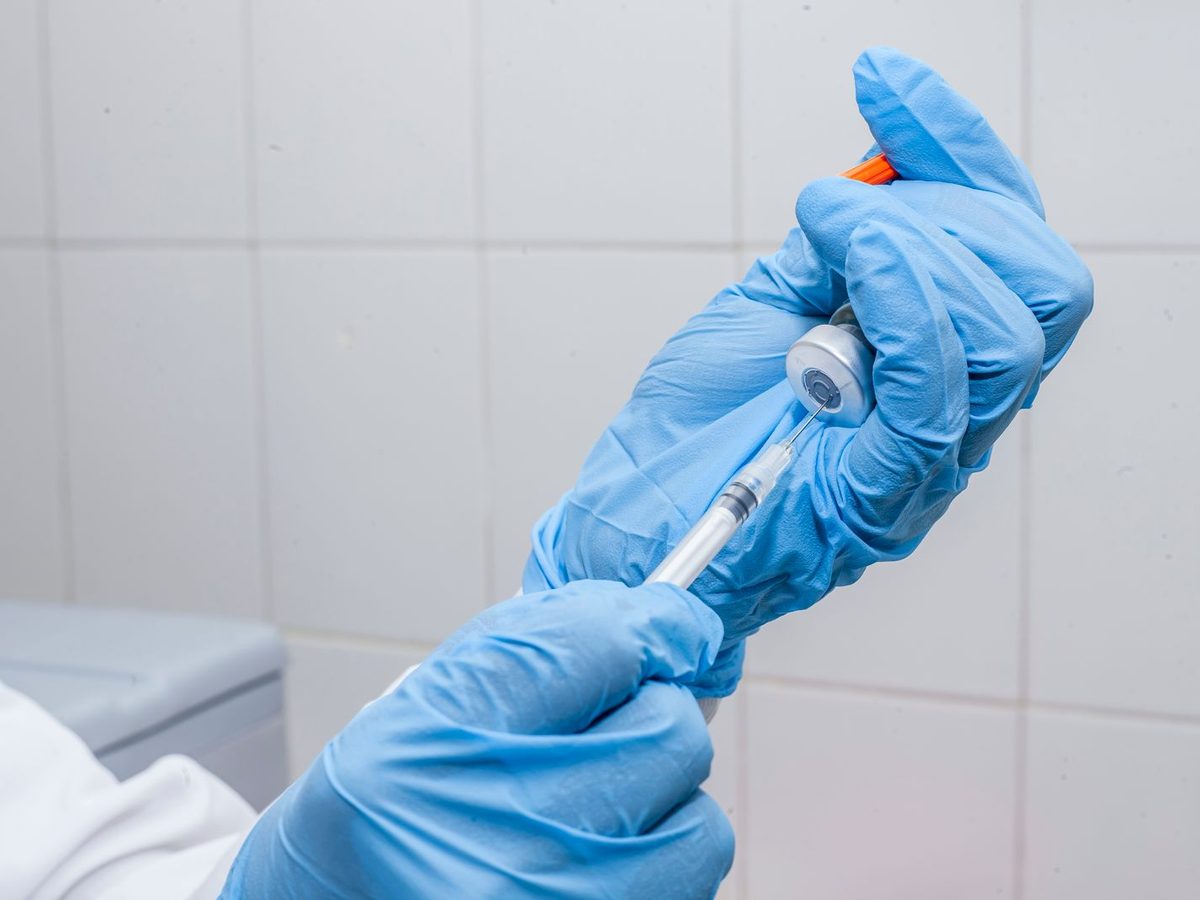
Peptide therapy has moved from bodybuilding forums to the med spa menu in about three years, and the search interest has followed: people looking for peptides near them roughly tripled between late 2025 and mid 2026. The pitch is appealing. Short chains of amino acids that signal your body to release its own growth hormone, heal faster, sleep deeper and lean out, injected at home with a tiny needle, no downtime. Some of that is real, some of it is early science stretched into marketing, and a meaningful share of what is sold under the word “peptides” is not legal for a pharmacy to make. This page sorts the three.
What peptide therapy actually is
Peptides are signalling molecules. Insulin is one. So are semaglutide and tirzepatide, the GLP-1 drugs behind medical weight loss. In a med spa, “peptide therapy” almost always means one of two families:
Growth-hormone-releasing peptides. Sermorelin is the workhorse: a fragment of the hormone your hypothalamus uses to tell the pituitary to release growth hormone. Injected under the skin at night, it raises your own growth hormone pulses rather than adding hormone from outside. Tesamorelin is a longer-acting relative and the only one with FDA approval, granted for reducing belly fat in adults with HIV-associated lipodystrophy. CJC-1295 and ipamorelin belong to the same family and are heavily marketed, and they are where the legal picture changes, covered below.
“Healing” and specialty peptides. BPC-157, TB-500, GHK-Cu, MOTS-c, epitalon, PT-141 and a dozen others, each sold for a specific promise: tendon repair, skin, mitochondria, longevity, libido. The human evidence for most is thin to absent, and in the United States none of them is on the list of substances a pharmacy may compound.
A legitimate program looks like this: a consultation with a prescriber, bloodwork (growth hormone markers such as IGF-1, testosterone, thyroid, metabolic panel), a prescription filled by a named compounding pharmacy, home injections five to seven nights a week, and a check-in every month with repeat labs at three months. Clinic visits are for monitoring, not for the injections themselves.
The legal line, plainly
This is the part most clinic websites skip. In the United States, a compounding pharmacy can only make a drug from a substance that is on the FDA’s approved bulk substances list, has a USP monograph, or is part of an FDA-approved drug. Sermorelin was an approved drug (Geref) until its maker withdrew it in 2008 for commercial reasons, so pharmacies continue to compound it. Tesamorelin is an approved drug and can be prescribed off-label. The GLP-1s are approved drugs.
The FDA reviewed the rest of the popular list for the compounding program and, in its published evaluation (updated April 22, 2026), flagged BPC-157, CJC-1295, TB-500, GHK-Cu, MOTS-c, AOD-9604, epitalon, thymosin alpha-1 and Melanotan II with a “risk for immunogenicity” and limited or, for several, no human safety data. None made the approved list. Ipamorelin was placed on the restricted category for outsourcing facilities with serious adverse events noted. The practical meaning: if a clinic offers you these, the product is not coming from a compliant pharmacy, and neither the clinic nor you can know what is in the vial.
Compounded drugs of any kind are not FDA-approved; the agency does not check their safety, effectiveness or quality before they are sold. So even with sermorelin, the pharmacy’s name and reputation are part of your decision.
In Canada the picture is simpler. Health Canada’s April 2026 public advisory warns against unauthorized injectable peptides such as BPC-157 sold for anti-aging, bodybuilding and wellness, and reminds patients that an authorized drug carries an eight-digit Drug Identification Number on its label. No injectable peptide sold this way has one. Canadian clinics that run growth-hormone peptide programs do so through prescribers and compounding pharmacies under provincial college rules, and you should ask the same pharmacy question.
What the evidence supports
Sermorelin measurably raises growth hormone pulses and IGF-1 in adults, and that is where the reliable claims stop. Patients most often notice sleep quality first, within a few weeks, then recovery from training, then small changes in body composition over three to six months, and the effect is largest in people who start with low markers. It is not a weight loss treatment. Anyone whose real goal is weight should be looking at a GLP-1 program, and a clinic that steers you to peptides instead is selling what it has.
Tesamorelin has real trial data, but for one thing: reducing visceral belly fat in people with HIV-associated lipodystrophy. Its own label says it is not indicated for weight loss and that long-term cardiovascular safety has not been established. A med spa prescribing it to a healthy adult for body composition is prescribing off-label, which is legal and which you should be told.
For BPC-157 and the healing peptides, the excitement rests on animal studies and testimonials. The FDA’s evaluation states that for several it has identified no human exposure data at all. That is not a reason to assume harm; it is a reason not to pay for a promise.
Side effects and who should not do this
Pharmacy-compounded sermorelin is well tolerated: injection-site redness, flushing, headache, occasionally water retention or joint aches while the dose settles, which a prescriber manages by adjusting it. The risks that matter are the ones a label would carry if there were one. Growth-hormone signalling is not for anyone with an active cancer or a history of one without an oncologist’s word. Immunogenicity, the FDA’s stated concern, means an immune reaction to the peptide or its impurities, and it is why product source matters more here than in almost any other med spa treatment. Pregnancy and breastfeeding rule it out. And both the FDA and Health Canada have documented serious harm from peptides bought online or from unauthorized supply, so a clinic that lets you bring your own vial is a clinic to walk out of.
What it costs
Sermorelin programs at US med spas run $150 to $400 a month for medication and supplies, after an initial visit and labs of $150 to $400. Stacked protocols of two or three peptides are priced at $300 to $600 a month. Tesamorelin is the outlier at $500 to $1,000 or more a month because it is a brand-name drug. Nothing here is covered by insurance at a med spa. Canadian pricing tracks similar numbers in dollars. Monthly memberships are common; three-month minimums are common too, and reasonable, since that is how long the effect takes to show.
Choosing a clinic
Ask four things and listen for straight answers. Who is the prescriber and who is the medical director? Which exact peptide, and which pharmacy makes it (the name should be on the label)? What bloodwork do you run first, and what result would make you say no? What is the monthly cost after the first visit? A clinic that answers all four and will not sell you BPC-157 or CJC-1295 is doing this the right way. Many of the med spas that run peptide programs also run medical weight loss and hormone programs, which is useful: the same labs feed all three decisions, and a good prescriber will tell you which one you actually need.
Where to compare peptide therapy
Peptide programs cluster in the wellness-heavy markets. Compare clinics in Atlanta, Austin, Phoenix and Boston, or browse peptide therapy providers in your city. Most pair it with IV therapy or a medical weight loss program, so look at the whole menu before you commit to one.