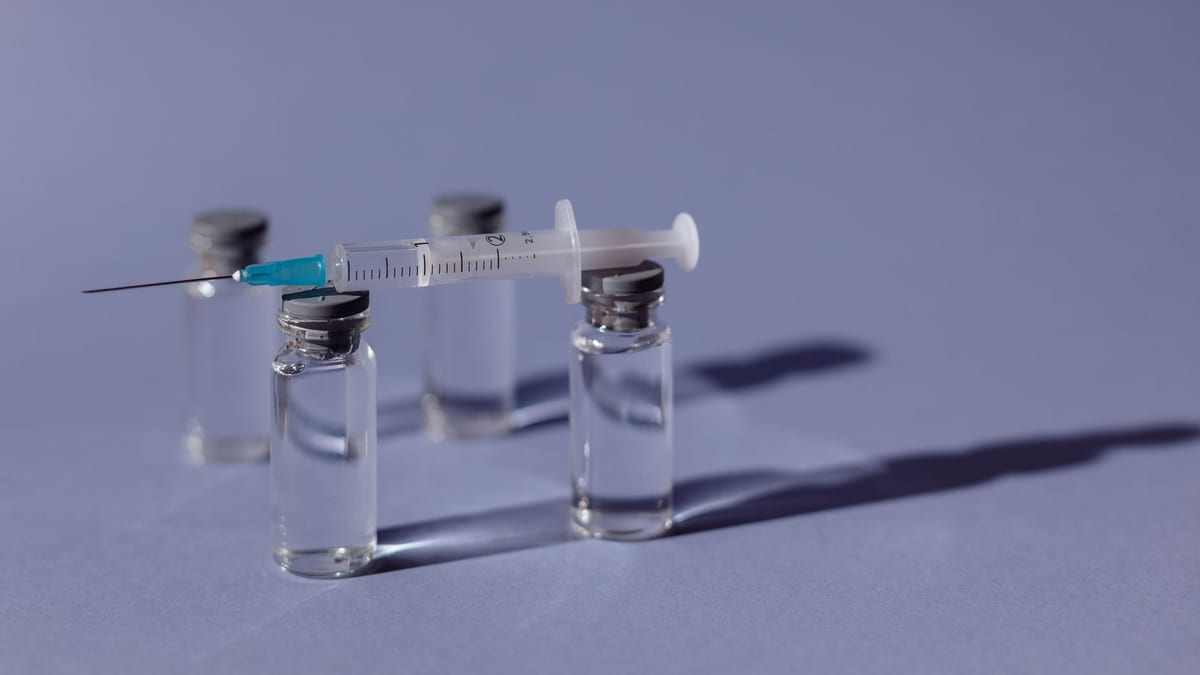
Botox vs. Fillers: What's the Difference and Which Do You Need?
A clear, side-by-side comparison of Botox and dermal fillers: how each works, what they treat, what they cost, and how to decide which (or both) is right for you.
Botox and dermal fillers are the two most popular non-surgical aesthetic treatments, and the most commonly confused. The short version: they do entirely different things. Botox relaxes the muscles that cause expression wrinkles. Fillers replace volume the face has lost. They’re not competitors; they’re complements. Most great results use both, in the right places, with restraint.
The fundamental difference
| Botox | Dermal Fillers | |
|---|---|---|
| What it is | Botulinum toxin (neuromodulator) | Hyaluronic acid gel (volumizer) |
| What it does | Relaxes specific muscles | Adds volume to soft tissue |
| Treats | Dynamic wrinkles caused by muscle movement | Volume loss and structural change |
| Best areas | Forehead, glabella, crow’s feet, masseter | Cheeks, jawline, smile lines, lips, under-eyes |
| Onset | 3–4 days, full effect at 2 weeks | Immediate |
| Duration | 3–4 months | 9–18 months |
| Reversible | No (but wears off naturally) | Yes (HA dissolved with hyaluronidase) |
| Typical cost | $400–$1,400 per visit | $700–$5,000+ per visit |
When you need Botox
Choose Botox when your main concern is expression wrinkles, lines that appear or deepen when you make facial expressions:
- Horizontal forehead lines when you raise your eyebrows
- Vertical ”11s” or frown lines between your brows
- Crow’s feet when you smile
- A pulled-down mouth corner that looks unhappy at rest
- Excessive jaw clenching (masseter Botox for jaw slimming + grinding relief)
Botox doesn’t restore volume. If your cheek looks flat, your jawline has softened, or your smile lines are deep at rest (not just when smiling), Botox won’t fix it.
When you need fillers
Choose fillers when your concern is volume, structure, or shape:
- Flat or sagging cheeks (volume loss in mid-face)
- Softened jawline that lacks definition
- Deep smile lines (nasolabial folds) present even at rest
- Thin lips or asymmetric lips you’d like to enhance
- Hollow under-eyes (tear trough)
- A weak chin that lacks projection
Fillers don’t soften expression lines from muscle movement. If your forehead furrows when you concentrate, that’s a Botox job.
When you need both: the “liquid facelift”
For most people over 35, the ideal plan uses both: Botox for the upper face, filler for the lower face. The combination is sometimes called a “liquid facelift” because together they can dramatically refresh appearance without surgery:
- Botox softens dynamic wrinkles in the forehead, glabella, and crow’s feet.
- Fillers restore mid-face volume that has dropped, lifting the cheeks and improving the jawline.
- The combined effect is more natural and complete than either alone.
A skilled injector evaluating your face for both will spot things you didn’t realize you had, and often recommend less of each than you’d expect. Restraint is what separates a great result from an obvious one.
Cost comparison: annualized
Per-treatment cost isn’t a fair comparison because they last different lengths of time. Annualized:
- Botox (3–4 treatments per year): typically $1,200–$3,000/year
- Fillers (1–2 treatments per year): typically $1,500–$5,000/year depending on how many syringes
For most “Botox + filler” combination patients, total annual spend runs $2,500–$7,500/year. Significant, but much less than surgical alternatives, and far more flexible.
How to decide
If you’re unsure which you need, the right answer is a consultation with an experienced injector, preferably two. Bring photos of yourself from 5–10 years ago for context. A great provider will:
- Identify whether your concerns are muscular (Botox), volume-based (fillers), or both
- Recommend a conservative starting plan rather than “the works”
- Explain the why behind every recommendation
- Make clear which areas to address first if budget is a constraint
Honest providers often recommend less than you came in expecting. That’s a feature, not a bug.
Browse Botox and dermal filler providers near you on ClinicCompass to compare clinics and book a consultation.
Find a provider in your city
Ready to compare? See the Botox and dermal fillers overviews, or compare locally in New York, Los Angeles, and Miami. For pricing, read the Botox cost guide and the dermal fillers cost guide.
Find a Botox clinic near you
See the clinics in your city that offer it, compare reviews, and request a free consultation.
Your location is used once to pick the nearest city and is never stored.
Treatments mentioned in this guide
Common questions
Can I get Botox and filler in the same appointment?
Yes, many providers prefer to do them together because they treat different problems in different areas of the face. Botox for the upper face (forehead, glabella, crow's feet), filler for the cheeks, jawline, smile lines, or lips. The combined "liquid facelift" effect is one of the most popular treatment plans in aesthetic medicine.
Which costs more, Botox or fillers?
Fillers are usually more expensive per treatment session. A single Botox visit runs $400–$1,400 for a full upper face. A filler treatment can run $700–$5,000+ depending on how many syringes and which areas. Botox needs to be redone every 3–4 months; filler lasts 9–18 months, so per-year, the totals can be closer than they look.
Should I start with Botox or fillers?
Most people start with Botox in their late 20s/early 30s for dynamic wrinkles and add filler later as volume loss appears (typically 35+). But this depends entirely on what bothers you. A consultation should tell you which is the actual driver of your concerns.
Which lasts longer?
Fillers last much longer per treatment, typically 9–18 months for hyaluronic acid filler vs. 3–4 months for standard Botox. Daxxify (a newer neurotoxin) can last up to 6 months, narrowing the gap.
What about Sculptra and Radiesse: are those fillers?
They're a different category called collagen stimulators. Instead of immediate volume, they trigger your body to build its own collagen gradually over months. Often used for broader structural support rather than precise volumizing.
Can either be reversed if I don't like the result?
Hyaluronic acid fillers can be dissolved with an enzyme (hyaluronidase), usually in one appointment. Botox cannot be reversed, but it wears off naturally in 3–4 months, so an unfavorable result isn't permanent.
Where this information comes from
Clinical facts on this page are checked against these primary sources.
- 1.FDA Prescribing Information for BOTOX Cosmetic (onabotulinumtoxinA): Indications, Usage, and Dosing, U.S. Food and Drug AdministrationThat BOTOX Cosmetic is FDA-approved to treat glabellar lines, forehead lines and lateral canthal lines (crow's feet), and that its effect on glabellar lines lasts approximately 3 to 4 months, backing the guide's statement that Botox treats dynamic wrinkles in these areas and lasts 3 to 4 months.
- 2.FDA-Approved Dermal Fillers, U.S. Food and Drug AdministrationThat hyaluronic acid gel fillers work by combining with water to swell and create a smoothing and filling effect, backing the guide's description of dermal fillers as a hyaluronic acid gel that adds volume to soft tissue.
- 3.Fillers: FAQs, American Academy of DermatologyThat most fillers, including hyaluronic acid gel, produce immediate or close to immediate results, backing the guide's statement that filler onset is immediate compared to Botox's 3 to 4 day onset.
- 4.JUVEDERM VOLUMA XC Directions for Use, U.S. Food and Drug Administration (CDRH device labeling, PMA P110033)Clinical trial data showing 67.1% of subjects remained treatment responders at Month 24 for this structural filler, backing the guide's statement that fillers can last toward the upper end of the cited range and considerably longer than Botox.
- 5.How Should We Use Hyaluronidase for Dissolving Hyaluronic Acid Fillers?, National Institutes of Health (PubMed Central), Journal of Cosmetic DermatologyThat hyaluronidase is an enzyme used to dissolve hyaluronic acid filler, backing the guide's statement that fillers can be reversed with hyaluronidase while Botox cannot be reversed and simply wears off naturally.
Still deciding? Talk it through.
The right answer depends on your anatomy, and that is a conversation, not a web page. Tell us what you are weighing up and we will match you with a clinic near you that offers both.
Or browse clinics by city and all treatments.
Request received
Thanks, we've got your details. If we can match you right away, the clinic's name and phone number are in your inbox within a few minutes. Either way, a matched clinic reaches out to confirm pricing and next steps.
Request a free consultation
A matched clinic reaches out. No obligation.