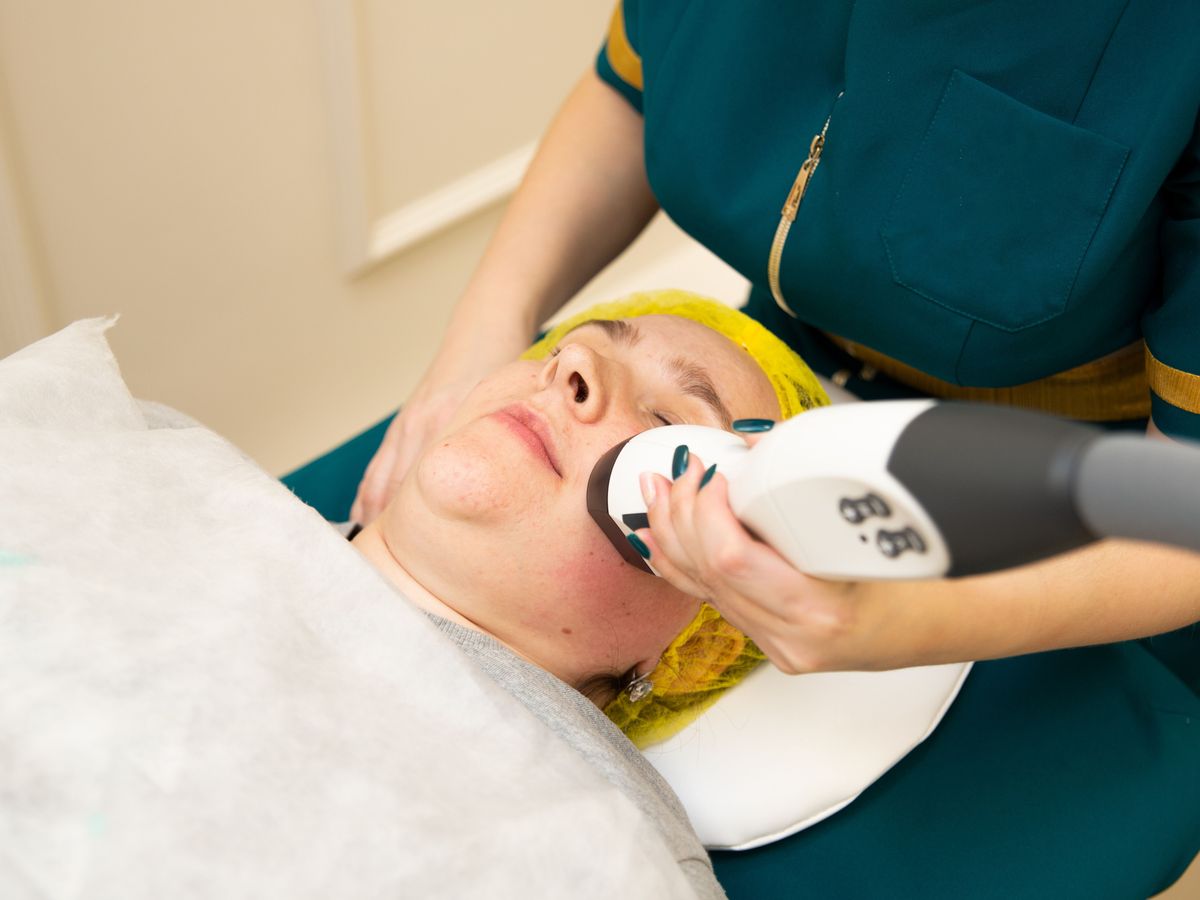
A device that combines radio-frequency heating with electrical stimulation of the facial muscles, lifting and toning the face without needles over a series of four twenty-minute sessions. Modest, natural lift for people who want improvement without injectables or downtime.
Emface is the device that asks whether a face can be lifted the way a body is toned: by making the muscles work. It pairs radio-frequency heating of the skin with electrical stimulation of the muscles that lift the brows and cheeks, in four twenty-minute sessions, and produces a modest lift with no needles, no downtime, and no change to how the face moves. For people who want improvement without injectables, it is the most credible non-invasive option to arrive in years.
How it works
Pads adhere to the forehead and each cheek. Radio-frequency energy warms the skin and the layer beneath it, triggering collagen and elastin production over the following months. Simultaneously, a form of high-intensity electrical stimulation contracts the elevator muscles of the face, the ones that lift the brow and cheek, thousands of times in a session, strengthening them so they hold the face higher at rest. The maker’s studies report an average lift in the range of twenty to twenty-five percent and a reduction in wrinkles of roughly thirty percent after a series, with results developing over three months.
What to expect
Four sessions about a week apart, each twenty minutes. The sensation is warmth plus a strong, rhythmic pulsing of the facial muscles, strange for the first few minutes and relaxing after. There is no downtime; people return to work with makeup on. Muscles may feel mildly fatigued for a few hours. The lift becomes noticeable at four to six weeks and continues to build to three months. Maintenance sessions every six to twelve months hold it.
Who it suits
Early to moderate laxity, typically the 30s through 50s, in people who want a natural lift and prefer to avoid injectables, or who use them and want a complementary lift. It also suits people maintaining a surgical result. It is not a substitute for filler where volume has been lost, or for surgery once skin genuinely hangs, and a provider should say so.
What it costs
Typically $3,000 to $5,000 for the four-session series, with maintenance sessions priced individually. That is a device-series price, and the honest comparison is against a year of injectables or a single Ultherapy session rather than against a facial.
Choosing a provider
Ask how many Emface series the clinic has completed and to see results at three months, since the immediate look understates the result. Ask who it would not suit. A clinic that also offers injectables and surgery can place it honestly in the range of options; one that only has the device tends to recommend the device.
Browse the clinics below and compare Emface providers and pricing by city.
Why people choose Emface
Lifts the brows and cheeks and tones the jawline without needles
Twenty-minute sessions with no downtime
Builds facial muscle and collagen at the same time
Suits people who do not want injectables
Are you a good candidate?
People in their 30s to 50s with early to moderate sagging who want lift and tone without injections or surgery, and people maintaining a surgical result
By location
Find Emface near you
111 clinics across 85 cities list Emface on ClinicCompass. 67 of them (60%) say on their own websites that they offer financing or payment plans;
ask about approval and interest before you book.
Pads placed on the forehead and cheeks deliver two energies at once. Radio-frequency heats the skin to stimulate collagen and elastin, and a form of electrical stimulation contracts the lifting muscles of the face thousands of times per session, the way a body-toning device works on the abdomen. The muscles get stronger and lift more; the skin over them gets firmer.
What kind of result should I expect?
A modest, natural lift: the maker's studies report around 20 to 25 percent more lift and about 30 percent fewer wrinkles on average after a series, with results developing over three months as collagen builds. It is not a facelift and it does not replace filler for volume loss. People who like it describe looking rested and lifted rather than changed.
Does it hurt?
No. The sensation is warmth and a strong rhythmic contraction of the facial muscles, which most people find odd for the first minutes and then relaxing. There is no downtime; makeup can go on afterward.
What does it cost?
A series of four sessions typically runs $3,000 to $5,000, with maintenance sessions every six to twelve months. It is priced like a device series rather than an injectable, and the value depends on how much you want to avoid needles.