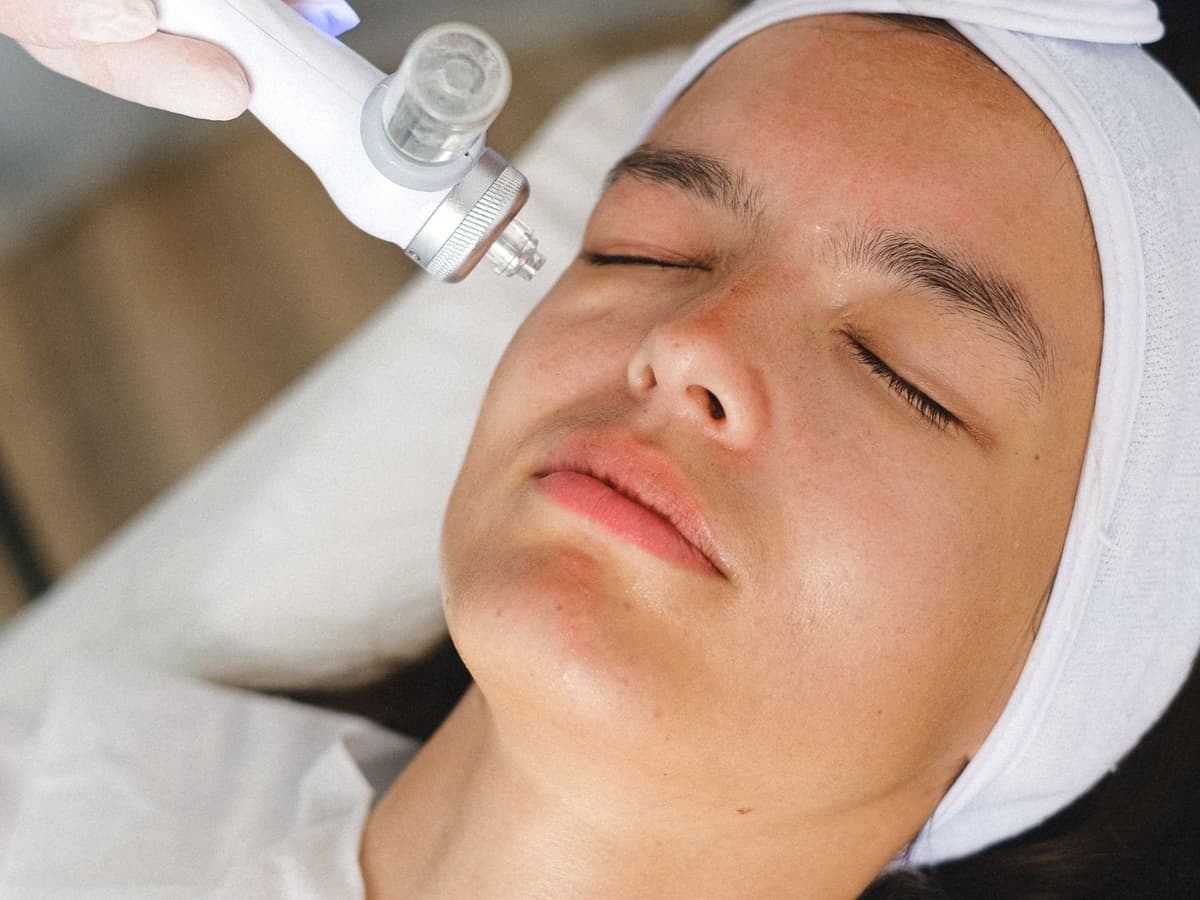
The gold-standard focused ultrasound treatment that lifts and tightens skin on the face, neck, and brow by rebuilding collagen at the foundational layer. No needles, no downtime.
Also called: ulthera, ultrasound skin tightening, non-surgical facelift
See the clinics in your city that offer it, compare reviews, and request a free consultation.
Your location is used once to pick the nearest city and is never stored.
Ultherapy is the deepest non-invasive lift in aesthetics and the first FDA-cleared one, reaching the same foundational layer a surgeon tightens during a facelift with focused ultrasound instead of a scalpel. It owns the “prejuvenation-to-prevention” window: real lifting for the stage of laxity where surgery would be premature.
How Ultherapy works
Ultherapy delivers micro-focused ultrasound with a unique advantage: live ultrasound imaging. The provider sees the tissue layers on screen and deposits precise points of heat at exact depths, including 4.5mm, the SMAS layer, the structural plane of the face that surgical facelifts pull tight.
Each heat point (65–70°C) does two things: contracts existing collagen immediately, and triggers a months-long wound-healing response that builds fresh collagen scaffolding. No surface damage: the energy passes harmlessly through the skin’s surface and focuses below, which is why there’s no downtime.
What to expect
Sessions run 30–90 minutes depending on area (brow only vs full face and neck). The energy pulses are genuinely felt (brief deep heat, most noticeable along bone), but modern settings and comfort protocols (pre-medication, breaks, sometimes nitrous) keep it very manageable. Skin may look flushed for a few hours; makeup and normal life resume immediately.
Results and timeline
Immediately: subtle tightening from collagen contraction
Weeks 4–12: the real lift develops as new collagen builds
Month 3–6: peak result (brows sit higher, jawline cleaner, neck smoother)
Duration: 1–2 years; annual maintenance sessions are the common rhythm
Ultherapy’s changes are measured in millimeters, which on a brow or jawline is exactly the difference between “tired” and “rested.”
Is Ultherapy right for you?
The sweet spot:
Mild to moderate laxity: early jowls, softening jawline, heavy brow, crepey neck
Ages ~35–60 with reasonable collagen reserves
Wanting zero downtime and no needles
The honest boundaries: significant laxity and heavy jowls respond only modestly. That’s thread lift or surgical territory. Very thin patients with minimal fat may need conservative settings.
What affects the cost
Area and line count. The core variable: full face + neck ($3,000–4,500) versus brow-only ($800–1,500 at some clinics). Always ask the line count behind a quote.
Provider training. The live imaging only helps in trained hands; experienced Ultherapy providers are worth their premium.
Combination plans. Pairing with Morpheus8 or laser for surface texture is common and often package-priced.
Browse Ultherapy providers near you on ClinicCompass to compare pricing, and see skin tightening for the full landscape of lifting technologies.
Why people choose Ultherapy
The first FDA-cleared non-invasive lift for face, neck, brow, and décolletage
Reaches the deep foundation layer (SMAS) that surgeons tighten in facelifts
Single session, zero downtime, no needles
Results build naturally over months and last 1–2 years
Are you a good candidate?
Adults with mild to moderate skin laxity on the face, neck, brow, or under the chin, the "not ready for a facelift, but noticing the sag" stage
By location
Find Ultherapy near you
879 clinics across 327 cities list Ultherapy on ClinicCompass. 533 of them (61%) say on their own websites that they offer financing or payment plans;
ask about approval and interest before you book.
How is Ultherapy different from Morpheus8 or radiofrequency tightening?
Depth and mechanism. Ultherapy uses micro-focused ultrasound with live imaging to deposit heat at up to 4.5mm, the SMAS layer, the same foundational plane surgeons lift. Morpheus8 and RF devices work shallower, remodeling skin and immediately-underlying tissue with texture benefits Ultherapy doesn't offer. Deep lift → Ultherapy. Texture + moderate tightening → Morpheus8. Many patients alternate them.
Does Ultherapy hurt?
This one has a reputation. The deep energy pulses can feel like brief hot zaps, worst along the jawbone. Modern protocols (updated energy settings, pre-medication, sometimes nitrous) have tamed it considerably. Providers who did Ultherapy years ago and hated it are often surprised on re-treatment. Ask what comfort options the clinic offers.
When will I see results?
This is a collagen treatment, not an instant one. Some subtle tightening shows immediately from heat contraction, but the real result builds over 2–3 months as new collagen forms, continuing to improve through month 6. Judge photos at 90 days minimum.
How long do results last?
Typically 1–2 years. The new collagen is genuinely yours, but aging continues. Most patients re-treat every 12–24 months to maintain. A yearly single session is a common maintenance rhythm.
Can Ultherapy replace a facelift?
No, and clinics that imply otherwise are overselling. Ultherapy lifts millimeters; surgery lifts centimeters. It shines in the mild-to-moderate laxity window: the early jowl, softening jaw line, heavy brow, or crepey neck years before surgical territory. For significant laxity, it disappoints; a consult with honest photos calibrates expectations.
Why do prices vary so much between clinics?
Treatment area and line count. A brow lift is a few hundred lines of energy; full face and neck is thousands, taking 60–90 minutes. Cheap quotes often mean fewer lines, a lighter, shorter-lived result. Ask how many lines the quote includes and what areas it covers; that's the apples-to-apples number.
Sources
Where this information comes from
Clinical facts on this page are checked against these primary sources.
1.Ulthera System 510(k) Clearance Letter and Indications for Use (K180623), U.S. Food and Drug AdministrationConfirms the FDA-cleared indications for the Ulthera System: lifting the eyebrow, lifting lax submental and neck tissue, and improving lines and wrinkles of the decollete, and that its live ultrasound imaging is used to visualize tissue layers and confirm treatment depth.
3.Ultrasound Therapy for Sagging Skin, American Society for Dermatologic SurgeryConfirms most patients need only one session, that discomfort is felt only while energy is being delivered, that visible tightening builds over the first two to three months with further improvement up to six months, and that common side effects are temporary redness, swelling, tenderness, bruising, or numbness.
4.A Systematic Review of the Efficacy of Microfocused Ultrasound for Facial Skin Tightening, PMC, National Library of Medicine, National Institutes of HealthSupports that treatment discomfort is worst over bony areas such as the jaw and submandibular region, that a single session is standard, that improvement continues from around 90 days out to roughly a year, and that temporary redness and swelling are the most common side effects.