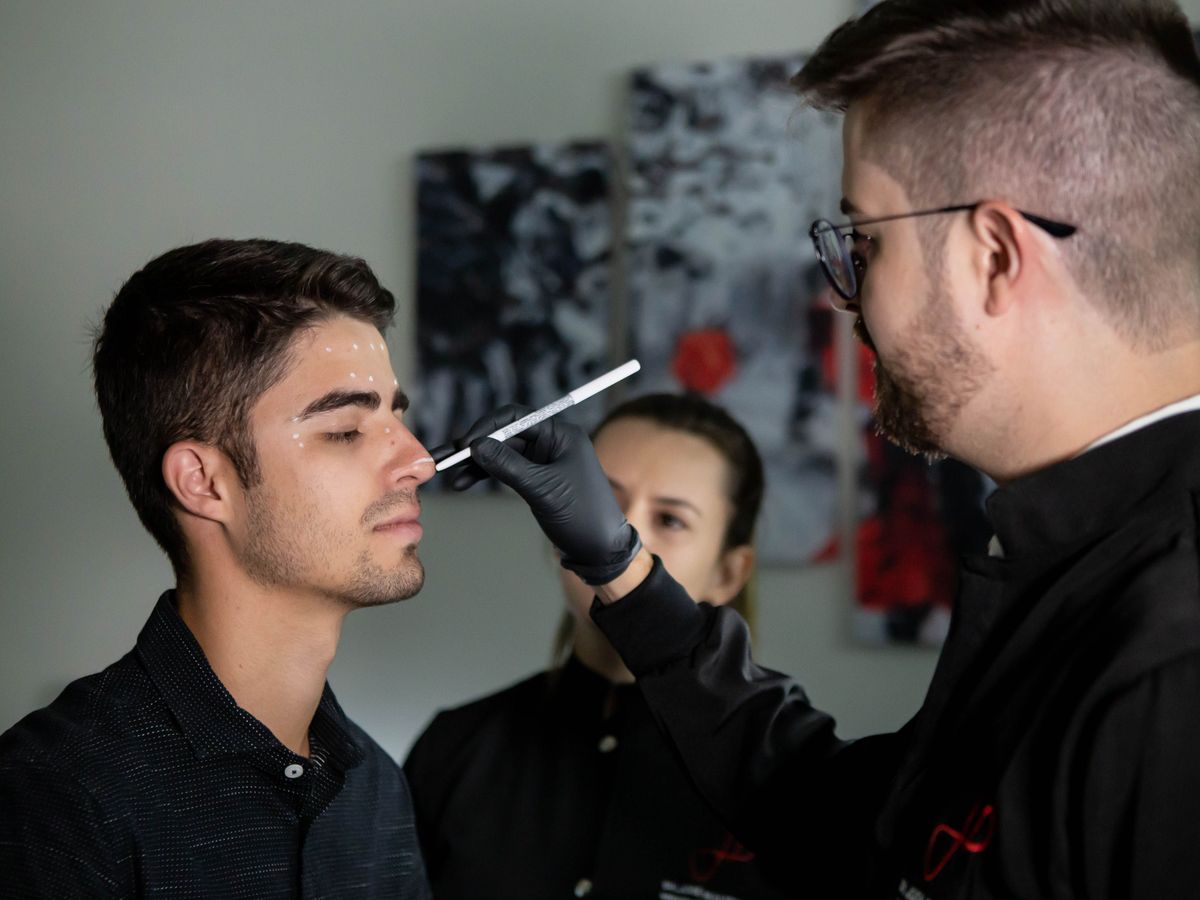
A procedure that takes fat from your own body, purifies it, and injects it into the face to restore lost volume in the cheeks, temples, under the eyes, and lips. Permanent for the fat that survives, natural because it is your own tissue, and often done alongside a facelift.
Also called: fat grafting to the face, facial fat grafting, fat transfer to face, autologous fat transfer, fat injections face
Facial fat transfer answers the question filler users eventually ask: is there something that lasts? It takes a small amount of fat from your abdomen or thighs, purifies it, and injects it into the areas of the face that have lost volume, the cheeks, temples, under-eye hollows, and the folds around the mouth. The fat that establishes a blood supply stays permanently, and because it is your own tissue the result looks and moves like you.
What the procedure involves
Under sedation or local anesthesia with sedation, the surgeon removes fat through a small liposuction cannula from a donor site, most often the abdomen or thigh. The fat is spun or filtered to separate the healthy cells from fluid and debris, then injected in tiny threads through fine cannulas across the face, placed to rebuild the structure that has thinned. The procedure takes one to two hours and is often combined with a facelift, where restoring volume makes the lift look natural rather than tight.
What to expect
The face swells and often bruises for one to two weeks; the donor site is sore for about a week. The initial result looks fuller than the final one, because some of the transferred fat is absorbed over the first three months. Typically half to two thirds survives, and the volume that remains at three months is permanent, aging along with the rest of the face. A second smaller session is sometimes done to top up areas where survival was lower.
Fat transfer versus filler
Filler is the right tool for precise, modest, adjustable change and for anyone who wants to try before committing; it dissolves over one to two years. Fat transfer is the right tool for broad volume loss, for people whose yearly filler has grown to several syringes, and for anyone having a facelift who needs volume restored in the same operation. It costs more up front and less over a decade.
What it costs
Typically $3,500 to $8,000 depending on the areas treated, the city, and whether it is combined with other surgery, where it adds less to the total. Not covered by insurance.
Choosing a surgeon
Ask how many fat transfers the surgeon does a year and to see results at one year, when the surviving volume is what remains. Ask how they process the fat and how they place it, since technique determines survival. Ask what they expect your survival rate to be and whether a second session is likely. And ask how they decide between fat and filler for a given face.
Browse the surgeons below and compare facial fat transfer providers and pricing by city.
Why people choose Facial Fat Transfer
Your own tissue, so no foreign material and no allergy risk
Lasting result for the fat that establishes, unlike filler that dissolves
Restores broad volume across the whole face in one procedure
Improves skin quality over time, an effect attributed to the stem cells in fat
Are you a good candidate?
People with significant facial volume loss who want a long-lasting, natural alternative to repeated filler, and people having a facelift who need volume restored at the same time
By location
Find Facial Fat Transfer near you
441 practices across 167 cities list Facial Fat Transfer on ClinicCompass. 341 of them (77%) say on their own websites that they offer financing or payment plans;
ask about approval and interest before you book.
They solve different scales of problem. Filler is precise, adjustable, reversible, and ideal for specific areas and modest volume; it dissolves over one to two years. Fat transfer restores broad volume across the face in one procedure with a lasting result, at a surgical cost and recovery. Many people use filler for years and move to fat transfer when the volume they need each year adds up to several syringes.
How much of the fat survives?
Typically 50 to 70 percent of the injected fat establishes a blood supply and stays permanently; the rest is absorbed over the first few months. Surgeons account for this by placing slightly more than the final volume needed, and a second session is sometimes done to top up. Weight stability afterward protects the result, since the transferred fat behaves like the fat it came from.
Where does the fat come from?
Usually the abdomen, flanks, or thighs, removed with gentle liposuction through a tiny incision. The amount is small and the donor site is sore for a week rather than noticeably changed. The fat is processed to remove fluid and damaged cells before injection.
What is the recovery?
The face is swollen and often bruised for one to two weeks, with the final volume settling over three months as some fat is absorbed. Most people return to work at ten to fourteen days. The donor site is sore for about a week.