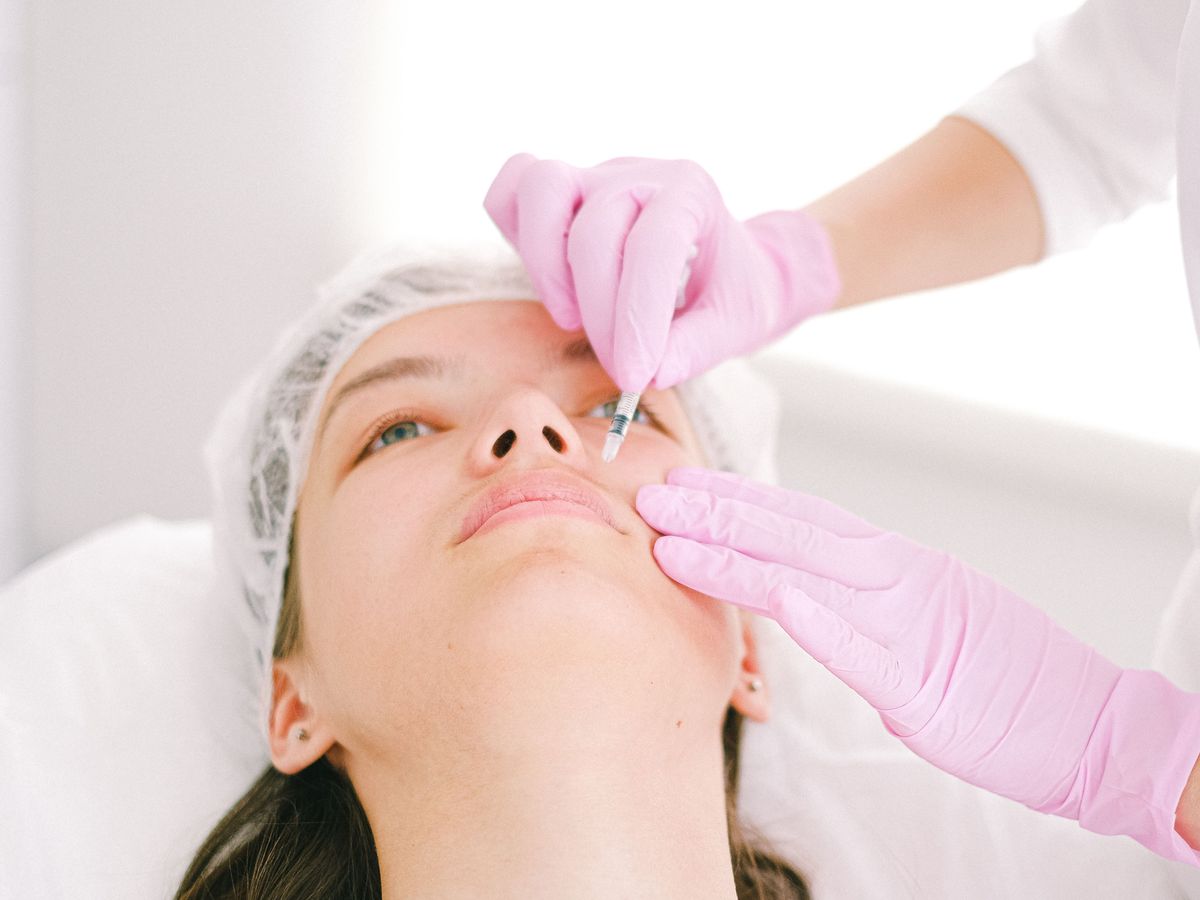
A calcium-based filler that provides immediate structure and then stimulates your own collagen as it dissolves, used for the jawline, chin, cheeks, and the backs of the hands, and in diluted form for crepey skin on the body. Firmer than hyaluronic acid fillers and not reversible.
Radiesse sits between the two families of injectables most people know. Like a hyaluronic acid filler it adds volume the day it goes in. Like Sculptra it stimulates your own collagen over the following months. It is firmer than hyaluronic acid, which makes it the filler injectors reach for when the job is structure, a sharper jawline, a stronger chin, lifted cheeks, and it is the only major filler approved for the backs of the hands.
What it is
Radiesse is calcium hydroxylapatite, a mineral found naturally in bone, suspended as microspheres in a gel. Injected, the gel provides immediate volume, and over months the body absorbs it while building new collagen around the microspheres. The result is a lift that holds twelve to eighteen months, longer than most hyaluronic acid fillers, with some of the collagen improvement persisting after that.
Because it is not hyaluronic acid, it cannot be dissolved with an enzyme. That makes injector selection and placement more consequential, and it is why Radiesse is not used in the lips or under the eyes, where softness and reversibility matter.
Where it is used
Jawline and chin. The firmness that rules it out of the lips makes it ideal here, defining the jaw’s edge and projecting a weak chin with a result that reads as bone rather than filler. Cheeks and mid-face. Placed on the cheekbone it lifts the mid-face and softens the folds below. Hands. Aging hands lose the fat that hides tendons and veins; Radiesse restores the padding and is approved for exactly that. Body, diluted. Mixed thin with saline and spread across crepey skin on the neck, chest, arms, or knees, it stimulates collagen without adding volume, competing with Sculptra for that job.
What to expect
Treatment takes twenty to forty minutes, with lidocaine mixed in. Swelling and possible bruising last a few days; the structural result is visible immediately and refines as swelling settles, with collagen building over the following months. Results last twelve to eighteen months on the face, around a year for hands and body.
What it costs
Syringes run $700 to $1,200 depending on the city, with jawline or chin plans typically using one to two. Hands usually take one syringe per hand. Diluted body treatments are priced per area.
Choosing an injector
Ask how many Radiesse treatments the injector does and where they use it. Ask how they approach placement given that it cannot be dissolved, and to see results at three months, when the collagen effect has developed. If hands or body are the goal, ask specifically about their experience with hyperdilute technique.
Browse the clinics below and compare Radiesse providers and pricing by city.
Why people choose Radiesse
Immediate volume plus collagen stimulation that continues for months
Firmer than hyaluronic acid fillers, so it holds structure on the jaw and chin
Approved for the backs of the hands, where hyaluronic acid fillers are not
Diluted, it treats crepey skin on the body
Are you a good candidate?
People wanting definition along the jawline or chin, lift in the mid-face, rejuvenation of aging hands, or improvement in crepey skin on the neck, chest, arms, or knees
By location
Find Radiesse near you
906 clinics across 261 cities list Radiesse on ClinicCompass. 633 of them (70%) say on their own websites that they offer financing or payment plans;
ask about approval and interest before you book.
How is Radiesse different from Juvederm or Restylane?
Juvederm and Restylane are hyaluronic acid gels; they add volume and can be dissolved with an enzyme if needed. Radiesse is calcium hydroxylapatite in a gel; it adds volume immediately, is firmer, and stimulates collagen as the gel dissolves over months, leaving some of the improvement behind. It cannot be dissolved, which is why it is used for structure on the jawline, chin, and cheeks rather than in the lips or under the eyes.
What is it used for on the hands?
Aging hands lose fat, so tendons and veins show. Radiesse is approved for the backs of the hands and restores the smooth padding over them, with results lasting a year or more. It is one of the few fillers with that approval and a common add-on to a facial treatment plan.
What is hyperdilute Radiesse?
Radiesse mixed with saline and lidocaine into a thin solution and spread across an area with crepey skin, the neck, chest, upper arms, above the knees, and the buttocks, to stimulate collagen without adding bulk. Results build over three months and last a year or more. It competes with Sculptra for this use.
How long does it last and what does it cost?
Twelve to eighteen months for structural use, sometimes longer, and around a year for hands and diluted body treatments. Syringes run $700 to $1,200, and a jawline or chin plan typically uses one to two.
Sources
Where this information comes from
Clinical facts on this page are checked against these primary sources.
1.RADIESSE Injectable Implant: Instructions for Use, U.S. Food and Drug Administration (Center for Devices and Radiological Health, PMA P050052)FDA-approved indication for subdermal correction of moderate to severe facial wrinkles and folds such as nasolabial folds, and for restoring facial fat loss (lipoatrophy) in people with HIV; and that the implant's principal component is synthetic calcium hydroxylapatite suspended in a gel carrier.
2.RADIESSE Injectable Implant: Instructions for Use for the Dorsum of the Hand, U.S. Food and Drug Administration (Center for Devices and Radiological Health, PMA P050052/S049)FDA approval of RADIESSE for hand augmentation to correct volume loss in the dorsum of the hands, that safety data support use through about 1 year in the hand, and the warnings that it may cause nodules or lumps and swelling in the hand.
4.Calcium Hydroxylapatite for Facial Rejuvenation: Properties, Mechanisms, and Clinical Applications, Tissue Engineering Part B: Reviews (PubMed, National Institutes of Health)Confirms the dual mechanism of immediate volumization plus long-term collagen stimulation through fibroblast activation, and that CaHA fillers lack a reversal agent (cannot be dissolved like hyaluronic acid fillers) and carry a risk of nodule formation.