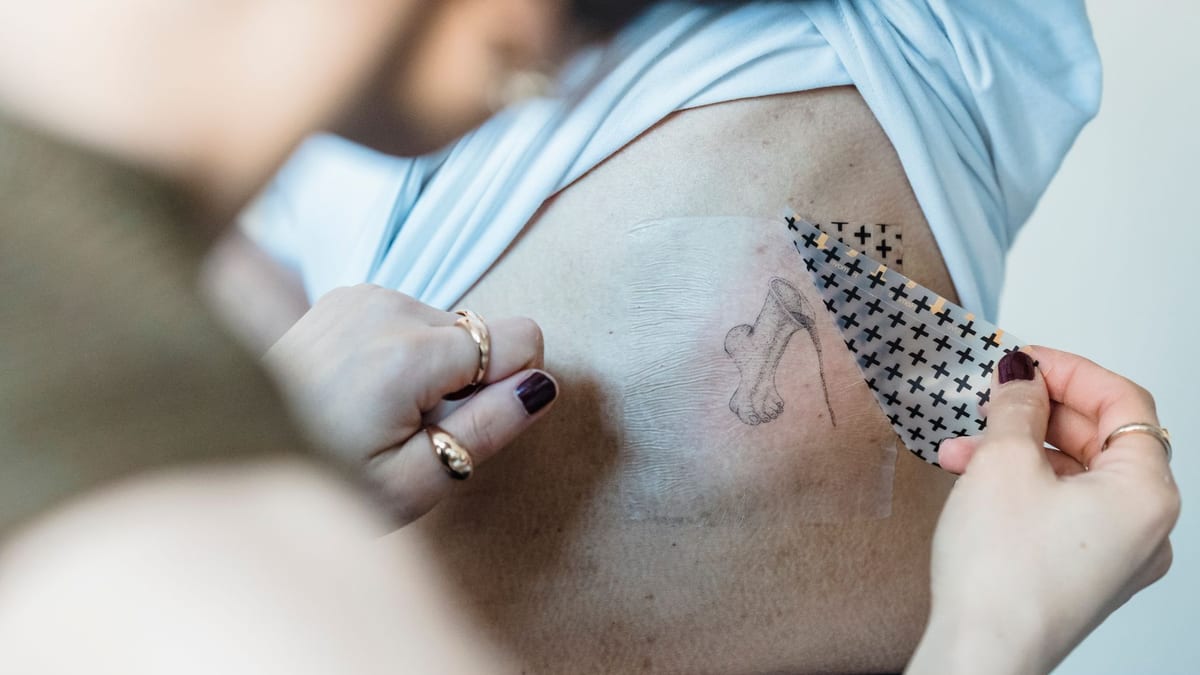
Laser Tattoo Removal Aftercare: What Healing Looks Like, Day by Day
Laser tattoo removal heals like a mild burn: white frosting, then redness and swelling, often blisters, then scabs and itching for a week or two. Here is what to expect each day, how to care for the area, and the mistakes that cost you sessions or leave marks.
How do you care for skin after laser tattoo removal, and what does healing look like? Treat it like a small, clean burn. Expect white frosting for minutes, redness and swelling for a day or two, possible blisters, then scabbing and itching for one to two weeks. Keep it clean, covered with a thin layer of ointment, out of water and out of the sun, and never pick at it.
That is the short version. The longer version matters because laser tattoo removal is a series, not a single appointment. Most professional tattoos need somewhere between six and twelve sessions spaced six to eight weeks apart, and how well you heal after each one decides two things: whether the skin under the tattoo ends up looking normal, and whether you can go back for the next session on schedule. Poor aftercare is one of the few parts of this process you control completely.
Why the skin reacts the way it does
The laser does not burn the tattoo off. It fires extremely short pulses of light at a wavelength the ink absorbs, which shatters the ink particles into fragments small enough for your immune system to carry away. The American Academy of Dermatology describes the process the same way, and notes it takes multiple sessions because no laser can safely break down every layer of ink at once.
That energy still lands in your skin. The surface reacts like a superficial burn, which is why the aftercare looks like burn care. The fading itself happens slowly, over the weeks between sessions, as your body clears the fragments. The skin heals in about two weeks. The ink keeps fading for six weeks or more after that.
What to expect, day by day
| Timing | What you see and feel | What to do |
|---|---|---|
| During and right after | White, raised “frosting” over the ink; stinging like a sunburn; pinpoint bleeding possible | Clinic cools the area and applies ointment and a dressing |
| First 20 minutes | Frosting fades; redness and swelling take over | Cold pack wrapped in a cloth, 10 minutes on and off |
| Day 1 | Red, swollen, warm, tender; may weep slightly | Leave the dressing on as long as the clinic says, usually 24 hours |
| Day 1 to 3 | Blisters are common, especially on dense or colorful ink | Leave blisters intact; keep ointment on and the area covered |
| Day 3 to 7 | Blisters flatten; thin crusts or scabs form; itching starts | Gentle cleaning once or twice a day, ointment, no scratching |
| Week 2 | Scabs flake off on their own; skin underneath is pink and shiny | Switch to a plain fragrance-free moisturizer; sun protection |
| Weeks 3 to 8 | Skin looks normal; the tattoo keeps getting lighter | Sunscreen, patience, book the next session at 6 to 8 weeks |
Two things surprise first-timers. The first is frosting: the white, almost chalky look of the tattoo right after the laser pass. It is gas released as the ink heats, it is expected, and it disappears within about 20 minutes. The second is blistering. Many people assume a blister means something went wrong. On a large, dark, or heavily saturated tattoo, blisters in the first 72 hours are routine. What matters is what you do with them.
The aftercare routine
Clinics differ in the details, so the instructions you are given win over anything general. Most of them look like this.
First 24 hours. Keep the dressing on for as long as your provider says, commonly a day. Use a cold pack wrapped in a thin towel to bring down swelling; never ice directly on the skin. If the tattoo is on an arm or leg, keep it raised when you can. For discomfort, many clinics suggest acetaminophen rather than aspirin or ibuprofen, because the latter can make bruising and pinpoint bleeding worse. Ask what your clinic prefers.
Days 2 to 7. Wash the area gently once or twice a day with lukewarm water and a mild, fragrance-free soap. Pat dry with a clean towel; do not rub. Apply a thin layer of the ointment your clinic gave you, or plain petroleum jelly, and cover with a non-stick bandage while blisters and scabs are present, especially where clothing rubs. Wear loose clothing over the area. Short showers are fine. Baths, pools, hot tubs, lakes, the ocean, and saunas are not, until the skin has fully closed, usually about two weeks.
Blisters. Leave them alone. The blister roof is a sterile dressing your body made, and popping it opens a wound to bacteria and raises the risk of a scar. If one bursts on its own, wash it gently, apply ointment, and cover it. A blister that is large, painful, or in a spot that keeps getting knocked is worth a photo to the clinic; some providers will drain one under clean conditions.
Scabs and itching. Itching in the second week is a sign of healing and is the point where most avoidable marks are made. Do not scratch and do not pick scabs, even when they are hanging by a thread. A cool compress and moisturizer help. Some people take an oral antihistamine for the itch; ask your provider or pharmacist whether that is suitable for you.
Weeks 2 to 8. Once the scabs are gone, switch to a plain moisturizer and protect the area from the sun every day: clothing over it, or a broad-spectrum sunscreen of SPF 30 or higher once the skin is closed. Treated skin is prone to pigment changes, and sun on newly healed skin is the most common way to end up with a dark patch that outlasts the tattoo.
The mistakes that cost you
| Mistake | What it can cause |
|---|---|
| Popping blisters or picking scabs | Infection, scarring, texture changes that make later sessions harder |
| Swimming or soaking before the skin closes | Infection; pools and hot tubs are the usual culprits |
| Sun or tanning in the weeks after | Darker or lighter patches; some clinics will postpone your next session |
| Shaving over the healing area | Torn scabs and irritation; wait until it has fully healed |
| Booking sessions closer together to finish sooner | More irritation, more pigment risk, and no faster fading |
The last one deserves a word. Spacing exists because your immune system needs time to clear the ink fragments, and because the skin needs to be fully healed before it takes more energy. Coming back at four weeks instead of eight does not move the finish line closer. Many clinics now space sessions eight weeks or more apart, and longer for darker skin tones.
Normal side effects, and when to call
Some side effects are part of the process. Others are a reason to pick up the phone.
Normal: redness, swelling, tenderness, blisters, scabs, itching, and mild bruising in the first two weeks. Lighter or darker patches of skin where the tattoo was. The AAD notes these pigment changes typically fade within 6 to 12 months.
Call your clinic if: redness keeps spreading after day three, the area becomes hotter and more painful instead of less, you see pus or yellow crusting with a bad smell, red streaks run from the area, or you develop a fever. Those are signs of infection and need to be seen. Also call about a rash, hives, or intense itching well beyond the treated area, which can signal an allergic reaction. These are uncommon, and reactions to red ink are the ones most often reported.
Paradoxical darkening. White, flesh-tone, and some pink, red, and cosmetic inks (for example, older lip liner or eyebrow tattoos) can turn darker, sometimes grey or black, after the first laser pass. It happens because of the iron oxide and titanium dioxide in those inks. An experienced provider tests a small spot first and waits to see the result before treating the whole design. If yours did not, ask why.
Scarring. With modern picosecond and Q-switched lasers, appropriate settings, and good aftercare, scarring is uncommon. The risk rises with aggressive treatment, infection, picking, and a personal history of keloids. If you scar easily or have keloids anywhere, say so at the consult; read our page on keloids for why it matters.
Pain during and after
Most people describe the laser as a hot rubber band snapping against the skin. It is sharper than getting the tattoo, but a session lasts minutes, not hours. Clinics use numbing cream, chilled air blown on the skin during treatment, and sometimes injected local anesthetic for large pieces.
Afterward, the area feels like a sunburn for a day or two, then tender while blisters are present, then itchy. Pain that increases after day three is not the normal pattern; that is a call to the clinic.
Skin tone and laser choice
Laser tattoo removal works on every skin tone, but it is not the same treatment on every skin tone. The laser can be absorbed by your natural pigment as well as the ink, which raises the risk of lighter patches on deeper skin. The usual approach is a longer wavelength (the 1064 nm setting most removal lasers carry), more conservative energy, and longer gaps between sessions. That can add sessions. It is the trade for keeping the skin under the tattoo even in tone. If a provider does not change anything in their plan for your skin tone, that is a reason to see someone else. Our med spa red flags post covers how to tell.
Can you speed up fading?
Clinics and forums are full of tips: exercise, drinking water, lymphatic massage, avoiding alcohol. Most are plausible and harmless, since your immune and lymphatic systems do the clearing, but none has strong evidence behind it. The one lifestyle factor with research support is smoking. A retrospective study of tattoo removal patients found smokers were significantly less likely to clear a tattoo within ten sessions than non-smokers. If you smoke and you are paying per session, that is worth knowing.
What does reliably affect the number of sessions is the tattoo itself: black ink clears fastest, older and amateur tattoos clear faster than new professional work, and greens, blues, and bright colors take longer. Tattoos on the hands, feet, and lower legs often take longer because circulation there is slower.
What it costs, and how aftercare fits in
A session commonly runs $200 to $500 depending on the size of the tattoo, the laser, and the city; see the laser tattoo removal hub for clinics and local pricing, and our cost calculator to estimate a full series. A complete removal of a medium professional tattoo is often a $1,500 to $5,000 project spread over a year or more. If you only want to fade a tattoo enough for a cover-up, two to four sessions is often enough, a fraction of the cost.
Aftercare is cheap: a fragrance-free soap, a tub of petroleum jelly, non-stick bandages, a cold pack, and sunscreen. Most clinics hand you the first dressing and a written sheet. You do not need a branded recovery kit. What you do need is the discipline to leave it alone for two weeks, six to twelve times over.
Before your first session
A few things make the aftercare easier:
- Tell the provider about any medication you take, especially blood thinners and anything that makes you sun sensitive, plus any history of cold sores, keloids, or slow healing.
- Avoid tanning and self-tanner on the area for about four weeks before treatment.
- Plan around water: do not book a session the week before a beach trip or a pool vacation.
- Ask which laser the clinic uses, how many sessions they expect for your tattoo, and what the aftercare instructions are, in writing. Our first med spa consultation guide lists other questions worth asking.
Laser tattoo removal clinics are listed by city in our directory. Read our unwanted tattoo page for how removal works and what results to expect, then compare providers in your city and ask each one the same questions before you book.
Find a Laser Tattoo Removal clinic near you
See the clinics in your city that offer it, compare reviews, and request a free consultation.
Your location is used once to pick the nearest city and is never stored.
Keep reading
What Med Spas Pay: Nurse Injector and Aesthetic Nurse Salaries by City
There is no official salary figure for a nurse injector. There is a floor, set by what hospitals pay registered nurses and nurse practitioners in your city, and a ceiling, set by how much revenue the injector brings in. Here are the floors in 18 metros, the pay structures that work, and the ones that quietly bankrupt clinics.
Read post → Treatment Deep DiveHow Long Does Laser Hair Removal Last? Years for Most Areas, With One Asterisk
After a full series, most people stay largely hair-free for years, and some areas never really come back. But nobody gets 100% forever. Here is the honest timeline by body area, the six reasons hair returns, and what a year of maintenance actually costs.
Read post → Patient GuideLip Filler Aftercare: What to Do, What Not to Do, and the Day-by-Day Healing Timeline
What should you do after lip filler? Ice gently, keep your head up, skip alcohol, hard exercise and heat for 24 to 48 hours, and do not judge the result for two weeks. Here is the day-by-day healing timeline, the full do-not list, and the few symptoms that are not normal.
Read post →Find Laser Tattoo Removal providers in your city
Compare vetted clinics with real Google ratings, see honest local cost ranges, and request a free consultation.