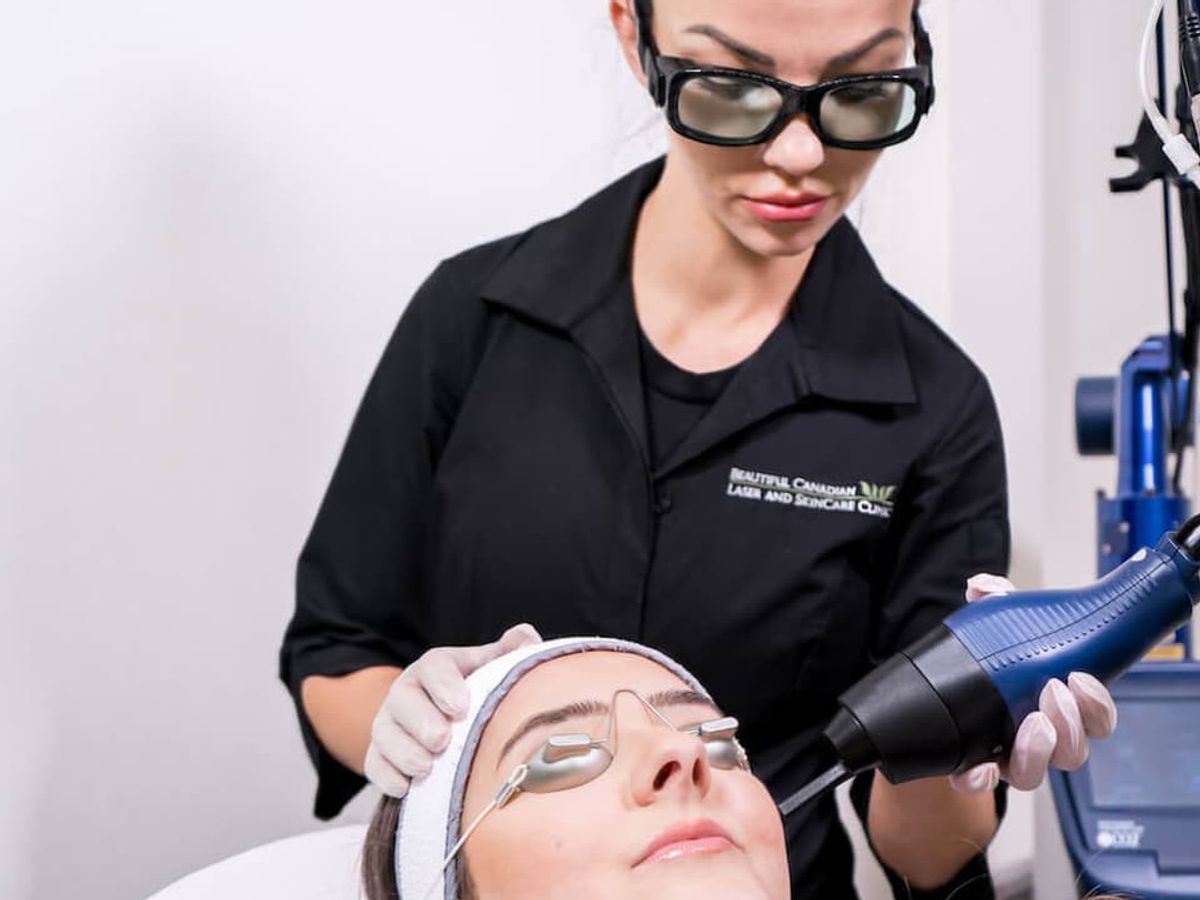
Picosecond and Q-switched lasers that shatter tattoo ink into particles your body clears naturally, the only proven path to removing or meaningfully fading unwanted tattoos.
Also called: tattoo removal, picosecond laser, Q-switched laser, PicoSure
See the clinics in your city that offer it, compare reviews, and request a free consultation.
Your location is used once to pick the nearest city and is never stored.
Laser tattoo removal is the only proven way to un-make a tattoo, and modern picosecond technology has made it dramatically better than its reputation. The trade: it works, but it’s a project measured in months, sessions, and aftercare discipline, not a single appointment.
How laser tattoo removal works
Tattoo ink sits in the dermis in particles too large for your immune system to clear. That’s why tattoos are permanent. Removal lasers fire pulses tuned to the ink’s color at speeds that shatter the particles without cooking the surrounding skin:
Q-switched (nanosecond) lasers, the established workhorses
Picosecond lasers (PicoSure, PicoWay), pulses 1,000× shorter, shattering ink into finer fragments that clear faster and reaching stubborn blues and greens
After each session, your lymphatic system spends weeks carrying the fragments away, which is why sessions sit 6–8 weeks apart and why patience is the treatment’s real currency.
What to expect
Sessions are short, often 5–15 minutes even for medium pieces. The sensation is a hot snap; clinics numb with topical cream, chilled air, or injections for large work. Afterward expect redness, swelling, and possible blistering for 3–7 days, treated like a healing burn: keep it covered, moist, and untouched.
Whatever you do, don’t pick. Nearly all removal scarring comes from aftercare violations, not the laser.
Results and timeline
Amateur/older black tattoos: often meaningfully faded in 3–5 sessions, gone in 6–8
Professional pieces: typically 8–12 sessions for full removal
Cover-up prep: 2–4 sessions usually suffices
Ink visibly fades between each session as clearance continues
Full removal is a 1–2 year relationship with your clinic. The before/afters are worth it, but only clinics honest about the timeline deserve your deposit.
Is laser tattoo removal right for you?
Good candidates:
Any unwanted tattoo, with timeline patience
Cover-up planners who need strategic fading
All skin tones, with the caveat that deeper tones need conservative settings and an experienced provider
Manage expectations on: bright greens/blues on older Q-switched platforms, cosmetic flesh-tone inks (test spots first), and tattoos over scars.
What affects the cost
Size. Priced per session by size tier: a business-card piece runs $200–350/session; half-sleeves far more.
Platform. Picosecond sessions cost ~30–50% more than Q-switched but usually need fewer total sessions. Compare total-removal quotes, not session prices.
Session count packages. Most clinics discount 15–25% for buying series upfront.
Goal. Fading for cover-up costs a fraction of full removal.
Browse laser tattoo removal providers near you on ClinicCompass and compare platforms and package pricing before committing to a series.
Why people choose Laser Tattoo Removal
The only clinically proven method for removing tattoo ink
Modern picosecond lasers clear ink in fewer sessions than older tech
Can fully remove, selectively fade, or prep a tattoo for a cover-up
Works on professional and amateur tattoos alike
Are you a good candidate?
Anyone with an unwanted tattoo and realistic timeline expectations. Outcomes depend on ink colors, depth, age of tattoo, and skin tone, all assessed at consult
By location
Find Laser Tattoo Removal near you
1,155 clinics across 403 cities list Laser Tattoo Removal on ClinicCompass. 694 of them (60%) say on their own websites that they offer financing or payment plans;
ask about approval and interest before you book.
The honest range is 6–12 for full removal of a professional tattoo, sometimes more, spaced 6–8 weeks apart, so a complete removal is a 1–2 year project. Variables that shorten it: black ink, older tattoos, amateur work, ink placed shallow. Variables that lengthen it: dense professional ink, bright greens and blues, newer tattoos, cover-ups. A good clinic gives a range at consult, not a promise.
What's the difference between picosecond and Q-switched lasers?
Pulse speed. Q-switched lasers (nanosecond) shatter ink photothermally; picosecond lasers (PicoSure, PicoWay) pulse a thousand times faster, breaking ink into finer particles the body clears more efficiently, typically fewer sessions and better performance on stubborn colors. Pico sessions cost more but often win on total cost. Ask which platform the clinic runs.
Does tattoo removal hurt more than getting the tattoo?
The sensation is sharper (a hot rubber-band snap), but sessions are dramatically shorter: a few minutes versus hours. Clinics numb well (topical, chilled air, sometimes lidocaine injections for large pieces). The week of aftercare is more the commitment than the minutes in the chair.
Can all ink colors be removed?
Black is the easiest. Every laser targets it well. Red responds well to specific wavelengths. Greens and blues were historically the stubborn colors; picosecond platforms handle them far better. Whites, pastels, and cosmetic (flesh-tone) inks are the true problem children and can darken paradoxically. An experienced provider tests first.
Will there be scarring?
With modern lasers and proper aftercare, scarring risk is low. Most residual marks are pigment changes (lightened or darkened patches) that fade over months. The bigger scarring risks are aggressive over-treatment and picking at blisters. Deeper skin tones need conservative settings and an experienced provider to avoid pigment loss.
Fade for a cover-up, or full removal?
If a cover-up is the plan, you often only need 2–4 sessions to fade the old piece enough for the new work, a fraction of the removal cost and timeline. Tell the clinic the goal; the plan changes materially.
Sources
Where this information comes from
Clinical facts on this page are checked against these primary sources.
1.Tattoo removal: Lasers outshine other methods, American Academy of DermatologyConfirms the shatter-and-clear mechanism (the laser's light shatters ink into tiny particles the body must flush out), that multiple sessions are needed because a laser cannot safely break down all ink layers in one treatment, that some patients develop light or dark spots that typically fade within 6 to 12 months, and that scarring and other serious side effects are rare with a trained physician but more common with an untrained provider.
3.PicoWay Laser System: FDA 510(k) Clearance Letter and Summary (K153527), U.S. Food and Drug AdministrationConfirms the PicoWay picosecond laser is FDA-cleared for tattoo removal at specific wavelengths matched to ink colors, and that in the clearance study 86% of treated tattoos achieved at least 50% clearance after up to 3 treatments, supporting that modern picosecond platforms can clear ink in fewer sessions.