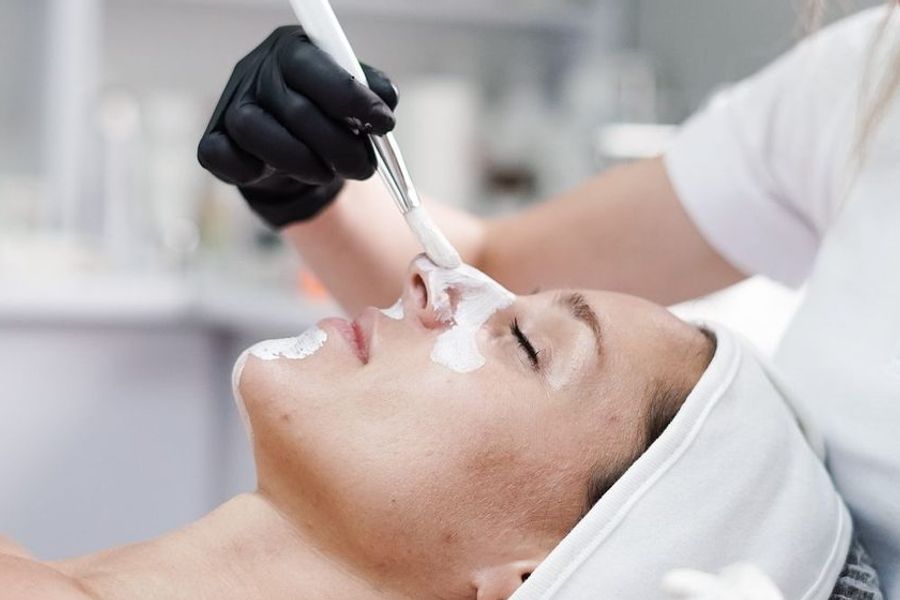
A blackhead is an open pore packed with oil and dead skin cells. The plug darkens where it meets the air. It is not dirt, so scrubbing harder does not help, and it is not a pimple, so most acne washes miss it. Blackheads cluster on the nose, chin and forehead, they are stubborn, and the most searched fix, squeezing them in the mirror, is the one dermatologists tell you not to do.
The honest plan has two halves. A clinic clears what is already there. A routine at home keeps the pores from refilling. Skip the second and you are back at the clinic in a month.
Clearing what is there
Extraction is the direct answer. A trained provider loosens the skin, then uses sterile instruments and controlled pressure to lift each plug out whole. Done properly it is safe and it clears the pore cleanly; done at home it pushes the plug deeper, inflames the pore, invites infection from the bacteria on your hands and can leave a scar. Many medical-grade facials include extractions after steaming or an enzyme exfoliation, which is the version worth paying for.
A HydraFacial does the same job by machine: a spiral tip exfoliates and applies a loosening solution, then suction pulls the congestion out, all in about half an hour with no downtime. In a small open-label study of twenty adults with mild to moderate acne, six treatments two weeks apart raised the share rated clear or almost clear from 20% to 65%. The study was small, had no control group and had an author employed by the device company, so treat it as a reasonable signal rather than proof.
A light chemical peel removes the dead cells and excess oil that clog pores and helps clear acne; a series between extractions keeps the skin smoother. Microdermabrasion polishes the surface for a brighter, more even complexion, but the dermatology guidance lists it for dullness and texture rather than blackheads, so think of it as a finish, not the fix.
Keeping them away
A retinoid at night is the only thing on this page that prevents blackheads rather than removing them. It keeps the pore from plugging. Adapalene is sold without a prescription, and stronger forms are prescribed. It takes six to eight weeks to show, and it is the step most people skip after a satisfying extraction, which is why the blackheads come back. A benzoyl peroxide wash reduces the bacteria that turn a blackhead into a pimple. Sunscreen every morning.
When it is a dermatologist’s job
Blackheads with painful bumps, cysts or scarring are acne that needs prescription treatment, not a facial. The same is true of blackheads that cover the nose and cheeks and return within weeks of every treatment, or of skin that a proper routine has not touched in two months. Extraction is usually offered after other treatment has failed to clear the skin, not instead of it.
How to choose a provider
Ask whether the esthetician extracts, with what, and how they sterilize. Ask what they do with a plug that will not lift (the right answer is to leave it). Ask what they recommend for home use, because a clinic that sells you a monthly treatment and never mentions a retinoid is managing your blackheads, not solving them. And ask them to send you to a dermatologist if what they see looks like more than congestion.
Browse the clinics below. Arrive without makeup and tell the provider what you already use at home, including any retinoid, so they do not peel skin that is already sensitized.