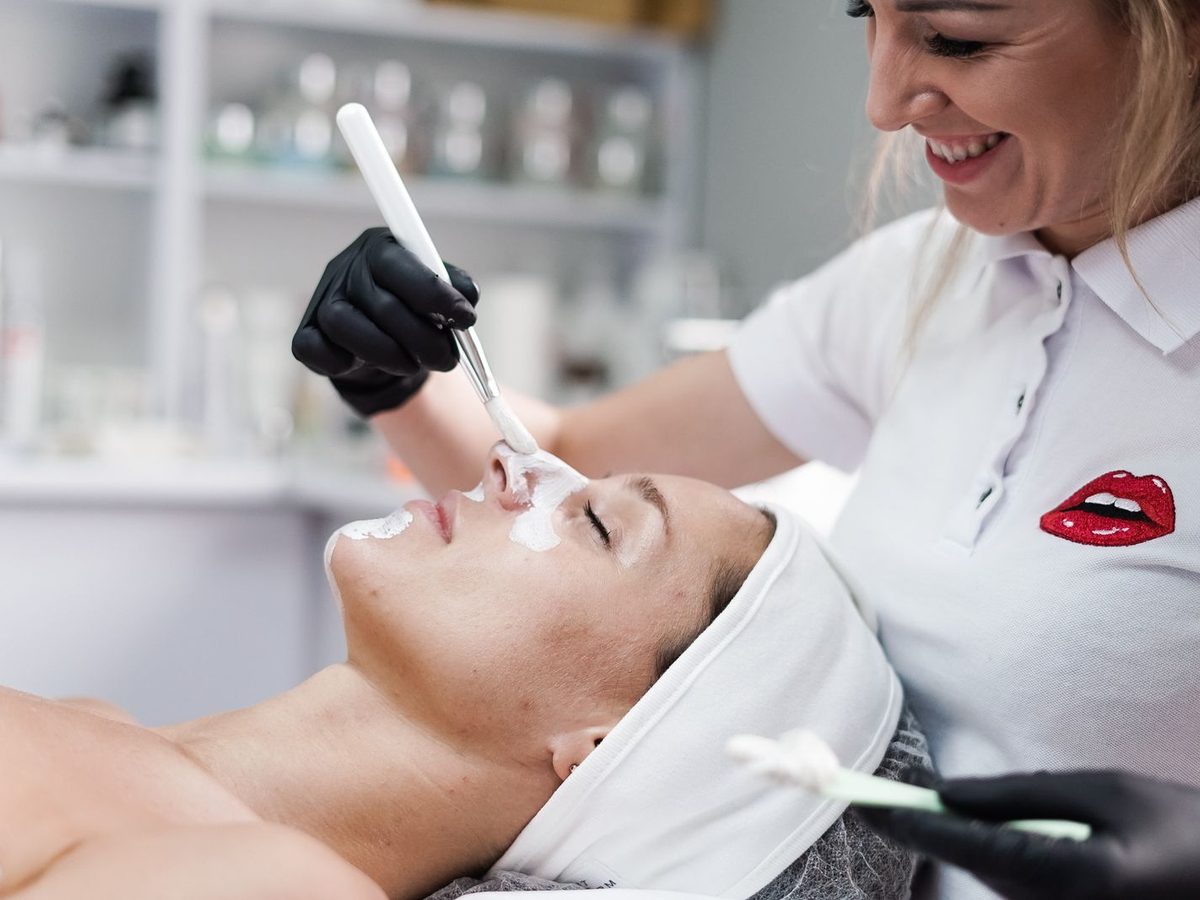
A facial is the most booked service on almost every med spa menu and the most searched skin treatment in North America by a wide margin. It is also the one where the name on the menu tells you least about what you will get: a signature facial at one clinic is a fifty-minute clinical session with extractions and an acid exfoliant, and at another it is a mask and a massage. This page explains what a medical facial actually consists of, what the device versions add, who is doing it and under what license, what the evidence supports, and how to choose.
What a med spa facial is
The structure is consistent even when the products are not: cleanse, exfoliate (an enzyme, a mild acid, or mechanical), steam, extractions of clogged pores, a mask matched to the concern, serums, moisturizer and sunscreen, in about fifty to sixty minutes. Hydrating, brightening, acne, teen and men’s facials are the same sequence with different products and more or fewer extractions. A signature or custom facial means the esthetician chooses the steps for your skin on the day; the word is marketing, not a regulated category.
What makes it medical is the setting. The esthetician’s license is the same one a day spa esthetician holds, and in most states there is no separate medical esthetician license; training requirements are set state by state and range from about 200 to 1,200 hours. Under a physician or nurse practitioner, though, an esthetician can use stronger exfoliants and actives, run device steps, and refer you to the clinician when something on your skin needs a diagnosis. That referral path is the real difference, and it is worth more than any serum.
The device versions
HydraFacial has its own page. DiamondGlow exfoliates with a diamond tip while suctioning debris and infusing a serum. Glo2Facial (OxyGeneo) exfoliates and oxygenates the surface with a reactive pod, then adds ultrasound and massage. Oxygen facials spray pressurized oxygen with a serum. LED light, a mild peel or dermaplaning are common add-ons; microdermabrasion and chemical peels are the deeper exfoliation options with their own pages. All of the device facials give an immediate glow and are pleasant to have. What they do not have is evidence for lasting change beyond what exfoliation and hydration deliver.
What the evidence supports, honestly
The products used in a facial are cosmetics. Under the FDA’s definition a cosmetic is for cleansing, beautifying, promoting attractiveness or altering the appearance, and it needs no approval before it is sold; anything intended to treat disease or change the structure or function of the skin is a drug. A facial that promises to treat acne, rosacea or melasma is therefore making a drug claim with cosmetic products, and the aesthetic dermatology literature has said plainly that many rejuvenation claims are not supported by good scientific evidence and that unproven services are often sold at significant cost.
What a good facial reliably does: clears congestion through proper extractions, exfoliates dead surface cells so skin looks smoother and products absorb, hydrates, and gives a professional a monthly look at your skin. That is worth paying for. What it does not do: treat active acne, rosacea or melasma, lift, tighten, or change the skin below the surface. Those need a dermatologist, who can diagnose and prescribe, or one of the device and injectable treatments on this site. The best med spas know the line and hand you across it.
What it costs
$75 to $150 for a standard facial in most US cities, $150 to $300 with a device step, peel or LED, and $200 to $350 for a HydraFacial with boosters. Memberships at $99 to $199 a month with one facial and product discounts are common and usually the best value for a monthly habit. Canadian pricing is similar in dollars.
Choosing a clinic
Book on the esthetician, not the menu name. Ask how long they have been licensed, whether extractions are included and how long the session is, what exfoliant they use and whether it is adjusted for retinoid or acid users, and who they refer to when they see something they cannot treat. A clinic that has a nurse practitioner or physician on site and says so is the setting the word medical is supposed to mean. Redness for an hour after extractions is normal; a clinic that promises no redness is not doing extractions.
Where to compare facials
Facials are on the menu at almost every med spa ClinicCompass lists, so use the city pages to compare price, session length and what is included. Compare clinics in Atlanta, Houston, Phoenix, Miami and Austin, or browse facials in your city.