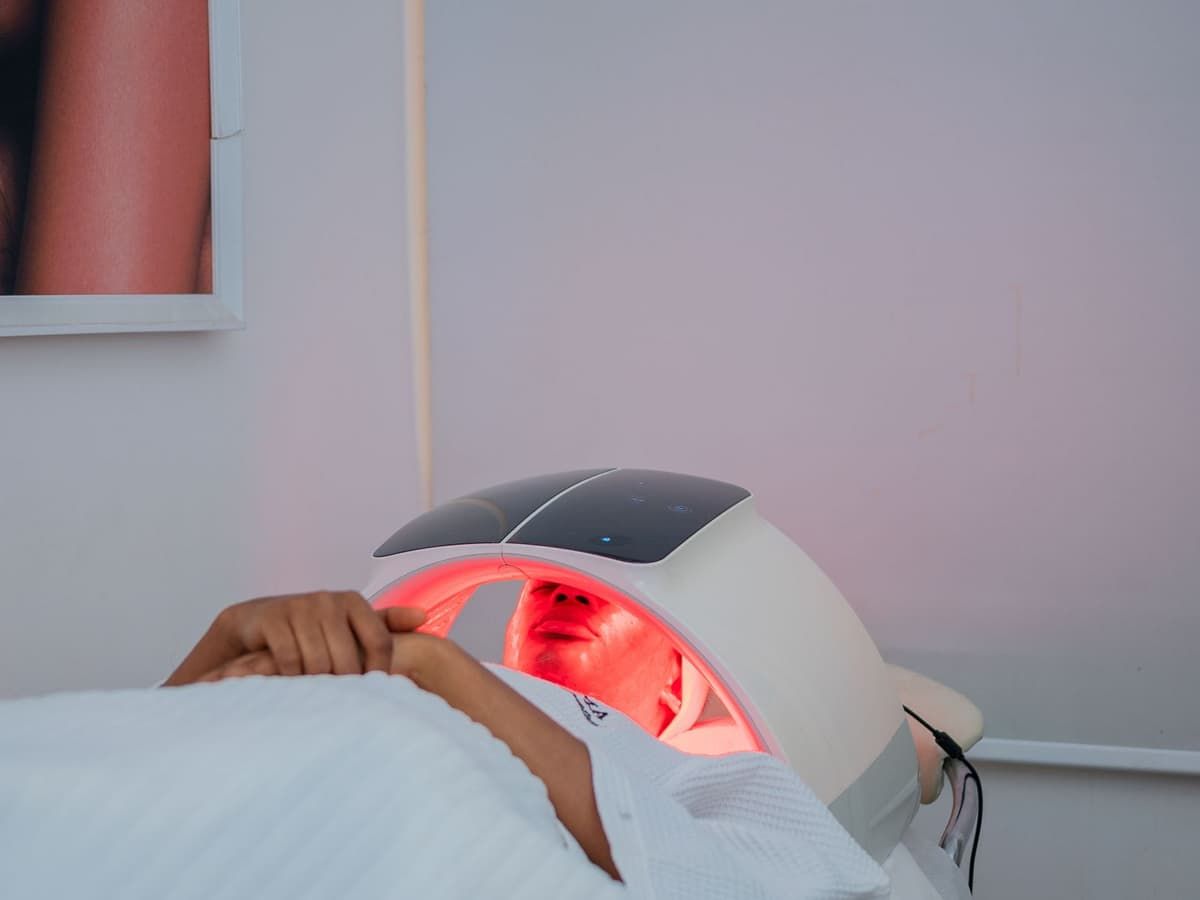
How Much Does Red Light Therapy Cost in 2026?
What red light therapy costs per session, by package, and by membership. Plus how clinic panels differ from at-home devices and when paying for either makes sense.
Red light therapy is priced unlike almost anything else in aesthetics: the per-session cost is low enough to look trivial, and the protocol is frequent enough that the real number surprises people. Here is how to price it properly.
Typical red light therapy cost
- Single session: commonly $25–$100
- Package of 10: commonly $200–$700, which is where most clinics actually sell it
- Monthly membership (unlimited or weekly): commonly $50–$150 a month
- Add-on to another treatment: often $15–$40 on top of a facial or microneedling session
- At-home panel: a one-time $200–$2,000 depending on size and output
What drives the price
- Session frequency, not session price. Two to three sessions a week for eight to twelve weeks is the standard protocol. At $40 a session that is roughly $800 to $1,400 for one course. The per-session number is the least useful figure in the quote.
- Full body versus targeted panel. A face-only panel costs less per session than a full-body bed or a large panel array. Confirm which one the quote covers.
- Standalone versus add-on. Many clinics sell it primarily as an add-on because it pairs naturally with facials and microneedling. The add-on rate is usually far better value than the standalone rate.
- Membership models. Studios that have invested in a full-body bed usually push memberships, and if you are actually going twice a week, the membership is almost always the cheapest route.
- Device output. Not all panels are equivalent. Output and wavelength determine how long a session takes and how many you need, which is a real cost difference hiding behind similar-looking prices.
Clinic versus at-home
This is the decision that actually determines what you spend:
- Clinic panels are more powerful, treat larger areas per session, and involve no equipment decisions. You pay per visit and you have to show up two or three times a week.
- At-home devices cost more upfront and less over time. The catch is compliance: a panel you stop using after a month is the most expensive option of all.
If you are certain you will use it consistently and your goal is general skin quality, at-home is usually the better economics. If you want it as a supported add-on to treatments you are already booking, the clinic add-on rate is hard to beat.
How to budget smartly
- Price the full protocol, not one session. Multiply the session rate by the actual frequency for eight to twelve weeks.
- Ask about the add-on rate if you already book facials or microneedling. It is often a fraction of the standalone price.
- Compare a membership against your realistic attendance, not your intended attendance.
- Ask what the panel treats. Face-only and full-body are priced differently and quoted with the same words.
- Set expectations before you spend. Red light therapy is a gradual, cumulative treatment. It is not a substitute for resurfacing or injectables, and any provider promising dramatic change from it is overselling.
Is it worth it?
As a low-cost, no-downtime addition to a routine you already have, it is one of the easier things to justify on a med spa menu. As a standalone purchase expected to deliver visible change on its own, it disappoints people often, mostly because they underestimate the frequency required and stop before the protocol finishes. Decide which of those two you are buying before you pay for a package.
See typical pricing and clinics near you on the red light therapy treatment page, and request a consultation for a personalized quote.
Compare red light therapy costs in your city
Compare red light therapy in Vancouver, Cincinnati, Newport Beach, Boston, and Austin. For a treatment that works on texture more aggressively, read our microneedling cost guide.
Treatments mentioned in this guide
Common questions
How much does a red light therapy session cost?
Commonly $25 to $100 per session, which makes it one of the least expensive treatments on most clinic menus. Memberships and packages bring the effective rate down considerably, and many clinics add it to another treatment for a small fee rather than selling it standalone.
How many sessions do I need?
Most protocols run two to three sessions a week for eight to twelve weeks, then taper to maintenance. That frequency is the real cost driver, not the per-session price, so price the full protocol before you commit.
Is an at-home device cheaper than going to a clinic?
Over a year, usually yes. A quality at-home panel runs a few hundred to about two thousand dollars against a clinic protocol that can exceed that in one course. Clinic panels are more powerful and treat larger areas per session, so the tradeoff is convenience and cost against intensity.
Is red light therapy the same as a laser treatment?
No. Red light therapy uses low-level light to stimulate cells without damaging tissue, so there is no downtime and no recovery. Ablative and resurfacing lasers deliberately injure the skin to force it to remodel. They are different categories with very different prices and outcomes.
Does insurance cover it?
Not for cosmetic use. Some clinical applications are covered in narrow circumstances, but aesthetic red light therapy is an out-of-pocket expense everywhere.
Where this information comes from
Clinical facts on this page are checked against these primary sources.
- 1.Photobiomodulation (PBM) Devices: Premarket Notification [510(k)] Submissions (Draft Guidance for Industry and FDA Staff), U.S. Food and Drug Administration, Center for Devices and Radiological HealthConfirms PBM devices deliver a non-heating dose of light at much lower fluence and irradiance than ablative or coagulating lasers and IPL devices, backing the guide's distinction that red light therapy stimulates cells without damaging tissue while ablative and resurfacing lasers deliberately injure skin to force remodeling, and confirms PBM outcomes depend on wavelength, fluence and irradiance, backing the guide's claim that device output and wavelength affect how long and how many sessions are needed.
- 2.Is red light therapy right for your skin?, American Academy of DermatologyConfirms red light therapy is not a one-and-done treatment and requires regular use, backing the guide's session-frequency guidance, that professional in-office devices are more powerful than at-home devices, backing the guide's clinic-versus-at-home comparison, and that evidence remains limited with dermatologists typically using it as a complementary therapy rather than a replacement for standard treatment, backing the guide's caution against expecting dramatic standalone results.
- 3.Photobiomodulation, Underlying Mechanism and Clinical Applications, National Library of Medicine, PubMed Central (National Institutes of Health)Supports the guide's claim that red light therapy stimulates cells without damaging tissue: light absorbed by mitochondrial cytochrome c oxidase increases ATP production and does not raise the temperature of the target tissue.
Ready to talk to a clinic?
Tell us what you are considering and we will match you with a clinic in your city. Free, no obligation, and we never sell your data.
Or browse clinics by city and all treatments.
Request received
Thanks, we've got your details. A matched clinic will reach out shortly to confirm pricing and next steps.
Request a free consultation
A matched clinic reaches out. No obligation.