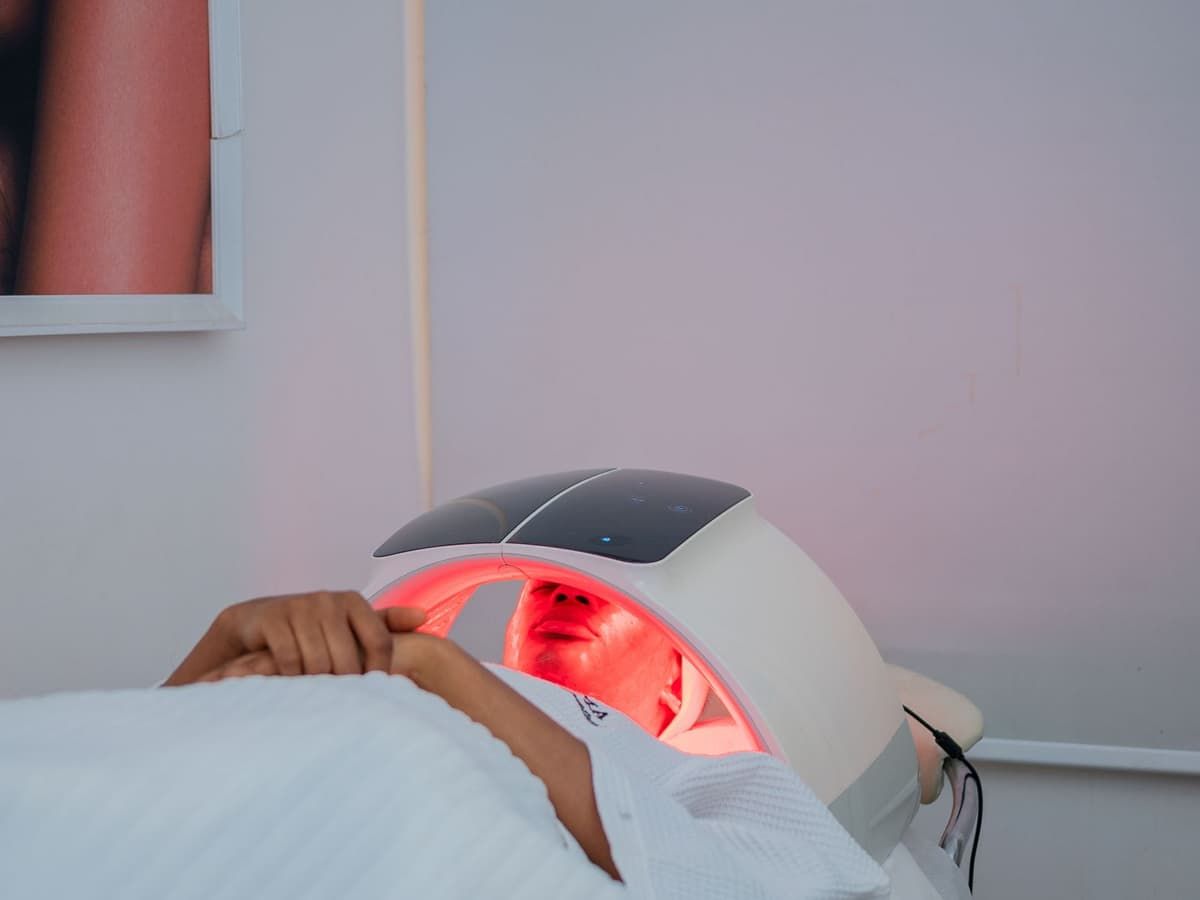
Low-level red and near-infrared light that energizes cellular repair, used for skin rejuvenation, collagen support, inflammation, and recovery, with zero downtime or discomfort.
Also called: LED light therapy, photobiomodulation, low-level laser therapy, infrared light therapy
See the clinics in your city that offer it, compare reviews, and request a free consultation.
Your location is used once to pick the nearest city and is never stored.
Red light therapy is the highest-volume, lowest-drama treatment in modern aesthetics, a painless 15 minutes under precisely tuned light that nudges your cells to repair, calm, and rebuild. No single session transforms anything; a consistent habit of them measurably does. That honest math, plus membership pricing, has made it one of the most searched treatments in the country.
How red light therapy works
Specific wavelengths of red (630–660nm) and near-infrared (810–850nm) light penetrate skin and are absorbed by mitochondria, the energy factories in your cells. The absorbed light measurably increases cellular energy (ATP) production, and downstream of that: collagen synthesis, circulation, and inflammation regulation.
The clinical name is photobiomodulation. Unlike lasers and IPL, there’s no heat injury and no controlled damage, nothing to heal from. That’s both the appeal (zero downtime, universally tolerated) and the honest limitation (gradual, cumulative results rather than dramatic ones).
What to expect
Sessions are effortless: 10–20 minutes under a panel, canopy, or full-body bed, wearing eye protection. The light feels gently warm. There is nothing to recover from: no redness, no sun sensitivity, no product restrictions.
The clinical protocols that show results share one feature: frequency. Expect 2–3 sessions weekly for the first 8–12 weeks, then 1–2 weekly to maintain, the reason nearly every med spa offers red light as a membership.
Results and timeline
With consistency:
Weeks 1–4: calmer, less reactive skin; faster recovery from workouts and other treatments
Weeks 6–12: gradual improvement in fine lines, texture, and firmness as collagen support compounds
Ongoing: maintenance sessions hold the gains
Where it genuinely excels: as the recovery layer after aggressive treatments (microneedling, peels, laser), calming inflammation and accelerating healing. Many providers bundle it into those appointments for exactly that reason.
Is red light therapy right for you?
Nearly everyone tolerates it, and it fits best for:
Maintenance-minded patients building a routine between bigger treatments
Redness-prone or reactive skin that can’t handle aggressive options
Post-treatment recovery stacking
Early fine lines and dullness with patience for gradual change
Check with your provider if you take photosensitizing medication.
What affects the cost
Membership vs drop-in. Drop-ins run $25–100; unlimited monthly memberships ($99–250) are the format that matches how the treatment actually works.
Device quality. Medical-grade panels and beds deliver meaningfully higher dosing than salon-tier equipment. Ask what device the clinic runs.
Bundling. Added to a facial or microneedling appointment, it’s often $25–50, the best value entry point.
Painless, warm, downtime-free sessions under 20 minutes
Stimulates collagen and cellular energy production over consistent use
Calms inflammation, pairs beautifully with aggressive treatments
The most affordable recurring treatment on most med spa menus
Are you a good candidate?
Nearly everyone (fine lines, dull skin, redness-prone complexions, post-treatment recovery, and anyone building a maintenance routine); results depend on consistency
By location
Find Red Light Therapy near you
1,384 clinics across 414 cities list Red Light Therapy on ClinicCompass. 763 of them (55%) say on their own websites that they offer financing or payment plans;
ask about approval and interest before you book.
Does red light therapy actually work, or is it hype?
The mechanism (photobiomodulation) is real and well studied; red and near-infrared wavelengths are absorbed by mitochondria and measurably increase cellular energy output, collagen synthesis markers, and circulation. The honest caveats are that effects are gradual, modest per session, and entirely dependent on consistency. It's a compounding treatment, not a dramatic one. Think skin fitness, not skin surgery.
What results can I realistically expect?
Over 8–12 weeks of consistent sessions, subtle improvement in fine lines, skin texture and firmness, faster recovery from other treatments, and reduced redness. It will not lift sagging skin, erase deep wrinkles, or replace lasers and microneedling. It shines as the maintenance layer underneath those bigger treatments.
How often do I need to go?
Consistency is the whole game, 2–3 sessions per week for the first 8–12 weeks, then 1–2 weekly for maintenance. This is why med spas sell red light as unlimited-use memberships; sporadic single sessions do very little.
Is it safe? Any side effects?
One of the safest treatments in aesthetics, non-thermal light with no UV, no heat damage, and no photosensitivity afterward. The main cautions are photosensitizing medications (some antibiotics, isotretinoin) and active cancer at the treatment site. Eye protection is worn as a precaution with high-output panels.
What's the difference between med spa red light and a home mask?
Power and coverage. Professional panels and beds deliver clinically-dosed irradiance across the whole face or body in minutes; most consumer masks output a fraction of that, requiring far longer exposure for less effect. Home devices are a reasonable supplement between sessions, rarely a full substitute.
Red light vs blue light, which do I need?
Different jobs. Red and near-infrared target collagen, inflammation, and repair. Blue light kills acne bacteria at the skin surface. Many LED sessions combine both; if acne is the primary concern, ask specifically about blue or combination protocols.
Sources
Where this information comes from
Clinical facts on this page are checked against these primary sources.
2.Is red light therapy right for your skin?, American Academy of DermatologyConfirms red light therapy (photobiomodulation) requires regular, repeated sessions rather than a single treatment, that side effects are generally mild, that eye protection should be worn per device instructions, that people on photosensitizing medication may not be good candidates, that in-office devices are more powerful than at-home devices, and that evidence remains limited despite some patient-reported improvement.
4.Photobiomodulation, Underlying Mechanism and Clinical Applications, National Library of Medicine, PubMed Central (National Institutes of Health)Supports the mitochondrial mechanism (light absorbed by cytochrome c oxidase driving ATP production) behind photobiomodulation, and that it can reduce inflammation and improve circulation.
5.Blue light acne treatment, DermNet NZConfirms the FAQ claim that blue light kills acne-causing bacteria (P. acnes) at the skin's surface.
6.Isotretinoin, National Library of Medicine, NCBI Bookshelf, StatPearls (National Institutes of Health)Confirms isotretinoin causes photosensitivity and that patients should avoid light-based procedures during and after treatment, backing the page's specific example of isotretinoin as a photosensitizing medication.