See the clinics in your city that offer it, compare reviews, and request a free consultation.
Your location is used once to pick the nearest city and is never stored.
Microblading and its machine-based siblings (powder brows, nano brows) have turned eyebrows into the most popular permanent-makeup category in the world. Done well, it’s the difference between drawing your brows every morning and waking up with them: semi-permanent pigment placed with artistic precision, lasting years.
How brow PMU works
All brow PMU deposits cosmetic-grade pigment into the upper dermis, shallower than a body tattoo, which is why it softens and fades by design over 1–2 years. The technique determines the look:
Microblading: a manual micro-blade cuts fine channels that mimic individual hairs, hyper-natural on dry-to-normal skin
Powder / ombré brows: a PMU machine builds soft, gradient shading, the “filled with powder” look, durable on every skin type including oily
Nano brows: machine-made single-needle hair strokes, microblading’s realism with less trauma and better longevity
Combo brows: hair strokes at the front, powder through the body (the best-of-both default many artists recommend)
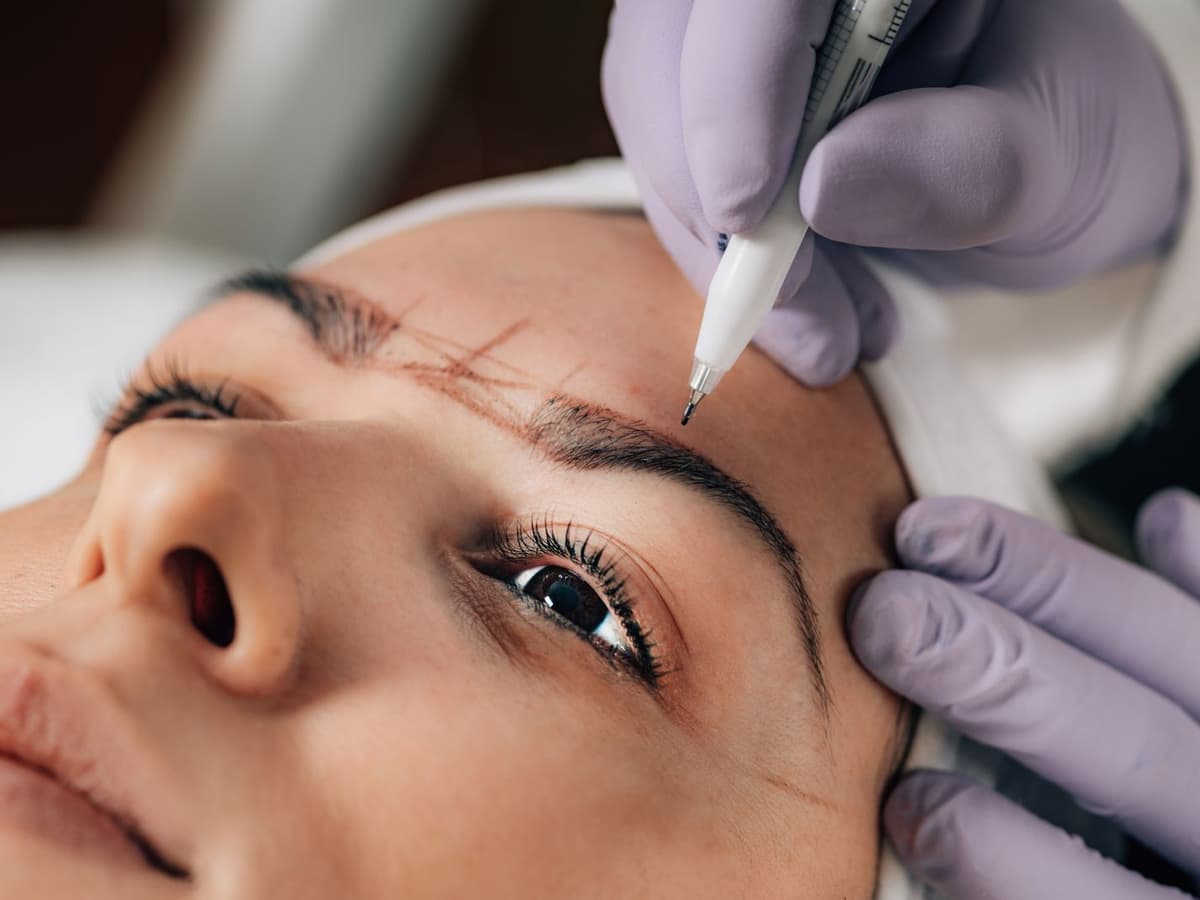
The artistry is in the mapping: measuring and drawing the shape to your bone structure and getting your approval before any pigment is placed.
What to expect
The first appointment runs 2–3 hours, mostly consultation, mapping, and shape approval, with numbing throughout the pigment work. You leave with bold, crisp brows that will run noticeably darker for the first few days, then flake lightly and soften over 7–10 days.
A 6–8 week touch-up is a standard, essential part of the process: first healing always absorbs some strokes unevenly, and the touch-up perfects them. Quotes that exclude it aren’t real quotes.
Results and duration
Healed results last 1–2 years, fading gradually, faster on oily skin and with sun exposure. Most clients book an annual or 18-month color refresh ($150–350, far less than the initial work) to keep brows crisp.
Is brow PMU right for you?
Strong candidates:
Sparse or over-plucked brows that never grew back
Hair loss: age-related, alopecia, or post-chemo restoration (a specialty many artists find the most rewarding work they do)
Daily brow-makeup users ready to retire the pencil
Asymmetric brows needing an expert’s mapping
Skin type steers technique, not eligibility: oily skin belongs with powder or nano. Standard deferrals: pregnancy, keloid-prone skin, and isotretinoin (Accutane) within the past six months, with your doctor’s OK before proceeding.
What affects the cost
Artist skill and demand. The dominant factor: established artists with strong healed portfolios run $500–800+; correcting cheap work costs more than doing it right once.
Technique. Machine work (powder, nano) often prices slightly above manual microblading.
Touch-up inclusion. Confirm the 6–8 week perfecting session is bundled.
Refresh cadence. Annual color boosts are a fraction of initial pricing.
Browse microblading and brow PMU providers near you on ClinicCompass, and judge every portfolio by its healed photos, not its fresh ones.
Why people choose Microblading & Brow PMU
Wake up with finished brows (no daily penciling)
Techniques for every skin type, from hair strokes to soft powder
Semi-permanent by design (refresh or adjust as trends change)
Restores brows lost to age, over-plucking, or medical causes
Are you a good candidate?
Sparse, over-plucked, or asymmetric brows; hair loss from age, alopecia, or chemo; anyone tired of daily brow makeup, with skin type steering the technique choice
By location
Find Microblading & Brow PMU near you
604 clinics across 297 cities list Microblading & Brow PMU on ClinicCompass. 304 of them (50%) say on their own websites that they offer financing or payment plans;
ask about approval and interest before you book.
What's the difference between microblading, powder brows, and nano brows?
Microblading cuts fine hair-stroke channels with a manual blade, the most natural look on dry-to-normal skin. Powder (ombré) brows use a machine to build a soft, makeup-like shading that suits every skin type and lasts longer. Nano brows create hair strokes with a single machine needle, microblading's realism with less skin trauma, increasingly the artists' favorite. Oily skin blurs manual strokes, which is why good artists steer oily-skinned clients toward powder or nano.
How long does microblading last?
1–2 years, fading gradually. Oily skin, sun exposure, and retinoid use shorten the life. Most people book a color refresh every 12–18 months. The initial appointment always pairs with a 6–8 week touch-up to perfect strokes after first healing; that touch-up is part of the real price.
Does microblading hurt?
Less than people expect. Topical numbing keeps most clients at a "scratchy pressure" level of discomfort. The 2–3 hour appointment is mostly mapping and drawing the shape; the actual blading is a fraction of it. You approve the drawn shape before any pigment touches skin.
What does healing look like?
Days 1–3, brows look bold and dark, noticeably darker than the final result. Days 4–10, light flaking as color softens (don't pick). Around week 3–4 the color can look too light before resurfacing at the true shade by week 6. This "dark, flaky, ghost, final" cycle is normal and why judging results before the touch-up is pointless.
Who shouldn't get microblading?
Pregnancy and breastfeeding (the industry-standard deferral; it has never been studied, so nobody will do it), active skin conditions in the brow area, keloid-prone skin, uncontrolled diabetes (healing concerns), and recent isotretinoin use, where the industry standard is to wait six months after finishing and to check with your doctor first. Very oily skin isn't excluded. It just belongs with powder or nano technique instead of manual blading.
How do I choose an artist?
Healed photos, not fresh ones. Fresh work always looks crisp; the skill shows at the 1-year mark. Ask specifically for healed results on your skin type, check the studio's licensing (PMU is regulated county-by-county), and confirm single-use needles. Cheap microblading gets expensive to correct. This is a skill-purchase, not a commodity.
Sources
Where this information comes from
Clinical facts on this page are checked against these primary sources.
1.Tattoos, Temporary Tattoos & Permanent Makeup, U.S. Food and Drug AdministrationConfirms permanent makeup is a type of tattoo (ink or pigment inserted into the skin), regulated as a cosmetic product, and that tattoo and permanent-makeup studio practice and licensing is regulated by local, state, or county jurisdictions rather than the FDA.
2.Tattoos & Permanent Makeup: Fact Sheet, U.S. Food and Drug AdministrationConfirms unsterile tattooing equipment and needles can transmit infections, the medical basis for the page's advice to confirm an artist uses single-use needles.
4.Cutaneous Adverse Reactions Associated with Tattoos and Permanent Makeup Pigments, Journal of Clinical Medicine (MDPI), National Library of Medicine PubMed CentralConfirms tattooing trauma carries an elevated risk of hypertrophic scarring or keloids, and that people with certain skin diseases should be cautioned about localized reactions, backing the page's advice that keloid-prone skin and active skin conditions are standard reasons to defer microblading.