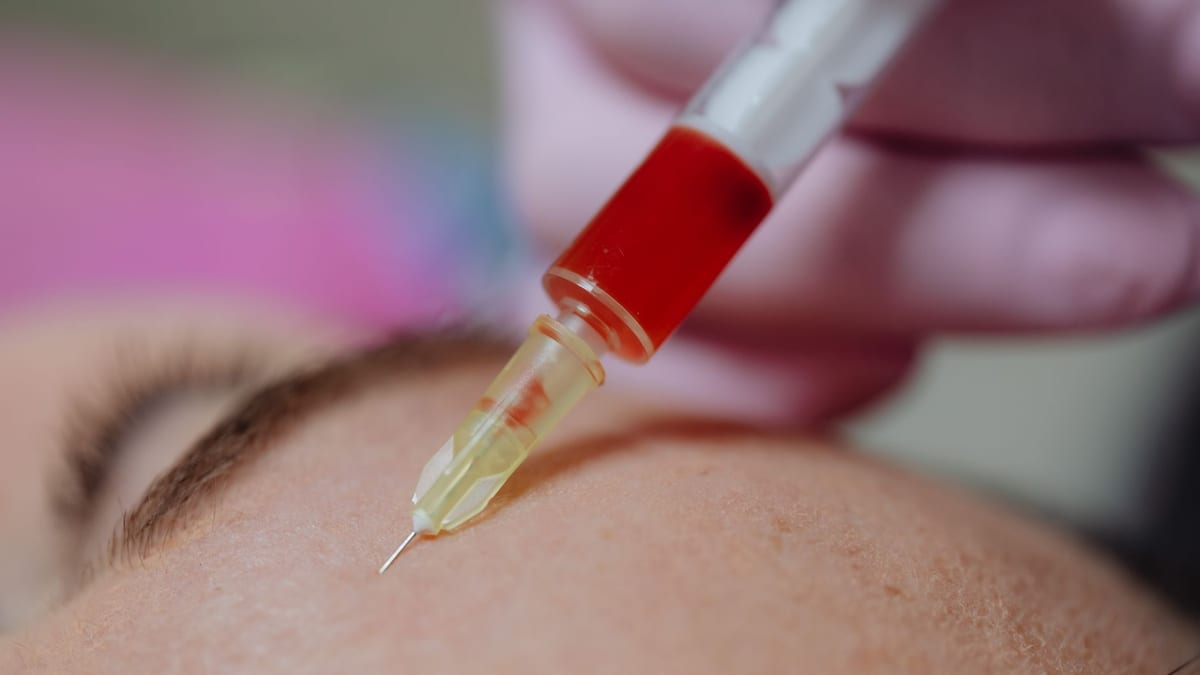
Botox Gone Wrong: What It Looks Like, How Long It Lasts, and What Can Be Fixed
When Botox goes wrong, it is usually a droop, a raised brow, or an uneven smile, and it wears off. Here is how long each problem lasts, what an injector can correct in the meantime, what goes wrong with masseter Botox, and which symptoms are an emergency.
What does Botox gone wrong actually look like? Usually it is a drooping eyelid or brow, a raised “Spock” brow, a forehead that feels frozen, or a smile that pulls to one side. These problems come from toxin landing in the wrong muscle or from a dose that does not suit your face. Almost all of them are temporary, and several can be improved while you wait.
The serious exception is trouble swallowing, breathing, or speaking, or weakness spreading beyond the treated area. Those symptoms need an emergency room right away.
Why Botox problems wear off
Botox blocks the signal between a nerve and a muscle, and the nerve recovers over time. That is why a bad result fades on its own, and it is also why the result cannot be erased. Filler made from hyaluronic acid can be dissolved with an enzyme, as we explain in our guide to filler gone wrong. Botox has no equivalent dissolver you can book at a clinic.
So the realistic options are to wait, to balance the result with a few more units somewhere else, or to use a short-term treatment such as eye drops. The full effect of a treatment generally lasts three to four months, though many specific problems settle sooner.
One date matters here: Botox takes up to two weeks to reach its full effect. Unevenness on day four may simply be the two sides kicking in at different speeds. Most injectors want to judge the result at about day 14, which is also the right time to ask for a correction.
The most common ways Botox goes wrong
| Problem | What it looks like | Usual cause | What can be done | How long it usually lasts |
|---|---|---|---|---|
| Eyelid droop | One upper lid sits lower and the eye looks tired | Toxin reaches the muscle that lifts the eyelid | Prescription eye drops for a temporary lift | 2 to 8 weeks |
| Brow droop | Heavy forehead, lower brows, hooded feeling | Forehead injected too low or dosed too high | Small correction in some cases | 2 to 6 weeks |
| Spock brow | Outer brow arches sharply upward | Outer forehead left untreated | A few units in the outer forehead | Fixed within days of a touch-up |
| Frozen look | Little or no forehead movement | Too many units for your face | Mostly time, and a lower dose next round | Up to a full cycle, about 3 to 4 months |
| Uneven smile | One corner of the mouth moves less | Toxin affects a smile or lip muscle | Sometimes balancing the other side | Weeks to a full cycle |
| Uneven result | One brow or side moves more than the other | Natural asymmetry or uneven dosing | Touch-up at about 2 weeks | Fixed within days of a touch-up |
Eyelid droop
This is the complication people fear most, and the FDA label for Botox Cosmetic has long listed eyelid droop among its known adverse reactions. It happens when toxin reaches the small muscle that lifts the upper lid, usually after injections close to the brow.
Dr. Victoria Taraska, our medical reviewer, puts true eyelid droop at two to eight weeks at most, and it often fades before the rest of the treatment does. Prescription drops can lift the lid in the meantime. Apraclonidine and oxymetazoline are the two usually discussed, and both are prescribed for this purpose based on limited evidence. They lift the lid for a few hours at a time and do not speed recovery, so think of them as a way to get through a wedding or a work week.
Brow droop
Brow droop is more common than true eyelid droop, and people often mistake one for the other. The forehead muscle is the only muscle that lifts your brows. Weaken too much of it, or inject too close to the brow, and the brow settles lower. People who already have heavy lids or low brows are at more risk, because they may have been using that muscle to hold their eyes open without knowing it.
If you are told you have this anatomy, a good injector will treat the forehead lightly or skip part of it. That can mean keeping a few more lines, and it is often the right trade.
Spock brow
If the center of the forehead is relaxed and the outer part is not, the outer brow can pull upward into a sharp arch. This is one of the easiest problems to fix. A few units placed in the outer forehead usually flatten it out, and you should see the change within a few days.
A forehead that feels frozen or heavy
A frozen look is a dose problem. The toxin did what it was meant to do, only more than you wanted. There is little to do besides wait, but you can use the experience: note how many units you received and ask for fewer next time. Feeling heavy or tight in the first couple of weeks is common and often eases as you adjust.
Masseter Botox gone wrong
Masseter Botox slims the jaw or calms clenching, and it uses far more units than the forehead, often 20 to 30 per side. It is also an off-label use. A 2018 literature review of 36 articles found that most complications appeared within two to four weeks and were gone within 12 weeks.
| Problem | What it looks like | Why it happens | What can be done |
|---|---|---|---|
| Uneven smile | Smile pulls differently on one side | Injection placed too far forward reaches the risorius, a smile muscle | Usually wait, it wears off |
| Paradoxical bulging | A lump at the jaw angle when you clench | One layer of the muscle stays strong while the rest weakens | A few more units in the part still working |
| Chewing fatigue | Tired jaw with steak or gum | The muscle is doing what the treatment intended, weakening | Softer food for a few weeks |
| Sunken or hollow look | Lower face looks thin or gaunt | Too much slimming on an already slim face | Stop or reduce the dose and let the muscle return |
| More visible jowls | Lower face looks saggier | The shrinking muscle was supporting loose skin | Stop treatment; may be a question for a skin tightening consult |
Bulging is the one worth reporting quickly, because it is usually corrected with a small top-up. The hollow look and the jowling are slower problems. Slimming builds over repeated rounds and can take months to reverse, so tell your injector early if you start to dislike the change. Dr. Taraska covers who should think twice in her guide to masseter Botox and what it does to your face.
When it is not a cosmetic problem
Most Botox complaints are about looks. These are not:
- Trouble swallowing or breathing
- Slurred speech or a change in your voice
- Double or blurred vision
- General muscle weakness, or weakness away from the treated area
The FDA’s boxed warning says effects of the toxin can spread beyond the injection site, and that symptoms can show up hours to weeks after treatment. Serious cases at standard cosmetic doses are rare, but do not wait on these. Go to an emergency room, tell them you had a botulinum toxin injection, and bring the product name if you have it.
For ordinary reactions such as bruising, a headache, or tenderness, read our guide to Botox side effects and call your clinic with any questions.
The kind of “gone wrong” that is entirely avoidable
The frightening news stories usually involve counterfeit product or unqualified injectors. In 2024 the CDC investigated harmful reactions linked to counterfeit or mishandled botulinum toxin. Its final count was 17 cases across 9 states, with 13 people hospitalized and no deaths. Reported symptoms included drooping eyelids, double vision, and trouble swallowing or breathing. The CDC said some of the product had been bought through online marketplaces instead of authorized suppliers, that some injectors did not follow state or local requirements, and that some people had injected themselves.
The CDC’s advice is simple, and it costs nothing to follow. Use a licensed, trained provider. Ask whether the product is FDA-approved and where it came from. If you are in doubt, skip the injection. Our guide on who can legally inject Botox explains what the rules typically look like and which setups to walk away from.
What to do if your Botox looks wrong
- Take photos now. Photograph your face at rest, then raising your brows, frowning, and smiling. Good photos help your injector and give you a record.
- Wait until day 14 unless something feels urgent. Many early problems even out as the toxin finishes working.
- Call the clinic that treated you first. Ask for your record, including the product, the units, and where they were placed. Any other injector will need that information.
- Ask what can be corrected and what has to wear off. A good injector will give you a straight answer. Ask whether a touch-up costs extra before you book it.
- Get a second opinion if you are brushed off. A dermatologist or an experienced injector can assess it. If you need one, you can search your city from the cities page.
- Write the fix into your next treatment plan. Fewer units, a different pattern, or a different injector.
Botox is commonly priced at $10 to $20 per unit, so a small correction is usually a modest bill. Policies vary, and some clinics include a two-week touch-up in the original price. Ask before you are treated. The Botox cost guide and cost calculator show what to expect.
How to lower your odds next time
- Choose the injector over the deal. Most of the problems above come down to placement and dose. Our list of med spa red flags covers the warning signs, including prices that seem too low.
- Tell them your history. Mention any past droop, heavy lids, or brow surgery, and bring photos of a past result you liked.
- Start light if you are new. It is easy to add units at two weeks. It is impossible to remove them.
- Follow the basic aftercare. Our guide to the first 24 hours after Botox has the short list.
- Ask about the correction policy at your first consultation. You want to know what happens at the two-week mark before you need it.
The bottom line
Botox gone wrong usually means a droop, a raised brow, too little movement, or an uneven smile. It cannot be dissolved, but it does wear off, often within weeks. Some of it can be corrected with a few well-placed units, and eye drops can help a droopy lid in the meantime.
Take photos, wait until two weeks unless something feels urgent, and go back to your injector with specific questions. Trouble swallowing, breathing, speaking, or seeing is different: go to an emergency room. When you are ready to try again, you can compare Botox clinics in your city and treat the list as a shortlist for consultations.
Find a Botox clinic near you
See the clinics in your city that offer it, compare reviews, and request a free consultation.
Your location is used once to pick the nearest city and is never stored.
Our free newsletter, once a month
The Compass is the ClinicCompass newsletter: what's new in aesthetics, what things cost, new clinics listed in your city, and what to ask before you book. Med spa, plastic surgery and dermatology, without the sales pitch.
Keep reading
Chemical Peel Aftercare and Recovery: What to Expect Day by Day
Chemical peel recovery takes anywhere from a day of pinkness to three weeks of real healing, and the depth of the peel decides which one you get. Here is what each day looks like, what to put on your skin, what to keep off it, and when to call the clinic.
Read post → For ClinicsGood Faith Exams: What Every Med Spa Owner Has to Get Right
The good faith exam is the step that makes every RN treatment in your clinic legal, and it is the step most often done badly: a questionnaire nobody reviews, a signature from a director who never saw the patient, an exam that expired a year ago. Here is how to get it right and keep it fast.
Read post → Treatment Deep DiveMorpheus8 Results Timeline: What Changes After 1, 2 and 3 Treatments
Most Morpheus8 disappointment comes from the calendar, not the device. Here is the honest timeline: the first two weeks, the first visible change, what each session in the series adds, and where you land at six months.
Read post →Find Botox providers in your city
Compare vetted clinics with real Google ratings, see honest local cost ranges, and request a free consultation.
Cite or link to this page
Free to quote with a link back.
ClinicCompass. (2026, November). Botox Gone Wrong: What It Looks Like, How Long It Lasts, and What Can Be Fixed. Retrieved {accessed}, from https://thecliniccompass.com/blog/botox-gone-wrong/
"Botox Gone Wrong: What It Looks Like, How Long It Lasts, and What Can Be Fixed." ClinicCompass, November 2026, thecliniccompass.com/blog/botox-gone-wrong/. Accessed {accessed}.
ClinicCompass. "Botox Gone Wrong: What It Looks Like, How Long It Lasts, and What Can Be Fixed." November 2026. https://thecliniccompass.com/blog/botox-gone-wrong/.
<a href="https://thecliniccompass.com/blog/botox-gone-wrong/">Botox Gone Wrong: What It Looks Like, How Long It Lasts, and What Can Be Fixed</a> (ClinicCompass)
https://thecliniccompass.com/blog/botox-gone-wrong/