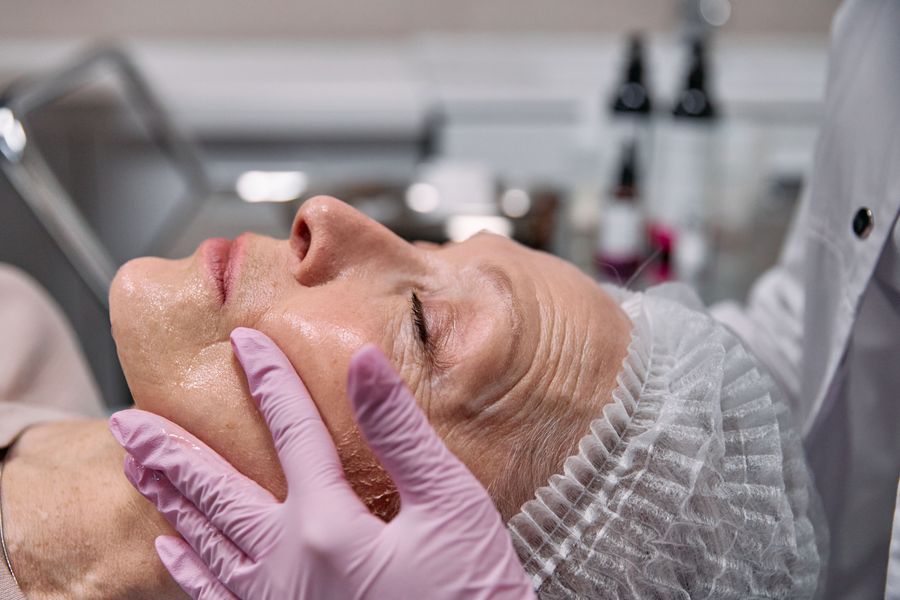
Ozempic face is the name people gave to something doctors have seen after every kind of fast weight loss: the face looks hollow, tired and older than it did twenty or forty pounds ago. The cheeks flatten, the temples and under-eyes sink, and the skin along the jaw and neck hangs looser. You will also see it called GLP-1 face, Wegovy face, Mounjaro face or Zepbound face, after whichever medication took the weight off. It is not a medical term, and it is not a side effect of semaglutide or tirzepatide. It is what happens when the fat under the facial skin goes quickly and the skin has not had time to tighten to match.
It is harmless, and it needs no treatment unless it bothers you. If it does, the fix depends on which of two things you are looking at.
Hollow or loose: work out which
Hollow means volume is gone. The cheeks look flat, the temples dip, the under-eyes are shadowed, and the folds beside the nose and mouth are deeper. Pinch the skin and it still feels fairly firm. Loose means the skin itself has slackened: jowls along the jaw, a soft neck, skin that looks thin and crepey. Most people have some of both, and the order matters. Volume goes back first, because skin needs something to sit on before anyone can judge how loose it really is.
Putting volume back
Sculptra is where most injectors start on a face that has deflated everywhere. It is injected across the temples, cheeks and jawline and prompts your own collagen to rebuild over a few months. The result comes on slowly, which is why it tends to look like you rather than like filler.
Hyaluronic acid filler works at once and suits specific places: the cheeks, the temples, the folds by the mouth, and the hollow under the eye, which is a small and unforgiving area that rewards an experienced injector. Filler can also be dissolved, which matters if your weight changes again.
Fat transfer moves your own fat to the cheeks, temples or under-eyes. It is surgery, it lasts longer than filler, and it is the usual choice when a great deal of volume is missing. It often takes more fat than a standard facial rejuvenation, and it is done once your weight has settled.
Firming loose skin
When the skin has thinned and slackened but has not dropped far, radio-frequency microneedling and other collagen-building devices firm it over a series of sessions. They tighten the skin that is there. They do not add volume, so on a hollow face they are a second step, not a first.
When the answer is surgery
If the weight loss was large, the skin and the deeper layer under it may have moved down into jowls and a loose neck. Filler cannot lift that. A facelift, usually with a neck lift and often with fat added in the same operation, repositions the tissue. Surgeons want your weight stable for about six months first.
Timing, and the weight coming back
Two facts shape every plan. First, the hollow look does not fade while the weight stays off. Second, many people regain much of the weight after stopping a GLP-1, and the face fills out again when they do. So tell your provider where you are: still losing, holding steady, or planning to stop. Reversible treatments make sense while things are still moving. Permanent ones are for a weight you expect to keep.
How to choose a provider
Ask how many patients they have treated after GLP-1 weight loss, and ask to see results on someone who lost a similar amount. Ask whether they see your face as hollow, loose or both, and what they would do first. Be cautious of a plan that is only filler for skin that is plainly hanging, and of a clinic that does not ask about your weight or your medication. A good consultation will sometimes end with a referral to a surgeon, and that is a sign of an honest one.
Browse the clinics below. Bring your starting weight, your current weight and how long it has been stable.