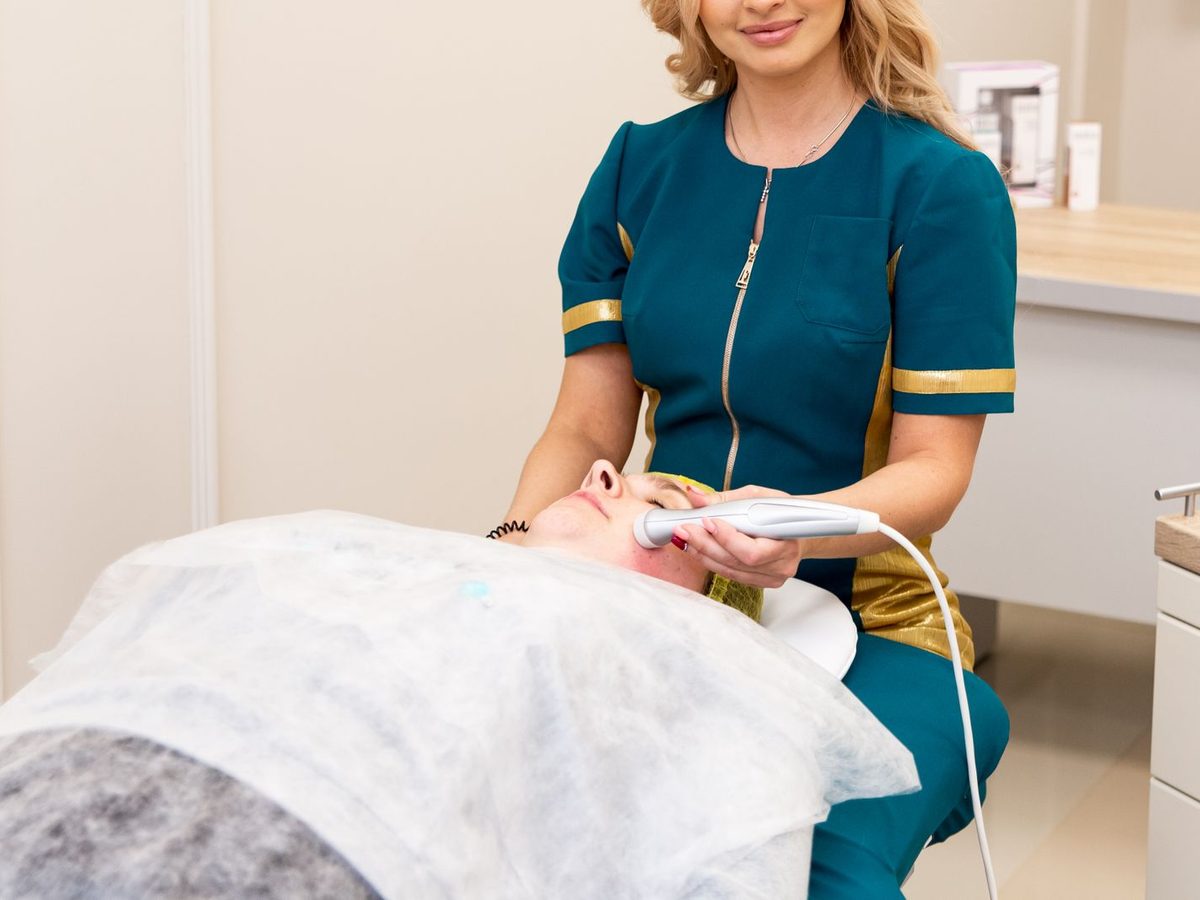
RF microneedling is the treatment a lot of people mean when they say Morpheus8, and it is bigger than one brand. A device pushes a grid of fine needles into the skin and releases radiofrequency energy at the tips, heating the dermis from inside while sparing most of the surface. The needles do what plain microneedling does; the heat does what plain microneedling cannot, contracting collagen and triggering deeper remodeling. The result is one treatment that resurfaces acne scars and texture and tightens mild laxity, with a recovery measured in days rather than the weeks of an ablative laser.
This page covers the device class as a whole. Morpheus8 has its own page; Vivace, Potenza, Secret RF, Virtue RF, Genius, Sylfirm X and Scarlet are covered here, and the clinics listed below offer at least one of them.
What it treats
The evidence is strongest for two things. Acne scarring: a 2026 systematic review of 41 studies found RF microneedling consistently reduced scar scores, with efficacy comparable to fractional lasers and a better recovery profile. Laxity and photoaging: the same review found improved wrinkle scales, higher dermal density on histology and reduced under-chin fullness. Beyond those, pores, crepey neck skin, fine lines around the mouth, stretch marks and some cases of melasma and rosacea improved, with more variable effect sizes. For underarm sweating, the review found botulinum toxin worked better.
What it does not do is replace surgery. Moderate to heavy jowls, a true turkey neck or deep nasolabial folds are volume and structural problems; RF microneedling softens the skin over them and no more. Clinics that show facelift-grade before-and-afters for a three-session series are showing their best case or someone else’s.
Where it sits among your options
Plain microneedling ($200 to $700 a session) is the entry point: mechanical channels, no heat, good for texture, pores and mild scars, one to two days of redness. RF microneedling ($600 to $1,500) adds dermal heating for deeper scars and laxity, at the cost of more discomfort and two to five days down. Fractional lasers (Fraxel, CO2, Halo) resurface from the surface and win on sun damage and pigment, with more downtime and more pigmentation risk in deeper skin tones. Ultrasound tightening (Ultherapy, Sofwave) heats deeper still with no surface effect, for laxity alone. Many clinics stack RF microneedling with PRP or a light chemical peel; the add-ons are reasonable, the prices for them vary widely.
What a session is like
Numbing cream for 30 to 45 minutes, then 20 to 40 minutes of treatment. It feels like heat and pressure with a prickling snap on bonier areas; most people rate it a 4 to 6 out of 10 with numbing. Afterward the skin is red and warm like a sunburn, with a fine grid of pinpoint marks. Day two brings swelling, days three to five settle to pink and slightly rough, and makeup is usually allowed by day three. A series is three sessions four to six weeks apart. Texture improves after the first; scars and tightening keep improving for three to six months after the last as new collagen matures, then hold for one to two years.
Risks, honestly
The common ones are redness, swelling, tenderness, a temporary breakout and, in deeper skin tones, temporary darkening that the review found infrequent and self-limited. The serious ones are rare and are why the FDA issued a safety communication in October 2025: reports of burns, scarring, fat loss, disfigurement and nerve damage, some needing surgical repair, from RF microneedling used for skin appearance. Fat loss is the one to understand. Energy delivered too deep in an area with little fat under the skin, the temples, the lower cheeks of a slim face, can dissolve the fat that gives the face its shape, and it does not come back. That is a depth and settings error, which is a provider error. The FDA’s recommendations are the right ones: a licensed provider trained on the specific device, a clear answer to “which device and why”, and never a home device.
Do not treat over active acne or a cold sore, within six months of isotretinoin, with a history of keloids, or during pregnancy. Pacemakers and metal implants in the treatment area rule out RF energy.
Cost
$600 to $1,500 per session for the face in the US, $1,800 to $3,600 for the usual series of three, with neck and body areas priced separately. Morpheus8 sits at the top of that range in most cities and unbranded RF microneedling at the bottom, for the same class of result. Canadian pricing tracks similar figures in dollars. Numbing and a follow-up should be included.
Choosing a clinic
Ask which device, and what training the person holding it has on that device. Ask how many patients with your skin tone they have treated. Ask what depth and energy they plan for each area and why, and whether they avoid the temples and thin areas. Ask to see their own before-and-afters at three months, not the manufacturer’s. A clinic that runs RF microneedling alongside plain microneedling, laser resurfacing and ultrasound tightening can tell you which one you actually need, which is the point of the consultation.
Where to compare RF microneedling
Nearly half of the med spas ClinicCompass tracks in large cities offer some form of RF microneedling. Compare clinics in Atlanta, Houston, Phoenix, Miami and Austin, or browse RF microneedling providers in your city, and see the Morpheus8 page if you are set on that brand.