Does Microneedling Hurt? An Honest Pain Guide by Area and Type
With proper numbing, standard microneedling is a 2 to 4 out of 10 for most people: a buzzing, scratchy pressure that gets sharper over bone. RF microneedling is a different experience. Here is the honest version, area by area.
Does microneedling hurt? With a proper numbing cream on for 30 to 45 minutes, most people rate standard microneedling around a 2 to 4 out of 10: a buzzing, scratchy pressure, like fine sandpaper being dragged across the skin, that gets sharper over the forehead, upper lip and jawline. Without numbing it is noticeably worse. RF microneedling, including Morpheus8, sits higher, often a 5 to 7.
That is the short answer. The useful answer depends on three things: which kind of microneedling you are booking, which part of your face is being treated, and how the clinic handles numbing. Each one moves the number more than your personal pain tolerance does.
What it actually feels like
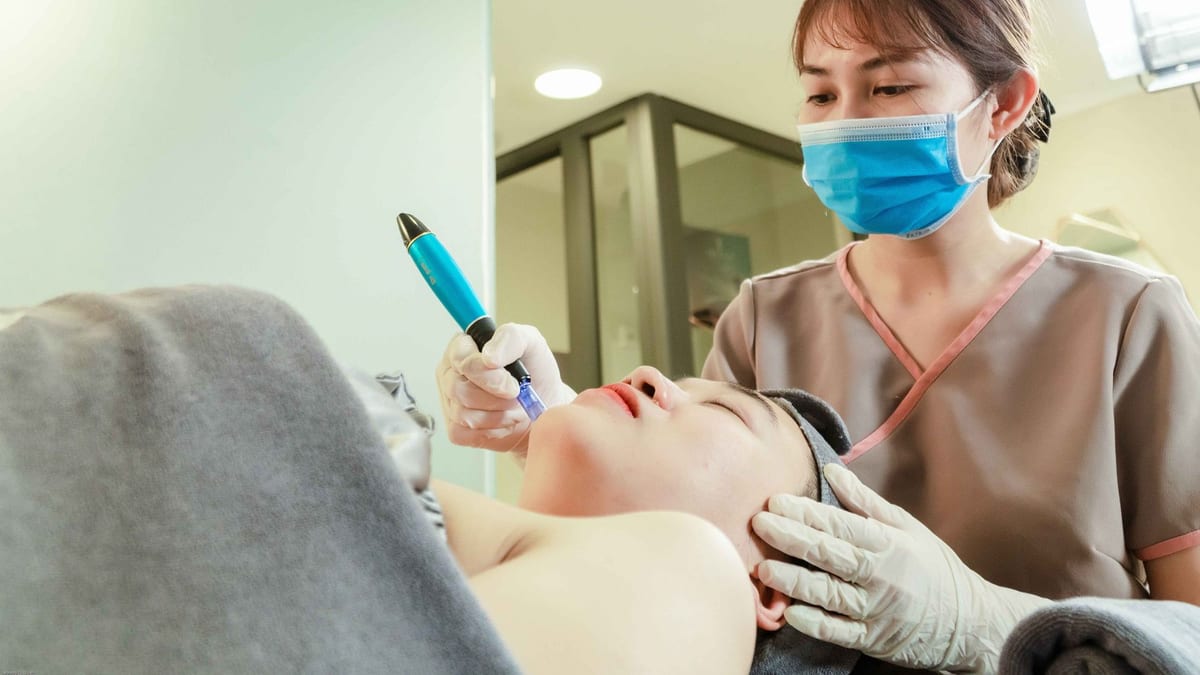
Microneedling uses a pen-shaped device with a cartridge of very fine needles that move in and out of the skin thousands of times a minute. The provider glides it over the skin in passes, usually two to four per area. The point is to create controlled micro-injuries that push the skin to build new collagen.
What patients describe, with numbing in place:
- A vibrating, scratchy drag, closer to a rough electric toothbrush than to an injection
- Pressure more than sharp pain across the cheeks
- A prickling sting over thin skin and bone, especially on the forehead and around the mouth
- Warmth and tightness afterward, like a mild sunburn, for the rest of the day
There is no single big needle and no moment where something goes deep. The sensation is constant and repetitive rather than sharp and brief, which is why a full-face session feels more tiring than painful for most people. You will also hear it: the pen makes a steady buzzing that some find more unsettling than the sensation itself.
Microneedling pain by area
Numbing cream evens a lot of this out, but bone and thin skin still come through. A typical full-face session runs 20 to 30 minutes of actual needling after the numbing comes off.
| Area | Typical rating (numbed) | Why it rates that way |
|---|---|---|
| Cheeks | 1-3 / 10 | The most padding on the face; usually the easiest part |
| Chin | 2-4 / 10 | Some padding, but bone close underneath at the point of the chin |
| Nose | 3-4 / 10 | Thin skin over cartilage; the sides of the nose sting more than the bridge |
| Neck | 2-4 / 10 | Thin skin, but the needle depth is usually set shallower there |
| Jawline | 3-5 / 10 | Skin directly over bone with little fat between |
| Forehead and temples | 3-5 / 10 | Thin skin over the skull; the most common answer to “where did it hurt?” |
| Upper lip | 4-5 / 10 | Nerve-dense, thin, and close to the teeth |
| Around the eyes | 3-5 / 10 | Very thin skin, so depth is kept shallow, but it is a sensitive spot to have anything near |
| Acne scars | 4-6 / 10 | Scar tissue is firmer, so providers often go deeper and slower over it |
| Body (stretch marks, scars) | 2-5 / 10 | Varies with depth and how much padding sits under the area |
Two rules explain the whole table.
Skin over bone hurts more than skin over fat. The cheeks are the easy part for almost everyone. The forehead, temples, jawline and upper lip are where people grip the chair.
Depth drives the sensation. Needle depth on the face commonly ranges from about 0.5 mm for fine texture work to 2 mm or more for deep scarring. Deeper settings reach more nerve endings and draw more pinpoint bleeding. If you are booking microneedling for acne scars, expect the scarred zones to be the most uncomfortable part of the session, because that is where the provider is working hardest.
Standard vs. RF vs. PRP microneedling
“Microneedling” now covers several treatments that feel quite different. Know which one you are booking.
| Type | Typical rating (numbed) | What changes the feeling |
|---|---|---|
| Standard microneedling | 2-4 / 10 | Needles only; buzzing, scratchy pressure |
| PRP microneedling | 2-4 / 10, plus a blood draw | Same needling; the blood draw is a normal arm draw, and the plasma itself does not sting |
| RF microneedling and Morpheus8 | 5-7 / 10, sometimes higher | Each stamp delivers a burst of radiofrequency heat at the needle tip |
RF microneedling is the one people underestimate. Instead of gliding, the handpiece is pressed to the skin and fires once per spot: a deep, hot zap that lands and is gone. Morpheus8 and similar devices can reach several millimetres deep on the face and deeper on the body, and the heat is the point. Clinics that do a lot of it take numbing seriously: stronger compounded creams left on longer, and at some practices extra options like dental-style nerve blocks or nitrous oxide. If a clinic quotes you Morpheus8 with no conversation about pain control, ask what they offer before you pay.
The trade is reasonable. RF microneedling tightens and remodels more than needles alone, which is why it costs more. We compare the two head to head, including the cost of each, in Morpheus8 vs. Ultherapy and the Morpheus8 results timeline.
What numbing cream actually does
Nearly every reputable clinic numbs before microneedling. It is the single biggest factor in how the session feels.
- What they use. Usually a topical anesthetic such as lidocaine, often a stronger compounded blend (for example lidocaine with tetracaine) that clinics prepare or order in. Over-the-counter numbing creams are weaker.
- How long it sits. Commonly 20 to 45 minutes, and longer for RF microneedling. Ten minutes is not enough. If a clinic is in a hurry to start, the first pass will tell you.
- What it cannot do. Topical numbing dulls the surface, not the bone underneath. That is why the forehead and jawline still register even when your cheeks feel like cardboard.
- Where it stops. Numbing wears off over roughly an hour. The tight, sunburned feeling that follows is not pain from the needles; it is inflammation, and it is expected.
Numbing cream should be applied by the clinic or exactly as the clinic tells you, and only to the area being treated. Large amounts of strong topical anesthetic over wide areas of skin have caused serious reactions, so this is not the place to bring your own cream from home and lay it on thick.
Things that genuinely reduce the pain
- Ask about the numbing before you book. What they use, how long it stays on, and whether they top it up mid-session. A clinic that does this often will answer without hesitation.
- Arrive on time so the cream gets its full window. Showing up late usually means the numbing time gets cut, not the appointment pushed.
- Ask for the bony areas last, or first. Some people prefer to get the forehead over with; others want the easy cheeks first to settle in. Either is a normal request.
- Speak up during the passes. A good provider adjusts depth and speed as they go. Saying “that spot is sharp” is useful information, not a complaint.
- Book away from your period if you can. Pain sensitivity tends to run higher in the days just before it.
- Skip the alcohol the night before. It does nothing for pain tolerance and can increase bruising and pinpoint bleeding.
- Do not take blood thinners on your own initiative. If you take aspirin or an anti-inflammatory for a medical reason, tell the clinic rather than stopping or starting anything yourself. Plain acetaminophen beforehand is a common suggestion; check with your provider.
Does it get easier?
Somewhat, though not in the same predictable way laser hair removal does. Most people find the second and third sessions easier for one simple reason: they know exactly what is coming, and anticipation is a real part of what you are rating. The skin itself does not become less sensitive.
What can make a later session feel worse is a deeper setting. Providers often start conservatively and go deeper as the series progresses, especially on scars. If session three feels sharper than session one, that is often why. Ask.
When pain is a warning sign
Normal microneedling leaves you red, warm and tight for a day or two, with some pinpoint bleeding during the session and mild flaking after. Our microneedling aftercare guide walks through the normal recovery day by day.
These are not normal, and are worth a call to the clinic or a doctor:
- Pain that gets worse after the first day instead of easing
- Throbbing, swelling, warmth or pus, which can point to infection
- Blisters or raised welts, especially after RF microneedling
- A rash or bumps that appear days later
- Any burning sensation that continues long after the numbing has worn off
It also helps to know what the treatment should never involve. A sterile, single-use needle cartridge should be opened in front of you. Products applied to freshly needled skin should be ones meant for that use; some topical products are not, and reactions to them are a known problem. If you are unsure, our list of med spa red flags covers what to watch for, and how to choose a med spa covers the questions worth asking first.
What about at-home dermarollers?
Home rollers and pens are shorter, blunter and usually much shallower, so they hurt less. That is also why they do much less. The bigger issue is not pain but hygiene and technique: a reused roller on unprepared skin is an easy way to cause irritation or infection, and pressing harder to “get results” is how people end up with marks. If you want the collagen effect that microneedling is known for, a professional session is the version that delivers it.
What it costs to find out
A single standard microneedling session for the face commonly runs $200 to $450, and a package of three is typically $600 to $1,100. PRP microneedling usually costs $500 to $900 per session, and RF microneedling such as Morpheus8 commonly runs $700 to $1,500 per session. The full breakdown, and why a series matters more than any single visit, is in our microneedling cost guide and Morpheus8 cost guide. You can see what those numbers look like where you live with the cost calculator.
If you are still deciding whether the treatment fits your concern at all, start with is microneedling worth it, and if acne scars are the reason you are looking, the scars page lays out what each option can and cannot do.
Bottom line: standard microneedling with a proper numbing window is a 2 to 4 out of 10 for most people, sharper over the forehead, jawline and upper lip and on scarred skin. RF microneedling and Morpheus8 are a real step up, and the clinic’s numbing plan matters more there than anywhere else. Ask about numbing before you book, give the cream its full time, and choose the clinic on how they handle the session, not on who promises it will not hurt.
Find a Microneedling clinic near you
See the clinics in your city that offer it, compare reviews, and request a free consultation.
Your location is used once to pick the nearest city and is never stored.
Our free newsletter, once a month
The Compass is the ClinicCompass newsletter: what's new in aesthetics, what things cost, new clinics listed in your city, and what to ask before you book. Med spa, plastic surgery and dermatology, without the sales pitch.
Keep reading
How to Get Rid of Jowls: What Works, What Doesn't, and What It Costs
Most jowl treatments get sold on the wrong promise. This guide explains what actually causes jowls, which fix matches your stage, and the real price ranges so you can judge a quote.
Read post → For ClinicsHow to Get More Google Reviews for Your Med Spa (and What to Say Back)
Almost three in four med spas on ClinicCompass are rated 4.9 or higher, which means the number that separates you is review count. This is how to build that number with a system your front desk can run, plus word-for-word replies for good reviews, bad reviews and reviews from people you have never treated.
Read post → Treatment Deep DiveBotox Gone Wrong: What It Looks Like, How Long It Lasts, and What Can Be Fixed
When Botox goes wrong, it is usually a droop, a raised brow, or an uneven smile, and it wears off. Here is how long each problem lasts, what an injector can correct in the meantime, what goes wrong with masseter Botox, and which symptoms are an emergency.
Read post →Find Microneedling providers in your city
Compare vetted clinics with real Google ratings, see honest local cost ranges, and request a free consultation.
Link to this page
Free to quote with a link back.
https://thecliniccompass.com/blog/does-microneedling-hurt/
<a href="https://thecliniccompass.com/blog/does-microneedling-hurt/">Does Microneedling Hurt? An Honest Pain Guide by Area and Type</a> (ClinicCompass)
ClinicCompass. (2026, November). Does Microneedling Hurt? An Honest Pain Guide by Area and Type. Retrieved {accessed}, from https://thecliniccompass.com/blog/does-microneedling-hurt/
"Does Microneedling Hurt? An Honest Pain Guide by Area and Type." ClinicCompass, November 2026, thecliniccompass.com/blog/does-microneedling-hurt/. Accessed {accessed}.
ClinicCompass. "Does Microneedling Hurt? An Honest Pain Guide by Area and Type." November 2026. https://thecliniccompass.com/blog/does-microneedling-hurt/.